



|
Getting your Trinity Audio player ready...
|
By: Yisroel David
The widening conflict engulfing the Middle East has taken on new and potentially destabilizing dimensions as Hezbollah reportedly explores the possibility of launching attacks against Israel from Syrian territory while simultaneously maintaining hostilities along the Lebanese border. The development has raised alarm among regional observers who fear the confrontation between Israel, Iran, and their respective allies may be evolving into a multi-front war stretching across several countries.
According to a report on Friday in The Algemeiner, the Lebanese Shiite terrorist organization is seeking ways to expand its operational reach beyond Lebanon in support of Iran’s confrontation with Israel and the United States. Israeli broadcaster Kan News, referencing intelligence sources from Arab governments, reported that Hezbollah has examined the possibility of initiating attacks from Syria in order to increase pressure on Israel during the current regional crisis.
Such a strategy would mark a significant escalation in the conflict. Hezbollah has long been considered the most powerful of Iran’s terror proxy forces in the Middle East, possessing a formidable arsenal of rockets and missiles as well as a network of fighters trained in guerrilla warfare. Historically, the group has operated primarily from southern Lebanon, where its forces have repeatedly clashed with Israeli troops over the past several decades.
The notion that Hezbollah could attempt to open a new front from Syrian territory has prompted swift countermeasures from Damascus. According to reporting referenced by The Algemeiner, the Syrian government has instructed its armed forces to prevent any militant cells from using Syrian soil as a staging ground for attacks against Israel.
The directive reflects a delicate balancing act by Syria’s leadership, which has sought to distance itself from the regional confrontation while maintaining internal security after years of civil war. President Ahmed al-Sharaa’s government has reportedly moved quickly to reinforce security across southern Syria, deploying additional military units and establishing checkpoints in key areas near the Israeli frontier.
These measures are intended to prevent unauthorized militant operations that could draw Syria directly into the expanding conflict.
For Syrian officials, the stakes are considerable. Although Iran and its allied militias once enjoyed a significant presence in Syria during the country’s protracted civil war, their influence has waned dramatically since the collapse of former president Bashar al-Assad’s government in December 2024.
Following Assad’s fall, the new Syrian leadership launched an extensive campaign aimed at dismantling the infrastructure that Iranian forces and Hezbollah had constructed across the country. Damascus has continued to pursue this objective by targeting logistical networks, arms depots, and training facilities once used by Iranian-backed militias.
In recent weeks, Syrian authorities have intensified efforts to prevent Hezbollah from reestablishing operational capabilities along the border. Media reports cited by The Algemeiner indicate that Syrian officials are even considering military action against Hezbollah positions located in the Bekaa Valley region of eastern Lebanon, a strategic area near the Syrian frontier that has long served as a base of operations for the group.
Despite these developments, Syrian leaders have emphasized that their military deployments are defensive in nature. Officials in Damascus have repeatedly insisted that the government has no intention of launching attacks against neighboring countries.
“But Syria is prepared to deal with any security threat to itself or its partners,” a security official told The Times of Israel in remarks referenced by The Algemeiner.
To reinforce that posture, Syria has dramatically expanded its military presence along the Lebanese border. Thousands of troops—including infantry formations, armored vehicles, and short-range rocket systems—have been deployed to the region. Syrian authorities say the objective is to curb the smuggling of weapons and narcotics while preventing infiltration by militant groups.
The troop buildup reflects growing anxiety in Damascus about the possibility that Hezbollah could attempt to exploit Syrian territory to broaden the battlefield.
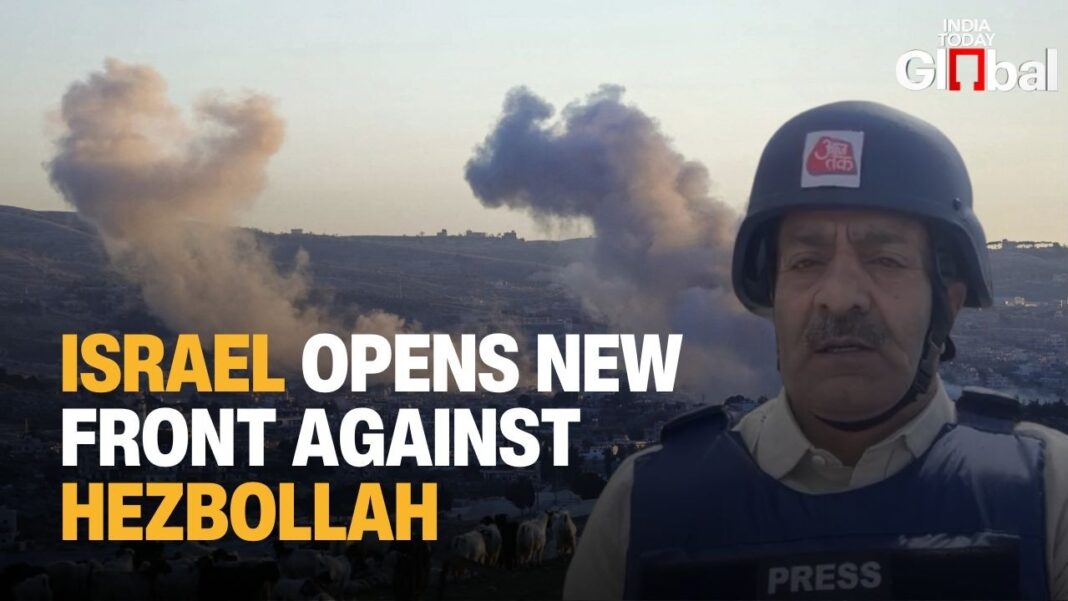
Meanwhile, hostilities between Hezbollah and Israel have already intensified along the Lebanese frontier. Earlier this week, Hezbollah fired multiple rockets into Israeli territory in what it described as a gesture of solidarity with Iran amid the escalating regional war.
Israel responded swiftly. According to the information provided in The Algemeiner report, Israeli forces launched a series of airstrikes targeting Hezbollah military infrastructure across southern and central Lebanon. The attacks struck weapons depots, command facilities, and other installations associated with the organization’s military network.
In one of the most significant operations, the Israeli military announced that it had eliminated the commander of Palestinian Islamic Jihad in Lebanon. Israeli officials described the strike as a major setback for the Iran-backed terrorist group, which has maintained close operational ties with Hezbollah.
Israel’s defense establishment has signaled that its response to Hezbollah’s involvement in the conflict will be both forceful and sustained. Defense Minister Israel Katz recently authorized the Israeli military to advance further into Lebanese territory and secure additional strategic positions.
Israeli troops have already maintained control over several hilltops along the border since the war with Hezbollah in 2024, a conflict that significantly weakened the organization’s leadership and operational capabilities.
The renewed escalation has deepened political divisions within Lebanon itself. Hezbollah remains the only armed faction in the country to retain its weapons following the end of Lebanon’s devastating civil war in 1990. While the group’s supporters view its arsenal as a necessary deterrent against Israel, critics argue that its military activities jeopardize Lebanon’s stability and sovereignty.
The latest confrontation has intensified those debates. In a move widely described as unprecedented, the Lebanese government recently announced a ban on Hezbollah’s independent military activities.
The decision marked a rare attempt by Beirut to assert authority over the powerful militia, which for decades has operated with considerable autonomy.
The reaction from Hezbollah’s allies was swift and hostile. The pro-Hezbollah newspaper Al-Akhbar denounced the government’s decision as a capitulation to external pressure, warning that such measures could ignite internal conflict.
Observers cited by The Algemeiner note that Lebanon’s fragile political system has long struggled to reconcile the presence of Hezbollah’s armed wing with the authority of the state. The current crisis may further strain that balance, particularly if Israeli military operations continue to intensify.
Meanwhile, the broader regional war shows little sign of abating. Iran has vowed to continue confronting Israeli and American forces, while Israel has indicated it will respond decisively to any attack from Hezbollah or other Iranian proxies.
The possibility that Hezbollah could open a second front from Syrian territory would significantly raise the stakes of the conflict. Such a move could draw additional actors into the fighting and potentially destabilize already fragile borders across the region.
For Syria, the challenge is particularly acute. The government in Damascus is attempting to rebuild the country after more than a decade of civil war while simultaneously preventing its territory from becoming a new battlefield in the escalating confrontation.
As The Algemeiner reported, the Syrian leadership appears determined to prevent Hezbollah or other terrorist groups from dragging the country into another destructive conflict.
Whether those efforts will succeed remains uncertain. The overlapping alliances and rivalries that define Middle Eastern geopolitics have often made it difficult for governments to control the actions of powerful non-state actors operating within their borders.
What is clear is that the conflict involving Israel, Iran, and their respective allies has already begun to reshape the strategic landscape of the region. With tensions rising along multiple frontiers—from Lebanon to Syria and beyond—the prospect of a broader regional war is becoming an increasingly pressing concern.
