



|
Getting your Trinity Audio player ready...
|
By: Fern Sidman
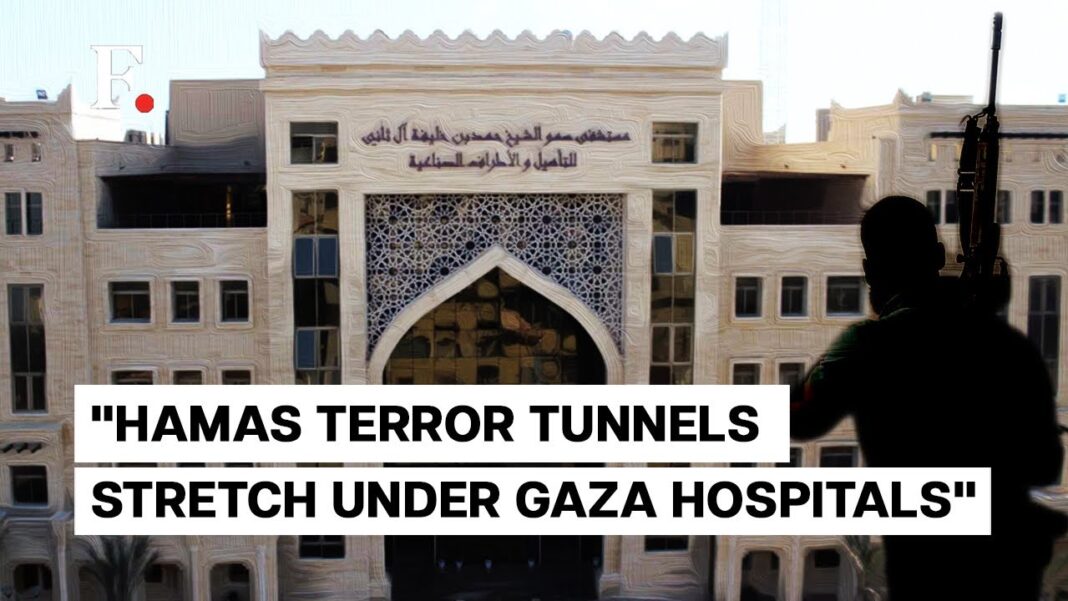
The revelation of two internal Hamas documents, recently declassified by the Israel Defense Forces (IDF) and translated by NGO Monitor, has once again cast an unflinching spotlight on one of the most disturbing dimensions of the Gaza conflict: the weaponization of hospitals and medical facilities by the terror organization, and the silence—if not outright complicity—of prominent international NGOs operating in those same spaces.
As reported on Thursday in The Jewish News Syndicate (JNS), the memos, dated February and March 2020, provide written evidence that groups such as the International Committee of the Red Cross (ICRC) and Doctors Without Borders (MSF) were fully aware of Hamas’s pervasive use of medical facilities for military purposes, even as they continued to issue public statements condemning Israel for targeting hospitals during military operations.
The documents, originating from Hamas’s Interior Security Mechanism (ISM)—an arm of the Ministry of Interior and National Security—describe in chilling detail how Hamas leaders, fighters, and infrastructure operated openly in Gaza hospitals, sometimes with NGO offices located mere feet away.
The February 2020 memo notes without hesitation that the Red Cross “chose a wing in Al-Shifa medical complex that is adjacent to the [Hamas] movement offices.” Another passage describes the French branch of Doctors Without Borders selecting “the only room in Abu Yousef El-Najar Hospital that has a safe communication landline.”
Far from being incidental, the memos confirm Hamas’s official view of medical centers not as neutral sanctuaries but as “a place of gathering for numerous leaders of the [Hamas] movement and the government during times of escalation.” In other words, hospitals are explicitly treated as Hamas’s secure bases of operation, blending human shields with command functions.
As the JNS report observed, these admissions strip away the fig leaf of deniability that NGOs have leaned on for years when confronted with evidence of Hamas’s misuse of hospitals. The documents show unequivocally that Hamas never sought to separate its terror infrastructure from civilian medical facilities—and that NGOs, by their own proximity, could not have failed to notice.
Gerald Steinberg, president of NGO Monitor, told JNS that the documents demolish the credibility of international organizations that have repeatedly condemned Israel’s military actions while omitting Hamas’s culpability.
“While repeatedly echoing Hamas allegations and condemning Israel’s operations to end the exploitation of hospitals for terror, these groups clearly knew that Hamas exploited these facilities and chose to remain silent,” Steinberg said.
For Anne Herzberg, NGO Monitor’s legal adviser, the evidence is even more damning. “The documents show they had to report to Hamas. They had to provide Hamas the names of those working for them. They knew they were being monitored by Hamas,” she told JNS.
Herzberg added that it was disingenuous for the ICRC to insist it raised concerns privately while reserving its public outrage exclusively for Israel. “Covering for Hamas only encourages the terror group to continue using hospitals as human shields,” she said.
The memos also illustrate Hamas’s paranoia about foreign NGOs potentially serving as intelligence conduits for Israel. The ISM documents reveal that Hamas’s Interior Ministry insisted on pre-approving NGO staff, restricting their movements, and assigning security escorts to foreign medical teams.
In short, NGOs in Gaza were compelled to operate entirely on Hamas’s terms, ensuring the terror group retained tight control of their activities. As the JNS report noted, this system made NGOs unwitting—or perhaps willing—participants in Hamas’s weaponization of humanitarian infrastructure.
When pressed by JNS, the ICRC issued a boilerplate reply: that international humanitarian law requires protection of medical facilities and that the organization raises concerns “confidentially” with relevant parties. But as Herzberg observed, this confidential diplomacy exists alongside highly public condemnations of Israel. The asymmetry is glaring.
Doctors Without Borders, meanwhile, continues to claim ignorance. On its website, MSF asserts: “MSF has no direct information that Hamas fighters are using hospitals in the Gaza Strip for military purposes. If we had been made aware … we would not have maintained activities there for obvious reasons of responsibility and the safety of our teams.”
But the Hamas memos contradict this outright, specifically citing Al-Shifa and Nasser hospitals, facilities where MSF has maintained operations. Worse still, as the JNS report highlighted, CCTV footage from November 2023 showed Hamas operatives marching Israeli hostages through Al-Shifa, making the denial increasingly untenable.
The Hamas documents are not the only evidence. Last month, former hostage Ilana Gritzewsky told the U.N. Security Council how she and others were confined inside Nasser Hospital, guarded by armed Hamas operatives. “They took us through the back entrance and walked us past all the civilians,” she testified. “In the hospital, there was an area that was closed off and used only by Hamas, with an armed guard.”
These accounts, combined with documentary evidence, erase any plausible claim by NGOs that they were unaware of Hamas’s activities in hospitals. The knowledge was not just circumstantial—it was overt.
The ICRC itself acknowledges on its website that hospitals enjoy protected status under international law only so long as they are not used for hostile purposes. The moment they become bases for military operations, that protection is nullified.
By embedding command centers and weapons caches in hospitals, Hamas forfeited that protection, exposing the facilities to legitimate military targeting. As Herzberg told JNS, “They’re turning them into military objectives.” Yet NGOs continue to portray every Israeli strike near a hospital as an assault on humanitarian law, willfully omitting the crucial context that Hamas created the danger in the first place.
For Herzberg, perhaps the most troubling revelation is not Hamas’s exploitation—which has been obvious for decades—but the corruption of NGOs themselves. “They’ve been corrupted. They’re pushing disinformation,” she told JNS.
This corruption is not merely rhetorical. By refusing to withdraw from facilities once Hamas imposed its reporting and monitoring requirements, NGOs effectively signaled their willingness to subordinate humanitarian neutrality to Hamas’s terror apparatus. Their silence is not passive; it is an active choice to remain embedded in a system of exploitation.
The consequences of this silence are measured in civilian lives. Each time NGOs echo Hamas talking points and condemn Israel for striking hospitals, they reinforce the incentive for Hamas to continue using medical facilities as shields. The terror group knows that global outrage will focus on Israel, while its own violations of humanitarian law remain shrouded in NGO silence or denial.
This cycle not only endangers Israeli civilians but also imperils Gazan patients and medical workers, who are forced to inhabit facilities that Hamas has turned into legitimate military targets.
The declassification of these Hamas memos marks a watershed moment. No longer can international NGOs claim plausible deniability. The documents provide hard evidence that they knew, they reported to Hamas, and they coexisted within the infrastructure of terror.
As the JNS report indicated, the credibility of groups such as the Red Cross and Doctors Without Borders is now on the line. Their insistence on neutrality rings hollow against the backdrop of documents showing they accepted Hamas’s oversight and remained silent about its abuses.
The revelations from these Hamas documents strike at the heart of humanitarian legitimacy. If the Red Cross, Doctors Without Borders, and other NGOs cannot uphold neutrality in the face of terror groups turning hospitals into bunkers, then their condemnations of Israel lose all moral authority.
As Gerald Steinberg of NGO Monitor observed, NGOs had a choice. They could have refused Hamas’s terms and withdrawn, maintaining their integrity even at the cost of presence. Instead, they stayed—and by staying, they became part of the system Hamas built.
The price of that choice is the erosion of public trust and the perpetuation of a cycle where terror thrives behind the shield of humanitarian silence. And as the JNS report has made clear, it is time for the international community to demand accountability not only from Hamas but also from the NGOs that have enabled its strategy of human shields through their silence and complicity.

“the credibility of groups such as the Red Cross and Doctors Without Borders is now on the line.” Everyone paying attention at all KNOWS such claims NEVER had ANY credibility and should have been clearly called out from the beginning, and are an indictment of the news organizations.
Correction: “claims” should read “groups”.
I suspect there are more than a few folks paying attention not only knew the Red Cross and Doctors Without Boarders but were thankful for their support in the war against Israel.