



|
Getting your Trinity Audio player ready...
|
Edited by: TJVNews.com
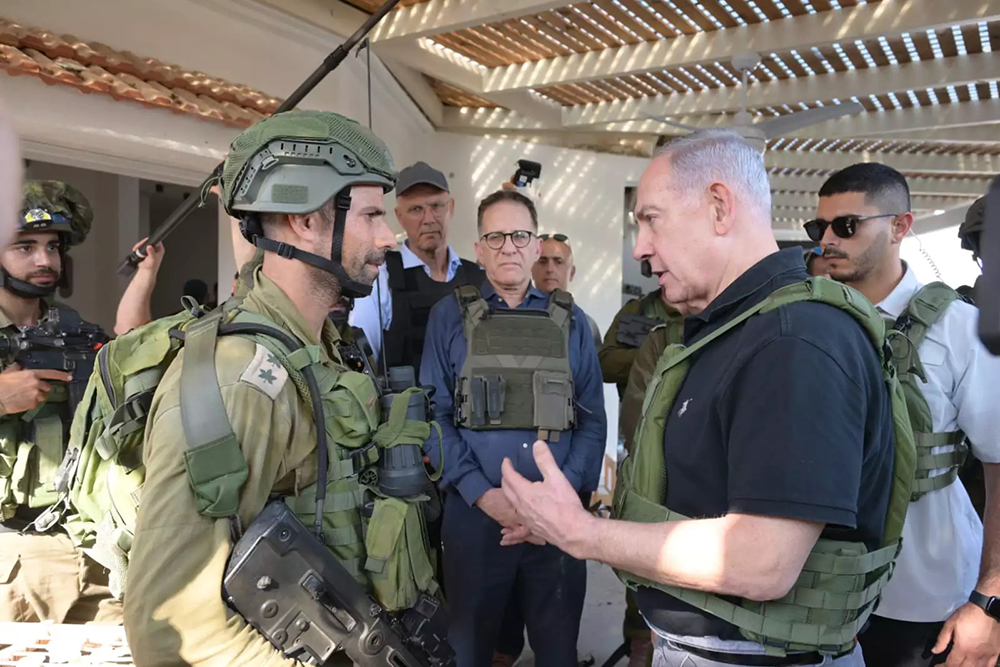
In a resolute statement, Israeli Prime Minister Benjamin Netanyahu pledged on Tuesday that his government would not acquiesce to the release of large numbers of Palestinian terrorists or withdraw troops from Gaza as part of any potential hostage deal with the Hamas terrorist organization, as was reported by the Jewish News Syndicate. Speaking at the Bnei David pre-military academy in Eli, located in Samaria’s Binyamin region, Netanyahu asserted his commitment to achieving the goals of the ongoing conflict.
“We will not withdraw the Israel Defense Forces from the Gaza Strip, and we will not release thousands of terrorists. None of this will happen,” declared Netanyahu to students and staff during his visit to the academy, which has played a prominent role in the religious Zionist pre-army education in Israel since its establishment in 1988.
According to the information provided in the JNS report, Netanyahu outlined his uncompromising stance, emphasizing that the government would not conclude the conflict without achieving its objectives. These objectives, as stated by the Prime Minister, include the elimination of Hamas, the safe return of all hostages, and ensuring that Gaza does not pose a future threat to Israel’s security.
Bnei David, known for its commitment to religious Zionism, has become a significant institution in shaping the future leaders of the Israel Defense Forces (IDF), as was indicated in the JNS report. Approximately 40% of its students have gone on to become officers in the IDF. However, the academy has not been untouched by the ongoing conflict, as 14 of its graduates have lost their lives in battles against Hamas terrorists since October 7.
Netanyahu’s statements came amid apparent progress in talks regarding an agreement to free the 136 captives who remain in Gaza. The report on the JNS web site said that these individuals were abducted by the Hamas terrorist group during their attack on southern Israel on October 7. The Prime Minister’s remarks signaled a commitment to a firm stance in negotiations, reinforcing his dedication to the nation’s security objectives.
Notably, Israel’s National Security Minister and leader of the Otzma Yehudit Party, Itamar Ben-Gvir, took to Twitter to express his concerns and issue a threat. Ben-Gvir warned that his party would bring down the government if it reached a “reckless” agreement with Hamas, the JNS report said. This statement highlighted the internal political tensions surrounding the ongoing negotiations.
In response to Ben-Gvir’s tweet, opposition leader Yair Lapid, head of the Yesh Atid Party, expressed his party’s willingness to provide full backing for a deal to free the hostages. The JNS report also said that Lapid, who has met with numerous families of abductees in the past 116 days, assured that his party would serve as a safety net for any agreement that ensures the safe return of the captives to their homes and families.
In a significant development, Ismail Haniyeh, the Qatar-based political bureau chief of Hamas, announced on Tuesday that the terrorist group would carefully examine a proposal resulting from negotiations in Paris on Sunday. As per the JNS report, Haniyeh expressed his intention to visit Cairo for further discussions on the initiative, signaling potential progress in the ongoing efforts to establish a ceasefire between Hamas and Israel.
Hamas, a terrorist organization operating in the Palestinian territories, has identified ending Israel’s military offensive in Gaza and the withdrawal of all Israeli troops from the coastal enclave as its primary priorities, JNS reported. This demand stands in contrast to Israel’s stated goal of dismantling the terrorist group, and highlighting the deep-seated differences between the two parties.
The Paris meeting, attended by high-level representatives from Israel, Qatar, Egypt, and the United States, was termed “constructive” by the Israeli Prime Minister’s Office, according to the information in the JNS report. However, it was also acknowledged that significant gaps still exist, prompting a commitment to continued discussions at additional meetings scheduled for the upcoming week.
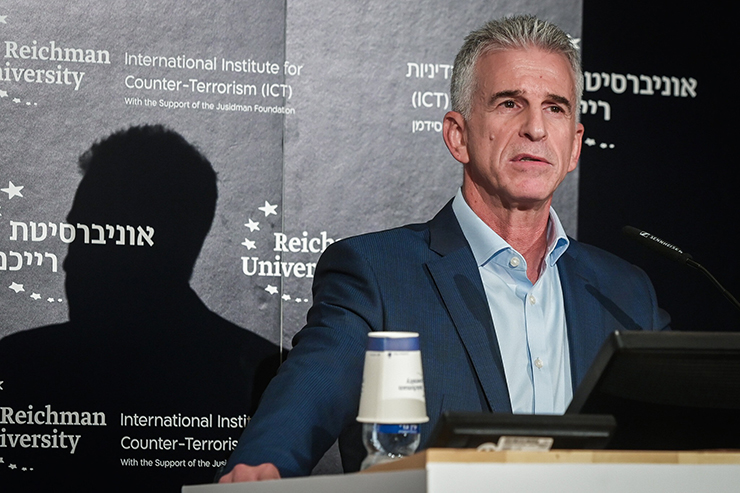
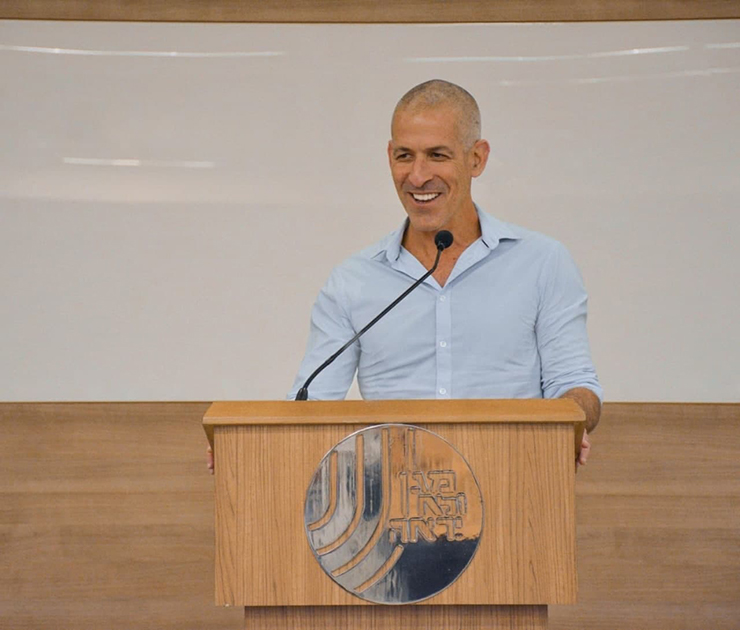
The Israeli delegation, led by Mossad chief David Barnea, Israel Security Agency (Shin Bet) Director Ronen Bar, and Maj. Gen. Nitzan Alon, the IDF’s point man for hostage negotiations, engaged with Qatari and Egyptian mediators in Paris. The report on the JNS web site also said that Qatari Prime Minister Sheikh Mohammed bin Abdulrahman Al Thani, Abbas Kamel, head of the Egyptian General Intelligence Directorate, and CIA Director William Burns were also integral to the discussions.
The New York Times reported that the current focus of negotiations revolves around a potential ceasefire lasting up to two months, contingent on the staged release of over 100 hostages held by the parties involved. The report on JNS said that as part of the proposed agreement, Israel would need to halt its military campaign against Hamas, and there are indications that Israel might agree to commute the prison sentences of an unspecified number of Palestinian terrorists.
Saudi-owned Al-Hadath TV reported a “breakthrough” in the talks on Sunday, suggesting progress towards a two-month ceasefire-for-hostages deal. Additionally, it was noted that Israel had reportedly consented to allowing more aid into the Gaza Strip as part of the agreement.
The emerging dynamics suggest a complex interplay of political interests and security imperatives as Israel navigates the delicate process of negotiating the release of hostages while safeguarding the nation’s long-term security objectives. The looming threat of a government collapse adds an additional layer of complexity to an already challenging situation.
In a recent development, Israeli forces in Gaza have reportedly uncovered a secret document outlining Hamas’s psychological warfare strategy against the Israeli public. Channel 12, a local news outlet, revealed on Monday that the document was discovered at a site visited by Yahya Sinwar, Hamas’s senior leader in the Gaza Strip, though it remains unclear whether Sinwar himself authored the paper.
According to the Channel 12 report, the document directs the continued publication of photos and videos of the Israeli hostages held by Hamas, emphasizing the psychological pressure they create, according to JNS. Currently, there are 136 captives in the hands of the terrorist group, adding a disturbing layer to their ongoing strategy.
Notably, the directive identifies Israeli Defense Minister Yoav Gallant as a target for psychological pressure, with the belief that he is particularly susceptible to this tactic. Additionally, the document underscores the importance of maintaining a narrative that places the responsibility for the failures of the Oct. 7 terrorist attack on Israeli Prime Minister Benjamin Netanyahu, the report added. It also aims to convey the idea that IDF ground operations will not create conditions conducive to the release of the remaining hostages.
The document further highlights the social divide within Israel as a focal point for their strategy, intending to exploit existing tensions. The emphasis on increasing pressure surrounding the issue of hostages and obstructing Israel’s war efforts by “putting sticks” in the wheels of its military operations reveals the depth of Hamas’s psychological warfare tactics.
Yahya Sinwar, believed to be hiding in the Hamas stronghold of Khan Yunis in the southern Gaza Strip, has reportedly surrounded himself with a significant number of living hostages. JNS reported that this information aligns with the broader context of the IDF’s major offensive in Khan Yunis, initiated on Jan. 21, resulting in the death of approximately 3,000 Hamas terrorists, constituting a third of the group’s fighting forces in the city. Recent days have seen the arrest of 340 Hamas terrorists, showcasing the intensity of the ongoing military operations.
The IDF’s combat teams from the 98th Division are actively engaged in the vast tunnel network beneath Khan Yunis, working to dismantle tunnels and uncovering critical infrastructure, including a major rocket-making factory and offices of senior Hamas officials, including Sinwar.
While Sinwar remains elusive, IDF International Spokesperson Lt. Col. Richard Hecht has declared that Sinwar and his entire command team are “in our sights,” the JNS report said. Hecht drew a parallel between Sinwar and Osama bin Laden, emphasizing Sinwar’s role as the mastermind behind the conflict. Sinwar’s eventual demise seems inevitable, with a senior Biden administration official pledging that “justice will be served” in December.
As the IDF continues its offensive and intelligence efforts, the situation remains dynamic, with the prospect of a resolution to the crisis hanging in the balance.
In a meticulously executed overnight operation on Monday, Israeli forces successfully eliminated three members of a Hamas terror cell at the Ibn Sina hospital in Jenin, located in the Samaria region. The cell was reportedly planning imminent terror attacks inspired by Hamas’s Oct. 7 massacre, according to the Israel Defense Forces (IDF).
The undercover operation unfolded rapidly, lasting a mere 10 minutes, as Israeli forces entered the hospital disguised as doctors, nurses, and Palestinian women, the JNS report said. Swiftly navigating to a safe room on the third floor, they utilized silenced weapons to neutralize the terrorists before exiting the premises unharmed.
One of the identified terrorists was Muhammad Jalamneh, 27, who, according to the IDF, had maintained contact with Hamas leaders abroad, procured weapons for a planned shooting attack, and had previously been injured while plotting a car bombing. The other two terrorists were identified as brothers Muhammad and Basel Ghazawi. Muhammad was implicated in a shooting attack on Israeli troops, while Basel was associated with the Palestinian Islamic Jihad terror group.
THEJNS report also indicated that the IDF highlighted the long-standing use of the hospital by Palestinian terrorists as a base for planning and executing attacks, illustrating what they termed “another example of the cynical use by terror groups of civilian spaces and hospitals as cover and as human shields.”

This incident follows another significant counterterror operation overnight Sunday when Israeli security forces uncovered a tunnel shaft rigged with explosive charges in the Jenin refugee camp. In parallel operations across Judea and Samaria, 19 Palestinians were arrested. The IDF reported that the Palestinians had booby-trapped the shaft with the intent of harming soldiers, and two wanted terrorists were apprehended inside the camp, with weapons confiscated.
This is not the first time Israeli forces have taken action in Jenin. In November, five Palestinian terrorists were eliminated during a counterterror raid, and an Israeli drone struck a group of terrorists firing on soldiers. JNS reported that some of the terrorists attempted to flee towards the Ibn Sina hospital, leading to the arrest of one individual at the entrance with three M-16 rifles found in his vehicle.
The use of hospitals by Palestinian terrorist groups has been a recurring concern. Earlier this month, U.S. spy agencies verified Israeli claims that Al Shifa Hospital in Gaza City served as a command center and hostage holding site for Hamas and other Palestinian terrorists. The JNS report said that in late November, the IDF released extensive video evidence of terror tunnels under Shifa Hospital, emphasizing Hamas’s systematic use of hospitals for its operations.
In a significant announcement, Israeli Defense Minister Yoav Gallant revealed on Tuesday that the IDF would maintain full security control over the Gaza Strip once the conflict with Hamas concludes, according to information provided in the JNS report. This decision aims to grant the IDF the freedom to operate in Gaza similarly to its current activities in Judea and Samaria.
During a briefing with Israeli lawmakers at his Tel Aviv office, Minister Gallant emphasized that while Israel would exert military control, it would not extend civilian control over Gaza. He highlighted the recent IDF raid on the Ibn Sina hospital in Jenin, where three members of a Hamas cell planning imminent terror attacks were eliminated. Gallant asserted that achieving military freedom of operation without civilian control is possible in Gaza, drawing parallels with the situation in Jenin.
Jenin, currently under the control of the Ramallah-based Palestinian Authority (P.A.), serves as an example of Israel’s approach to areas it deems essential for security operations. However, the United States insists on transferring control of Gaza to the P.A. after the war. Israel opposes this due to the P.A.’s overt support for terrorism, which has been a longstanding point of contention.
A recent survey conducted by Tel Aviv University revealed that 68.9% of the Jewish Israeli public favors IDF security control in Gaza, as was noted in the JNS report. Only 25% support rule by international and regional Arab forces, and a mere 2.2% believe that the P.A. should assume security responsibility in the Strip.
Israeli Prime Minister Benjamin Netanyahu has previously pledged to retain overall security responsibility for Gaza “for an indefinite period” after the destruction of Hamas. He emphasized the connection between Israeli security control and preventing the resurgence of terrorism, citing the Oct. 7 massacre as evidence. JNS reported that Netanyahu’s stance, however, puts his administration at odds with the Biden White House, which has voiced opposition to certain temporary Israeli security measures within the Strip.
In a separate development, Israeli forces operating in southern Gaza targeted and destroyed Hamas rocket launchers. This action followed a significant rocket barrage fired by Hamas at the Tel Aviv area, underscoring the ongoing military challenges faced by Israel in its efforts to ensure security in the region.
The conflict between Israel and Hamas entered a new phase on Monday as missile attacks triggered sirens in Tel Aviv, Bat Yam, Rishon Letzion, and Holon. While there were no reported injuries, several cars suffered damage in the attacks. In response, Israeli forces swiftly conducted targeted airstrikes, directing the strikes with precision to destroy the launchers responsible for the attacks. The IDF revealed that one of the destroyed launchers was positioned alongside mortars, indicating a readiness for further attacks.
Israeli news outlet Ynet reported insights from a senior security official, stating that the IDF had successfully destroyed two out of the four Hamas battalions operating in the Khan Yunis region. The report indicated that approximately 3,000 out of the estimated 4,000 Hamas and Palestinian Islamic Jihad terrorists in Khan Yunis have been killed during the battles, both above and below ground.
