



|
Getting your Trinity Audio player ready...
|
Dan McLaughlin (National Review)
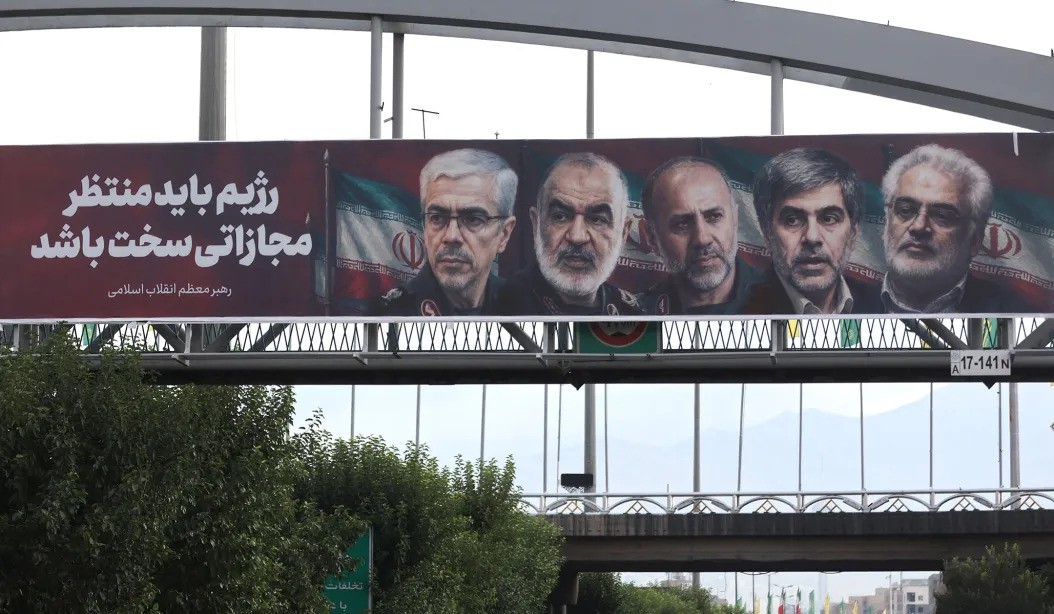
In the early morning hours of June 13, Israel struck Iran, taking out key ballistic missile and drone sites and largely eliminating the Islamic Republic’s military leadership in one fell swoop. Israel allegedly lured Iran’s top military commanders into a meeting only to take them out with a precision strike. It was the largest decapitation strike in modern military history.
Israel also killed the regime’s top nuclear scientists, proving that you can, it turns out, kill an idea. The Islamic Republic’s dreams of destroying Israel and murdering Jews in a nuclear holocaust went with them. Subsequent U.S. strikes on Iranian nuclear sites were enabled by Israeli intelligence, which had “boots on the ground beforehand” and had been monitoring multiple locations “for years,” according to the Times of London. The Pentagon recently assessed that the country’s nuclear program has been set back by two years or longer.
Many top Iranian officials were killed in their residences with precision strikes, indicating that Israel literally knew where they slept — often down to the very room. Some apparatchiks attempted to flee, only to be killed later in other hideouts that, unbeknownst to them, Israeli forces already knew about. While Israel was bombing key sites and officials, it also made menacing phone calls to lower-level Iranian military leaders. In every sense, Israel had Iran’s number.
The Decline of the Iranian Empire
Indeed, prior to the attack, Israel even built a covert drone base inside of Iran, which had been constructed over several months with parts smuggled into the country. One unnamed Israeli official told the Times of Israel that the operation relied on “groundbreaking thinking, bold planning and surgical operation of advanced technologies, special forces and agents operating in the heart of Iran while totally evading the eyes of local intelligence.” If this sounds a bit like bragging, it is well-deserved.
Israel, it seems, was able to operate with near impunity on Iranian soil. But its success didn’t happen overnight.
Indeed, the history of Israeli intelligence operations in Iran is filled with twists and turns and highs and lows. Iran’s support for terrorism, its attempts to acquire nuclear weapons, and its genocidal ambitions are the gravest threat to Israeli security in the tiny nation’s existence. But it was not always thus.
On March 13, 1978, two Israeli officials took a secret flight to Kish, an island ten miles off the Iranian shore in the Persian Gulf. The Mossad’s station chief in Iran, Reuven Merhav, was accompanied by Uri Lubrani, Israel’s ambassador to the country. Iran’s longtime ruler, Mohammad Reza Pahlavi, faced mounting opposition.
Merhav and Lubrani gave a warning to Israel’s security establishment. The Shah’s grip on power was coming loose. His attempts at modernization were too far and too fast for many of the country’s influential clerics and retrograde elements, and both too slow and not enough for the secular establishment. The demise of the Pahlavi dynasty loomed.
Yet Israel’s foreign ministry and the Mossad, its premier intelligence service, were unreceptive. Nor were they alone. On the eve of Iran’s Islamic Revolution, the CIA believed that there would be “no radical change in Iranian political behavior in the near future.” They were soon proven wrong.
On January 16, 1979, the Shah left for Egypt, taking key aides and a box of Iranian soil with him. The next day, Shapour Bakhtiar, the secular prime minister now leading the country, asked the Mossad to kill Ayatollah Ruhollah Khomeini, the radical septuagenarian cleric who had been fomenting protests from his exile in Paris. The Mossad refused.
As the journalist Ronen Bergman recounts, one divisional head said: “Let Khomeini go back to Iran. He won’t last. The military and SAVAK [the Shah’s secret police] will handle him and his people protesting in the streets of the cities.” The official added that Khomeini “represents Iran’s past, not its future.”
But Khomeini was Iran’s future. The forces unleashed by Iran’s 1979 Islamic Revolution would forever change the Middle East. The half-century of wars — the so-called Global War on Terror — are unthinkable absent the ascent of a radical theocracy with millenarian ambitions. Khomeini sought to fashion an Islamic epoch with himself at the forefront.
The Islamic Republic’s first target for exporting the revolution was Lebanon. In July 1982, Iran and Syria initiated a military agreement that allowed the Islamic Revolutionary Guard Corps to begin operating in the Levantine nation. Lebanon was a fitting choice — in the early 1970s, Palestine Liberation Organization (PLO) operatives had trained the nucleus of the IRGC. Now the terror was coming full circle, with IRGC agents helping fashion what would become the jewel in Tehran’s crown: Hezbollah, the Party of God.
