



|
Getting your Trinity Audio player ready...
|
Report: Washington Weighing Targeted Strikes on Iran’s Leaders, Missile Facilities, and Nuclear Sites
By: Fern Sidman
As the diplomatic track with Tehran shows signs of strain, a different calculus is unfolding behind closed doors in Washington. According to senior American and foreign officials cited in recent reporting, the United States is preparing for the possibility that negotiations with Iran may collapse, leaving the White House with a menu of military options that range from targeted assassinations of senior Iranian leaders to a sustained aerial campaign against the Islamic Republic’s nuclear and missile infrastructure. On Thursday, World Israel News reported that the scope and intensity of the military posture now being assembled across the Middle East suggest that contingency planning has advanced beyond theoretical exercises and into a phase of concrete operational readiness.
The Wall Street Journal disclosed that President Trump’s national security advisers have briefed him on scenarios that envision the deliberate elimination of dozens of Iranian decision-makers, a strategy that, in the assessment of some officials, could weaken the regime to the point of collapse. Such proposals are not presented lightly. They reflect a strategic judgment that Iran’s leadership structure—particularly within the Islamic Revolutionary Guard Corps and the upper echelons of the clerical establishment—constitutes the nervous system of a state that has, for decades, pursued regional hegemony through proxy warfare, ballistic missile development, and an advancing nuclear program. World Israel News has emphasized that these deliberations occur against the backdrop of years of Iranian defiance of international pressure and repeated threats directed at Israel, American forces, and U.S. allies throughout the region.
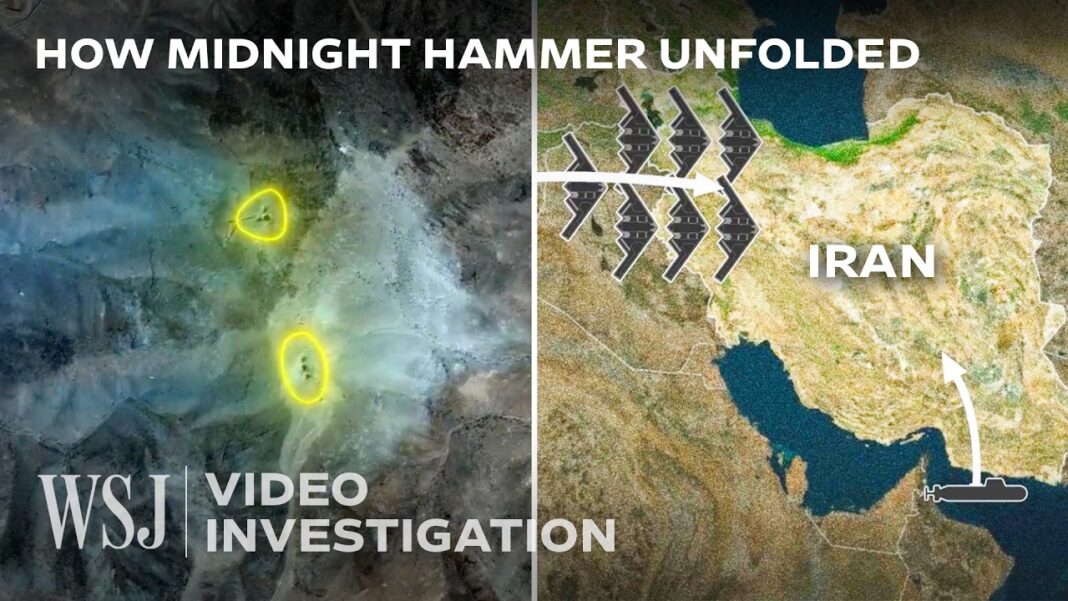
Beyond targeted killings, the range of options before the president reportedly includes extensive strikes against Iran’s nuclear facilities and its ballistic missile infrastructure. Such operations, officials have cautioned, would not resemble the limited, symbolic strikes that have punctuated Middle Eastern crises in the past. Rather, they would likely constitute a broad and sustained campaign designed to cripple Iran’s strategic capabilities over a period of weeks. The United States is now assembling what may be the largest concentration of American air power in the Middle East since the opening phases of the 2003 invasion of Iraq, a comparison that speaks volumes about the scale of the preparations underway.
Hundreds of warplanes have been deployed across the region, according to officials familiar with the posture, with strategic bombers positioned at Diego Garcia to provide long-range strike capability. One aircraft carrier battle group is already operating in the Persian Gulf, while another is transiting toward the eastern Mediterranean, forming a maritime arc of power projection that allows for sustained air operations. This configuration affords the U.S. military the capacity to conduct round-the-clock sorties for weeks on end, a tempo that would be required to suppress Iran’s air defenses, degrade its command-and-control networks, and systematically dismantle hardened nuclear sites.
These preparations have unfolded even as diplomatic engagement continues. The United States and Iran held a second round of talks in Geneva on Tuesday, a reminder that the administration continues to publicly affirm its preference for a negotiated outcome. Yet World Israel News notes that the juxtaposition of high-level diplomacy with accelerated military deployment reflects a dual-track strategy: the pursuit of dialogue underwritten by the credible threat of overwhelming force. This approach is premised on the belief that Iran’s leadership is more likely to make concessions when confronted with the tangible prospect of catastrophic military consequences.
Tehran, for its part, appears to be reading the signals clearly. Iranian officials have embarked on their own preparations for the possibility of an American-led campaign. On Monday and Tuesday, the Islamic Revolutionary Guard Corps conducted naval exercises in the Strait of Hormuz, a narrow maritime corridor through which roughly one-fifth of the world’s oil supply transits. The drills included live-fire components, a conspicuous display of Iran’s capacity to threaten global energy flows in the event of hostilities. World Israel News has reported that such maneuvers are widely interpreted as both a warning to Washington and a signal to regional actors that Iran retains asymmetric tools capable of inflicting economic shock well beyond the battlefield.
Within Iran’s borders, satellite imagery and intelligence assessments indicate that sensitive installations—including nuclear facilities—are being reinforced. Entrances to underground complexes are being strengthened, additional protective measures are being layered over vulnerable structures, and contingency plans are being disseminated to commanders across the country. Iranian leaders have reportedly instructed senior military officials to prepare for scenarios in which command hierarchies may be disrupted by targeted strikes, an acknowledgment that the regime is contemplating the very decapitation strategies now being discussed in Washington.
The strategic implications of these developments are profound, not only for the United States and Iran but for the broader Middle East. World Israel News has repeatedly highlighted Israel’s acute stake in the outcome of this standoff. Iranian nuclear advancement and missile proliferation are viewed in Jerusalem as existential threats, and Israeli officials have long argued that time is working in Tehran’s favor. The possibility of a coordinated U.S.-led campaign against Iran’s nuclear infrastructure would therefore represent a watershed moment in regional security dynamics, potentially altering the balance of power that has undergirded Iran’s regional ambitions for decades.
Yet the prospect of targeted killings and expansive air campaigns also raises fraught ethical and legal questions. While proponents of such measures argue that eliminating key figures could disrupt Iran’s capacity for aggression, critics warn of unintended consequences, including the potential for widespread civilian harm, retaliatory attacks on American and allied targets, and a spiral of escalation that could engulf the region in a broader war. The memory of past interventions looms large, reminding policymakers that the destruction of physical infrastructure does not automatically translate into political transformation.
The administration’s calculus is further complicated by domestic and international political considerations. A sustained military campaign against Iran would reverberate through global markets, potentially driving energy prices upward and destabilizing fragile economies. World Israel News has pointed out that the Strait of Hormuz remains a chokepoint whose disruption could trigger worldwide economic turbulence. Moreover, a conflict of this magnitude would test alliances, as European partners and regional states weigh their own security concerns against the risks of entanglement in a protracted war.
At the heart of the current moment lies a stark question: can the threat of overwhelming force compel Iran to accept constraints on its nuclear and missile programs that it has resisted for years? The World Israel News report framed this dilemma as the defining strategic gamble of the administration’s approach to Tehran. Advocates of pressure argue that previous rounds of negotiations failed precisely because they were not backed by a sufficiently credible military threat. In their view, the current concentration of air power and the explicit discussion of regime-targeting options signal a seriousness of purpose that Iran cannot ignore.
Conversely, skeptics caution that Iran’s leadership may interpret these preparations not as leverage for negotiation but as confirmation of hostile intent, thereby hardening its resolve and accelerating its own preparations for confrontation. The IRGC’s drills in the Strait of Hormuz and the reinforcement of nuclear sites may be read as signs that Tehran is preparing for a scenario in which diplomacy collapses and military confrontation becomes inevitable. In such a climate, the margin for miscalculation narrows dangerously, with the risk that a single incident could ignite a conflagration neither side originally sought.
The coming days, as negotiations continue under the shadow of mobilized air power, will test the efficacy of this dual-track strategy. World Israel News reported that senior U.S. officials remain publicly committed to diplomacy, even as they privately prepare for war. This tension between stated preference and operational readiness encapsulates the precariousness of the moment. History suggests that when military preparations reach a certain threshold, they exert a momentum of their own, shaping perceptions and narrowing the range of politically viable options.
For Israel and its allies, the stakes could scarcely be higher. A successful diplomatic resolution could avert a war that would reshape the Middle East and reverberate across the globe. A failure, by contrast, could usher in a period of sustained conflict whose consequences would be felt for generations. The World Israel News report framed the present juncture as a hinge point, a moment when decisions taken in Washington and Tehran will determine whether the region moves toward a precarious accommodation or plunges into a new era of confrontation. In the balance between diplomacy and force, the future of Middle Eastern stability—and perhaps the contours of global security—now hang in the balan
