



Edited by: Fern Sidman
Notices appeared on a number of Iran-affiliated websites on Tuesday saying they had been seized by the United States government as part of law enforcement action, according to a Reuters report.
Iranian news agencies said that the U.S. government had seized several Iranian media websites and sites belonging to groups affiliated with Iran such as Yemen’s Houthi movement, as was reported by Reuters.
The website of Masirah TV, which is run by the Houthis, reads:
“The domain almasirah.net has been seized by the United States Government in accordance with a seizure warrant…as part of a law enforcement action by the Bureau of Industry and Security, Office of Export Enforcement and Federal Bureau of Investigation.”
Iran’s Arabic language Alalam TV said on its Telegram channel: “U.S authorities shut down Al-Alam TV’s website.”
A Department of Justice spokesperson had no immediate comment. Two U.S. government sources indicated that the Justice Department was preparing an announcement on this issue, as was reported by Reuters.
Reuters reported that notices have also appeared on websites of Iran’s Press TV and Lualua TV, a Bahraini independent channel which broadcasts from Britain.
Last October, U.S. prosecutors seized a network of web domains which they said were used in a campaign by Iran’s Revolutionary Guard Corps (IRGC) to spread political disinformation around the world, according to the Reuters report.
The DOJ said then that it had taken control of 92 domains used by the IRGC to pose as independent media outlets targeting audiences in the United States, Europe, Middle East and Southeast Asia.
In another related regional development, World Israel News reported that Iran shut down its only nuclear power plant on Sunday, citing an unspecified “technical defect” at the Bushehr reactor.
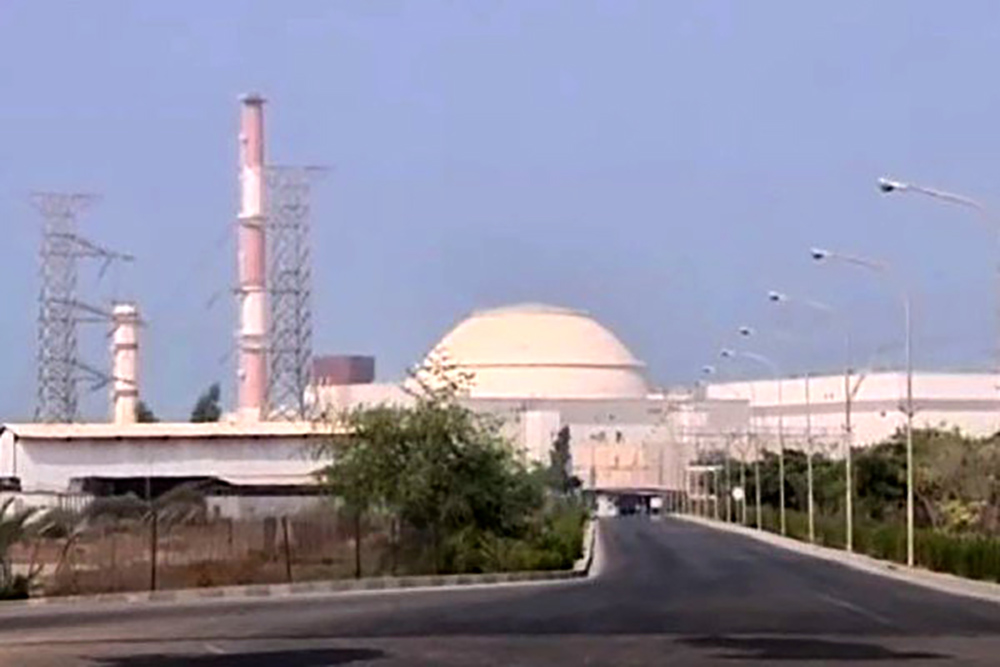
Iran’s Atomic Energy Organization said the reactor, which produces 1,000 megawatts of electricity, would be disconnected from the national power grid. An official from the state electric energy company said the shutdown would last “for three to four days” and urged people to minimize power consumption in the meantime.
It’s the first time Iran has reported an emergency shutdown of any kind at Bushehr.
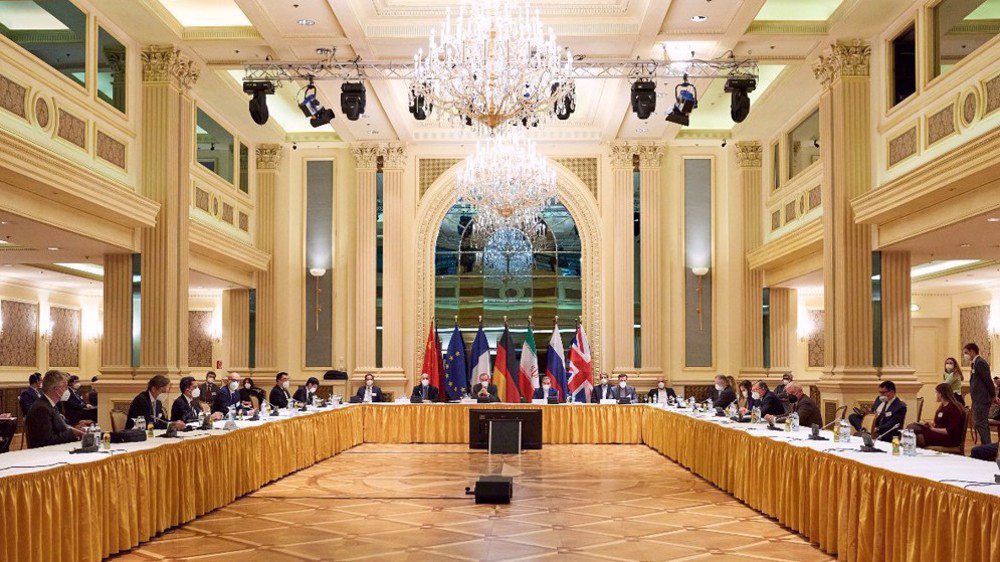
The report came as top diplomats said that further progress had been made at talks in Vienna on Sunday, where the U.S. and Iran are discussing a return to the JCPOA nuclear agreement, as was reported by WIN.
Iran’s lack of explanation for the shutdown fueled speculation that Bushehr was sabotaged by Israel, according to the WIN report. Over the past year, Iranian power stations, a petrochemical plant, a gas storage complex, a port terminal and other facilities have been beset by mysterious explosions and shutdowns widely assumed to be the result of Israeli sabotage and hacking.
WIN reported that Iran blamed most of those incidents on human error or flawed safety procedures while Israeli officials refused to comment.
However, in April, Iran blamed Israel for an explosion at its underground Natanz nuclear facility that damaged thousands of centrifuges, according to the WIN report. Before stepping down from his post in June, former Mossad chief Yossi Cohen hinted at Israel’s involvement in the Natanz incident.
Iran’s wave of unexplained blasts and power failures began shortly after hackers, who were traced back to Iran, unsuccessfully tried to raise the chlorine levels in an Israeli water treatment plant, as was reported by WIN. Although the attack was discovered and foiled, Israelis were shaken to learn that thousands of people could have been poisoned. Had certain failsafe measures triggered a shutdown, thousands more Israelis would have been left without water.
The Bushehr reactor is located on the coast of the Persian Gulf near active fault lines and is built to withstand powerful earthquakes. The facility has been periodically shaken by tremblors, though no seismic activity has been reported recently, according to the WIN report. A 5.9 magnitude earthquake struck the Bushehr province in April, but Iranian officials said no damage was caused.
Pertaining to the recent election of Iran’s new president, Ebrahim Raisi, the Associated Press reported that he would not meet with President Joe Biden nor negotiate over Tehran’s ballistic missile program and its support of regional terror proxies, sticking to a hard-line position following his landslide victory in last week’s election.
Judiciary chief Ebrahim Raisi also described himself as a “defender of human rights” when asked about his involvement in the 1988 mass execution of some 5,000 people. He is known as the “Butcher of Tehran.” It marked the first time he’s been put on the spot on live television over that dark moment in Iranian history at the end of the Iran-Iraq war, as was reported by AP..
“The U.S. is obliged to lift all oppressive sanctions against Iran,” Raisi said at the news conference.
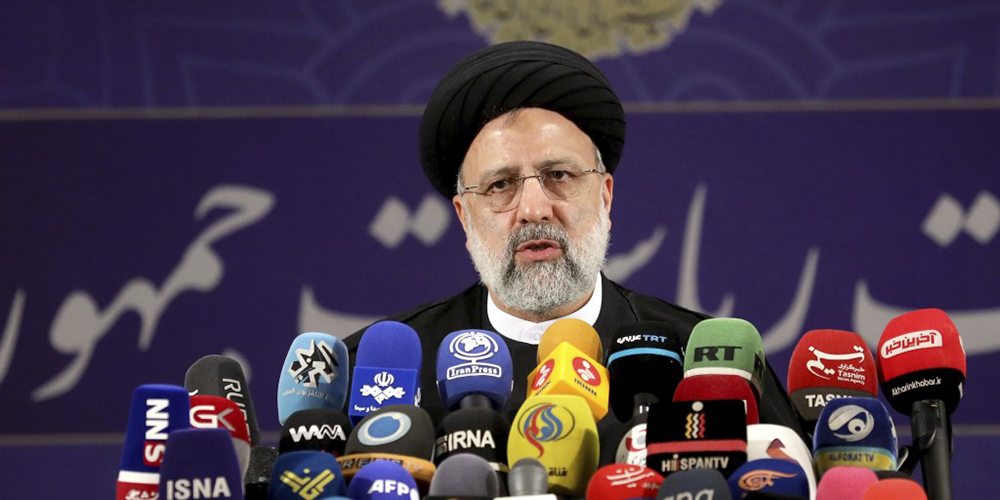
AP reported that Raisi sat in front of a sea of microphones, most from Iran and countries home to militias supported by Tehran. He looked nervous at the beginning of his comments but slowly became more at ease over the hour-long news conference.
Asked about Iran’s ballistic missile program and its support of regional terror proxies, Raisi described the issues as “non-negotiable,” as was reported by the AP.
Iran also relies on militias like Yemen’s Houthis, Gaza’s Hamas, and Lebanon’s Hezbollah, deemed terror groups by a number of entities throughout the world, to fight proxy wars against enemies like Saudi Arabia and Israel, respectively.
AP reported that on a possible meeting with Biden, Raisi simply answered: “No.” His competitor in the election, Abdolnasser Hemmati, had suggested during campaigning that he’d be potentially willing to meet Biden.
The White House did not immediately respond to Raisi’s statements Monday. Raisi will become the first serving Iranian president sanctioned by the U.S. government even before entering office, in part over his time as the head of Iran’s internationally criticized judiciary — one of the world’s top executioners.
AP reported that the so-called victory of Raisi, a protégé of Iran’s Supreme Leader Ayatollah Ali Khamenei, came amid the lowest turnout in the Islamic Republic’s history. Millions of Iranians stayed home in defiance of a vote they saw as tipped in Raisi’s favor.
Of those who did vote, 3.7 million people either accidentally or intentionally voided their ballots, far beyond the amount seen in previous elections and suggesting some wanted none of the four candidates, as was reported by the AP. In official results, Raisi won 17.9 million votes overall, nearly 62% of the total 28.9 million cast.
Observers have called the Iranian elections a sham.
Raisi’s victory puts hard-liners firmly in control across the government as negotiations in Vienna continue to try to save a tattered deal meant to limit Iran’s nuclear program, at a time when Tehran is enriching uranium at 60%, its highest levels ever, though still short of weapons-grade levels, according to the AP report.
Representatives of the world powers party to the deal returned to their capitals for consultations following the latest round of negotiations on Sunday.
Top diplomats from nations involved in the talks said that further progress had been made Sunday between Iran and global powers to try to restore a 2015 agreement to contain Iranian nuclear development that was abandoned by the Trump administration. They said it was now up to the governments involved in the negotiations to make political decisions, according to the AP report.
Raisi’s election victory has raised concerns that it could complicate a possible return to the nuclear agreement. In his remarks Monday, Raisi called sanctions relief as “central to our foreign policy” and exhorted the U.S. to “return and implement your commitments” in the deal.
AP reported that on Saudi Arabia, which has recently started secret talks with Iran in Baghdad to reduce tensions with Iran, Raisi said that Iran would have “no problem” with a possible reopening of the Saudi Embassy in Tehran and the “restoration of relations faces no barrier.” The embassy was closed in 2016 when relations deteriorated.
Raisi struck a defiant tone, however, when asked about the 1988 executions, which saw sham retrials of political prisoners, militants and others that would become known as “death commissions.”
After Iran’s then-Supreme Leader Ruhollah Khomeini accepted a U.N.-brokered cease-fire, members of the Iranian opposition group Mujahedeen-e-Khalq, heavily armed by Saddam Hussein, stormed across the Iranian border in a surprise attack. Iran ultimately blunted their assault.
AP reported that the trials began around that time, with defendants asked to identify themselves. Those who responded “mujahedeen” were sent to their deaths, while others were questioned about their willingness to “clear minefields for the army of the Islamic Republic,” according to a 1990 Amnesty International report.
International rights groups estimate that as many as 5,000 people were executed. Raisi served on the commissions.
“I am proud of being a defender of human rights and of people’s security and comfort as a prosecutor wherever I was,” he said, according to the AP report. “All actions I carried out during my office were always in the direction of defending human rights,” he added. “Today in the presidential post, I feel obliged to defend human rights.”
Israel National News reported that on the recent election of Raisi as president of Iran, Israeli Defense Minister Benny Gantz said: “This week, a new president was elected in Iran, in elections with the lowest voting rates in some 40 years, lacking public legitimacy, or any message of hope for his nation. ‘The hangman’ threatens Iranian citizens first and foremost.”
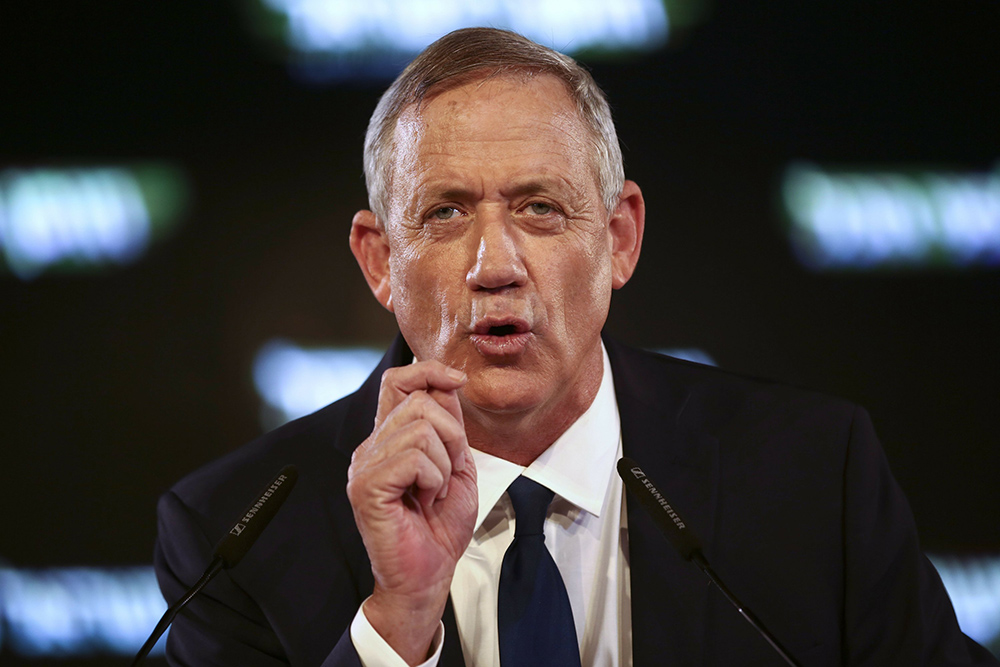
“Putting him in that role proves that Iran is moving toward greater extremism, expansion, and continued pursuit of weapons of mass destruction that may threaten the world, regional stability, and the State of Israel as well. Any state that chooses to become part of the Iranian proliferation is putting itself at risk, harming its citizens, and acting counter to its own national interest.
“Israel will stand firm and will not pass over a looming existential threat in silence. We are preparing and will continue preparing plans to avert it.
“We will always share information and knowledge, and keep coordinated with our friends, first and foremost the U.S. At the same time, we will always maintain our right, capacity, and duty to protect ourselves independently. That’s the way it’s been, and that’s the way it will continue to be.”
Also weighing in on the issue of the US possibly scheduling a meeting with Raisi was former Secretary of State Mike Pompeo. INN reported that Pompeo excoriated Iran’s president-elect, and urged the Biden administration not to negotiate with the incoming Iranian government.
Speaking with Fox News Monday night, Pompeo cited Iranian president-elect Ebrahim Raisi’s involvement in the 1988 mass execution of political prisoners, saying Raisi has “the blood of thousands of people on his hands.”

INN reported that Pompeo added that the US must maintain its sanctions regime on Tehran to force the Iranian government to “change its behavior”, without specifically referencing the country’s nuclear program.
“We left a lot of leverage for this administration, a couple thousand sanctions on the Iranian leaders and the economy,” said Pompeo.
“We built out a coalition of Gulf states and our friend and ally Israel, all work to keep containment on Iran to prevent them from having the money, the resources, all of the things we saw. You remember when they flew pallets of cash to Iran a few years back. This administration was given an enormous amount of leverage to put pressure on the Iranians.”
“You talked about the enrichment you can see they are firmly committed to putting pressure back on the United States so they will get more concessions at the table. Just this week they elected a fellow named Ebrahim Raisi as their new leader. He’s got the blood of thousands of people on his hands. This is not someone we ought to be talking to. It’s not a regime we should be engaged with. We ought to have the maximum pressure campaign to force this regime to change its behavior.”
In another related development, IDF Chief of the General Staff LTG. Aviv Kohavi concluded the first two days of his first visit to the US as chief of staff, during which he is meeting the country’s defense establishment leadership to discuss several pertinent security issues, and chiefly Iran, as was reported by the Tazpit Press Service.
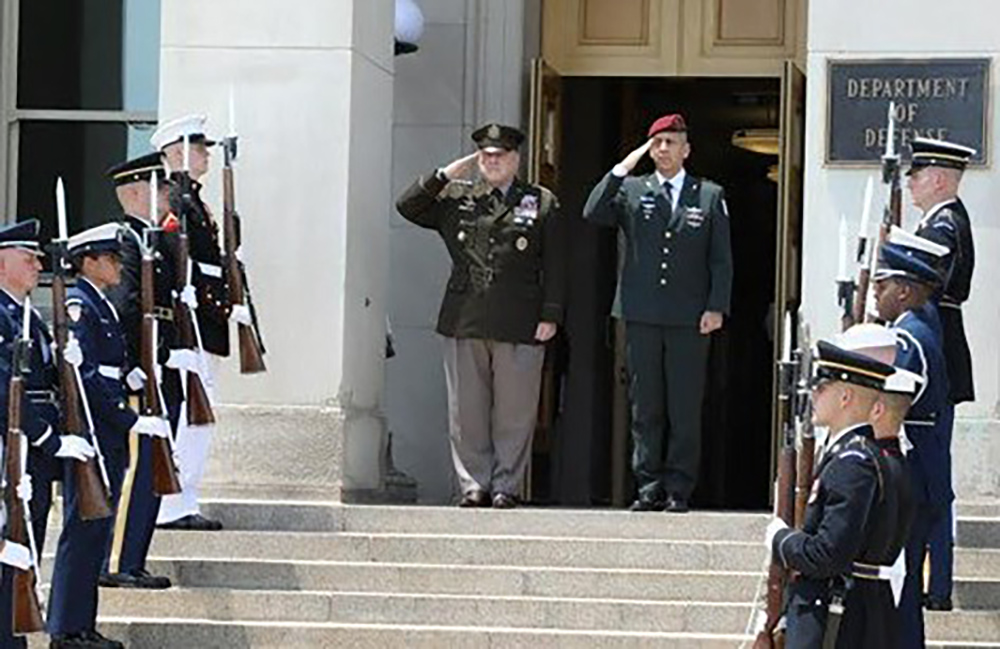
On Monday, Kochavi placed a wreath at the Tomb of the Unknown Soldier and saluted American soldiers on behalf of the IDF.
TPS reported that the Chief of Staff is the guest of the Chairman of the Joint Chiefs of Staff, General Mark Milley, and met with Secretary of Defense Lloyd Austin. The meetings included a professional panel chaired by the Joint Chiefs of Staff and other senior members of the IDF and US Army, in addition to a series of intelligence and operational reviews.
The meetings discussed issues related to the common challenges facing the US and Israeli armies, including the threat of the Iranian nuclear program and the establishment of the Iranian terror networks throughout the Middle East.
Kochavi presented the failures of the 2015 nuclear deal signed with Iran, which enables it “to make significant progress in the coming years in the scope and quality of centrifuges and in the amount and quality of enriched material,” and emphasized the lack of oversight of Iran’s nuclear weapons development, according to the TPS report.
Kochavi emphasized the danger of a return to the original nuclear deal and stressed that every effort should be made to prevent Iran from acquiring military nuclear capabilities.
The intensification of the Lebanon-based Hezbollah terror organization and its development of precision weapons and missile systems, as well as the challenges in the Palestinian arena, with an emphasis on Hamas and the Islamic Jihad in the Gaza Strip, were also discussed at the meeting, as was reported by TPS.
In addition, the Chief of Staff presented an overview of the main points of the IDF’s operational achievements during Operation Guardian of the Walls against Hamas last month, as was reported by TPS.
“The strategic and military alliance with the United States is a very significant pillar in the national security of the State of Israel,” Kochavi said at the end of the meetings.
TPS also reported that Kochavi is continuing the strategic dialogue begun during Defense Minister Benny Gantz’s trip to Washington three weeks ago.
(Sources: TPS, AP, Reuters, World Israel News, Israel National News)
