



|
Getting your Trinity Audio player ready...
|
By: Claude Webber
The fragile equilibrium of the Persian Gulf has entered a perilous new phase as American officials warn that Iran may be preparing to deploy naval mines in the Strait of Hormuz—one of the most strategically vital waterways on earth. The potential move, if carried out, could severely disrupt global energy markets and dramatically escalate the already volatile confrontation between Tehran and the United States.
According to reports referenced by Israel National News on Tuesday, American intelligence officials believe Iran may be positioning small naval vessels capable of placing explosive mines along the narrow shipping corridor through which nearly one-fifth of the world’s oil supply flows. The revelations were initially reported by CBS News.
Officials familiar with the intelligence assessments, speaking anonymously due to the sensitive nature of the information, indicated that Iran could use small boats—fast, maneuverable craft capable of carrying several naval mines at a time—to secretly deploy explosives along the seabed or just beneath the water’s surface.
Such a move would represent a profound escalation of tensions in a region already strained by military conflict and geopolitical rivalries.
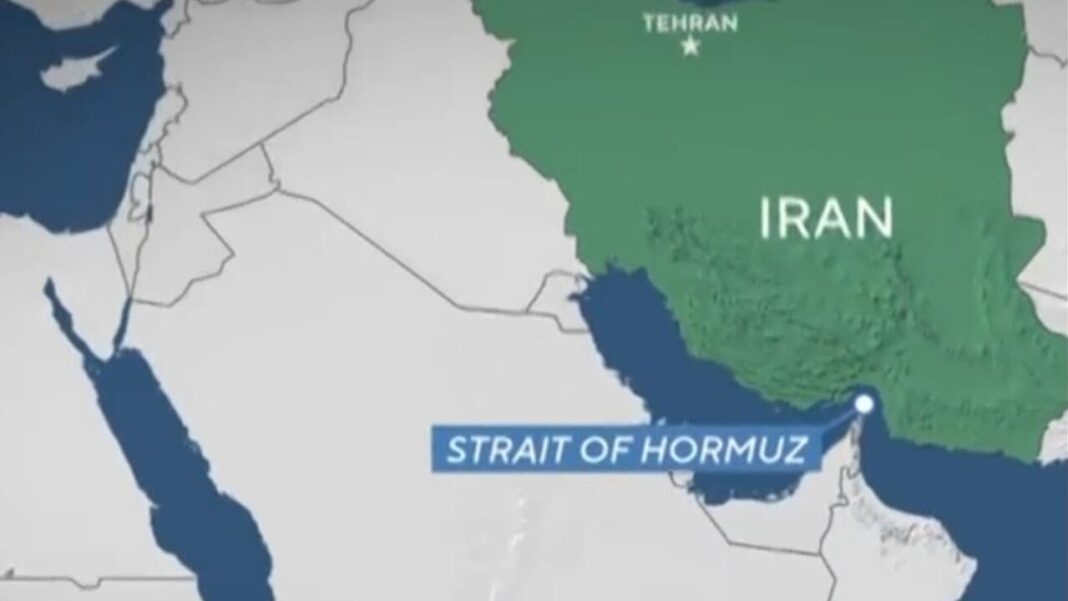
The Strait of Hormuz is widely recognized as one of the world’s most critical maritime chokepoints. Located at the mouth of the Persian Gulf between Iran and Oman, the narrow passage serves as the primary route for oil exports from major producers such as Saudi Arabia, Iraq, Kuwait, Qatar, and the United Arab Emirates.
According to international energy analysts cited by Israel National News, approximately 20 percent of the global oil supply travels through the strait each day. Any disruption to shipping in the area—whether from military conflict, sabotage, or mining operations—would reverberate across the global economy.
Energy traders, shipping companies, and governments alike have long viewed the strait as a potential flashpoint. Its narrow geography makes it uniquely vulnerable to interference: at certain points, the shipping lanes are only a few miles wide, meaning that even a small number of mines could threaten dozens of passing vessels.
The mere perception of danger can be enough to send oil prices surging and insurance costs skyrocketing.
Recent reports suggest that the current situation is already prompting maritime insurers to reassess the risk profile for ships traveling through the Gulf.
Naval mines are among the most deceptively simple yet devastating weapons used in maritime warfare. Unlike missiles or torpedoes, which require active targeting systems, mines can remain dormant for extended periods, detonating only when a ship passes nearby.
They are relatively inexpensive to produce but extremely difficult to detect and remove.
Estimates of Iran’s naval mine stockpile vary widely, but intelligence assessments cited in reports referenced by Israel National News suggest that Tehran may possess between 2,000 and 6,000 mines.
Many of these devices are believed to have been produced domestically by Iran’s defense industry, while others may have been acquired from foreign suppliers, including Russia and China.
Military analysts note that Iran has invested heavily in asymmetric naval warfare capabilities over the past two decades. Rather than attempting to match the conventional naval strength of the United States or its allies, Iran has focused on tactics designed to exploit the geography of the Persian Gulf.
These tactics include swarming attacks by small fast boats, missile strikes from coastal batteries, and the deployment of naval mines.
In the confined waters of the Strait of Hormuz, such strategies could prove particularly effective.
The possibility that Iran might attempt to mine the strait has drawn an immediate and forceful response from Washington.
In a message posted on his Truth Social platform, President Trump issued a blunt warning to Tehran.
“If Iran has put out any mines in the Hormuz Strait, and we have no reports of them doing so, we want them removed immediately,” Trump wrote.
He continued with a stark threat of retaliation, declaring that failure to remove any deployed mines would result in consequences “at a level never seen before.”
Trump also indicated that American forces had already begun targeting vessels suspected of being involved in mine-laying operations.
“I am pleased to report that within the last few hours, we have hit, and completely destroyed, 10 inactive mine-laying boats and/or ships, with more to follow,” he wrote.
The statement signaled a willingness by the United States to escalate military operations in order to ensure the continued freedom of navigation through the strait.
At a Pentagon briefing, Gen. Dan Caine confirmed that U.S. Central Command has begun actively searching for vessels suspected of deploying mines.
American forces, he said, are not only targeting boats believed to be involved in mine-laying activities but also striking locations where naval mines may be stored.
According to reports cited by Israel National News, the campaign is part of a broader effort to prevent Iran from threatening global shipping lanes.
The U.S. Navy maintains a significant presence in the region, including carrier strike groups and mine-countermeasure vessels capable of detecting and neutralizing underwater explosives.
Nevertheless, military officials acknowledge that clearing a mined waterway can be an extremely complex and time-consuming process.
Any disruption in the Strait of Hormuz would have immediate consequences for global energy markets.
Oil prices have already shown sensitivity to the escalating tensions. Even rumors of possible mining activity have triggered volatility in commodity markets as traders attempt to assess the risk to supply chains.
Countries heavily dependent on Gulf oil exports—particularly in Asia and Europe—are watching developments with growing concern.
Energy economists warn that a prolonged closure or disruption of the strait could remove millions of barrels of oil per day from global markets, potentially driving prices sharply higher and contributing to inflationary pressures worldwide.
The Strait of Hormuz has been the site of military confrontation before.
During the Iran–Iraq War in the 1980s, both sides engaged in what became known as the “Tanker War,” targeting oil shipments and laying mines in the Gulf. One such mine severely damaged the U.S. Navy frigate USS Samuel B. Roberts in 1988, prompting a large-scale American retaliation against Iranian naval assets.
More recently, tensions in the region have flared repeatedly as Iran sought to leverage its geographic position to influence global markets and diplomatic negotiations.
According to the Israel National News report, Israeli officials have also expressed concern that Iran might attempt to close the strait as part of a broader strategy to pressure Western governments.
Shipping companies and maritime insurers are now closely monitoring the situation.
The risk of naval mines—even if only suspected—can dramatically increase insurance premiums for ships traveling through the Gulf.
Some vessels may choose alternative routes, though few viable options exist for transporting Gulf oil to global markets.
The presence of mines could also necessitate the deployment of international mine-clearing operations, involving naval forces from multiple countries.
For now, the intelligence assessments remain preliminary, and officials caution that the full scope of Iran’s intentions is not yet clear.
Yet the mere possibility that naval mines could be deployed in the Strait of Hormuz underscores the gravity of the current geopolitical crisis.
As Israel National News has repeatedly noted in its coverage, the Persian Gulf remains one of the most volatile strategic arenas in the world.
A single miscalculation could trigger a chain reaction affecting global commerce, energy markets, and international security.
For the millions of barrels of oil that pass daily through the narrow strait—and for the global economy that depends on them—the stakes could scarcely be hig
