



|
Getting your Trinity Audio player ready...
|
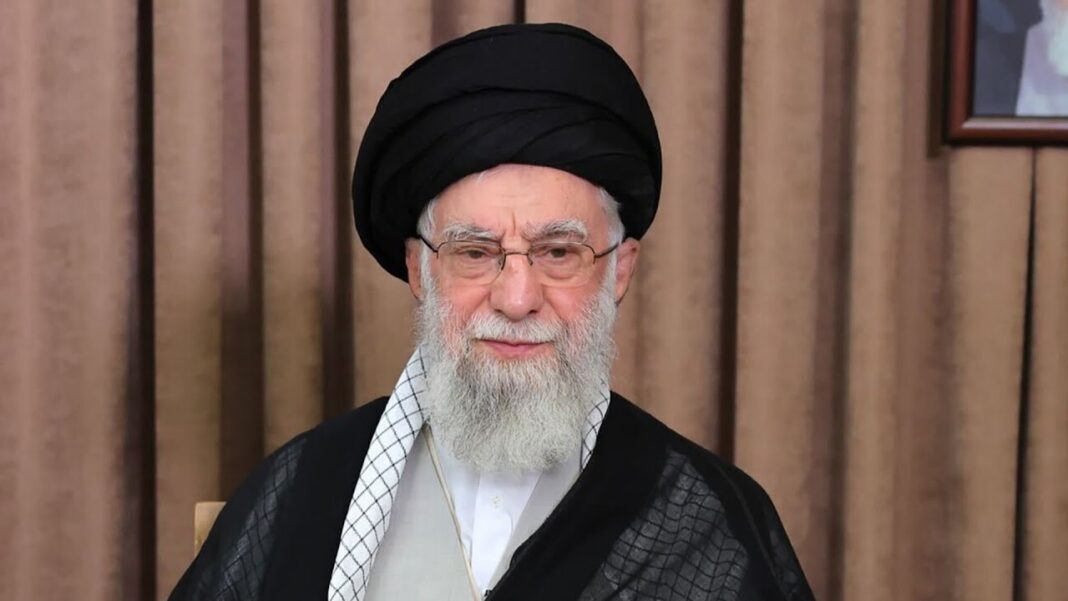
(TJV NEWS) Iran’s hardline Supreme Leader, Ayatollah Ali Khamenei, has died following an Israeli airstrike that reduced his Tehran compound to rubble, a senior Israeli official told Fox News.
Isreali officials told media entities worldwide this same report.
Israeli Prime Minister Benjamin Netanyahu was presented with proof that Iran Supreme Leader Ali Khamenei had been killed in the joint Israeli-US strikes on Tehran this morning, Israeli outlet N12 reports.
According to the report, Netanyahu and the heads of Israel’s security establishment saw a photo of Khamenei’s body.
Khamenei, who led the Islamic Republic for more than 35 years, presided over an era defined by strict domestic repression and sustained confrontation with the United States and Israel.
“Khamenei was the contemporary Middle East’s longest-serving autocrat,” Behnam Ben Taleblu, senior director of the Foundation for Defense of Democracies’ Iran program, told Fox News Digital. He described the late supreme leader as an ideologue driven by militant anti-Americanism and antisemitism, but also as a calculating strategist focused above all on preserving his system of rule.
Born on April 19, 1939, in Mashhad, eastern Iran, Khamenei was a central figure in the 1979 Islamic Revolution that toppled the U.S.-backed Shah, Mohammad Reza Pahlavi. A close associate of the republic’s founder, Ruhollah Khomeini, Khamenei served as president from 1981 to 1989 before assuming the role of supreme leader after Khomeini’s death.
Over decades in power, Khamenei consolidated control over Iran’s political, military and security institutions. His tenure was marked by repeated crackdowns on dissent, tight social restrictions and a steadfastly hostile posture toward Washington and Jerusalem.
Lisa Daftari, editor-in-chief of The Foreign Desk, told Fox News Digital that Khamenei’s rule was characterized by “unrelenting brutality and repression,” citing high execution rates and strict enforcement of social codes.
His leadership faced major internal challenges. In 2009, disputed elections that returned then-President Mahmoud Ahmadinejad to office sparked mass demonstrations across Iran. Security forces suppressed the unrest.
Further nationwide protests erupted in 2022 after the death of 22-year-old Mahsa Amini while in the custody of Iran’s morality police. Demonstrations were met with force, and numerous protesters were arrested and later executed, according to rights groups.
More recently, unrest again shook the country in early January 2026. An investigation by Iran International alleged that as many as 30,000 people may have been killed over two days of violence, though such figures remain contested.
International monitors have consistently reported high execution numbers under Khamenei’s leadership. Amnesty International said Iranian authorities carried out more than 1,000 executions in 2025 — the highest annual figure the organization has recorded in at least 15 years. A separate report by the United Nations found at least 975 executions in 2024, the highest total since 2015.
Beyond Iran’s borders, Khamenei expanded Tehran’s influence through a network of allied militias and armed groups. Iran provided backing to Hamas in Gaza and the West Bank, Hezbollah in Lebanon and Houthi forces in Yemen, along with militias in Iraq. The strategy was aimed at projecting Iranian power across the Middle East and countering Israel and U.S. interests.
However, analysts note that regional setbacks weakened Tehran’s position in recent years. Following the Oct. 7, 2023, attack and subsequent Israeli military campaigns, several of Iran’s key proxies suffered significant losses. During a 12-day conflict in June 2025, Israeli strikes reportedly killed several of Khamenei’s senior advisers and security officials.
Experts argue that Khamenei’s most enduring legacy may not be individual decisions but the institutional framework he constructed. A recent report by United Against Nuclear Iran described the Bayt — the Office of the Supreme Leader — as a parallel power structure embedded across Iran’s military, economy, clerical establishment and bureaucracy.
Kasra Aarabi, one of the report’s authors, told Fox News Digital that the Bayt functions as a “state within a state,” suggesting that removing Khamenei alone would not necessarily dismantle the system he built.
“Think of the Supreme Leader as an institution rather than just a single individual,” Aarabi said, warning that broader structural change would be required to fundamentally alter Iran’s governing apparatus.
As Iran confronts a post-Khamenei era, questions remain over succession, internal stability and whether the powerful machinery he established will endure without the man who shaped it for more than three decades.
