



|
Getting your Trinity Audio player ready...
|
Iranian Regime Behind Rising Wave of Plots Targeting British Jews and Dissidents, Says UK Intelligence Watchdog
By: Fern Sidman
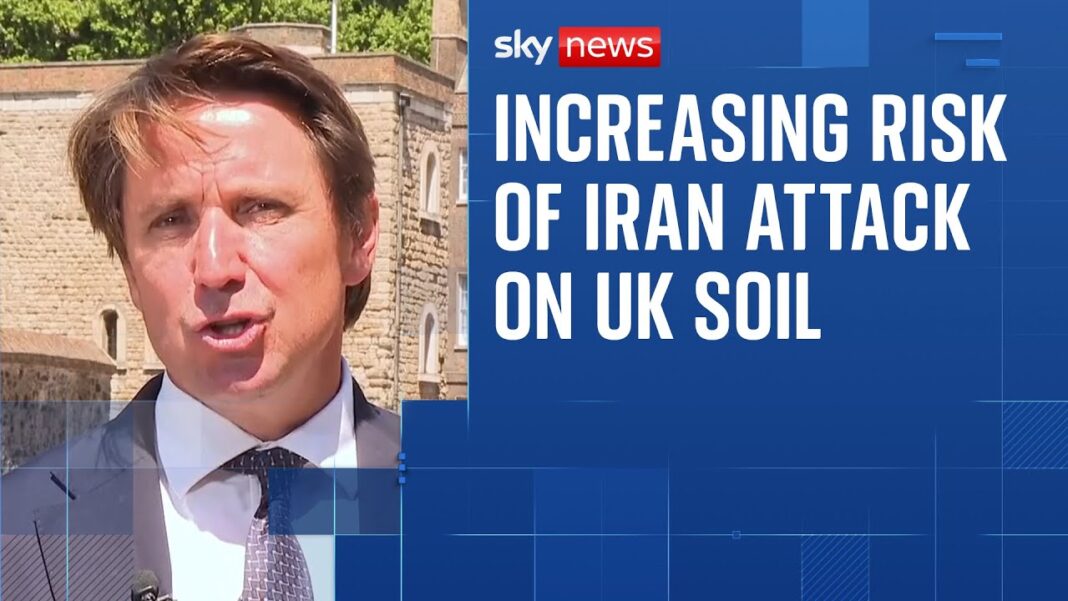
In a chilling revelation underscoring the expanding reach of Iran’s state-sponsored terrorism and clandestine operations in the West, a new report by the United Kingdom’s Intelligence and Security Committee (ISC) has confirmed that Iran’s regime has orchestrated no fewer than 15 attempts to murder or abduct Jewish individuals and regime dissidents on British soil since the beginning of 2022. The revelations, analyzed in a report that appeared on Thursday in The Jerusalem Post, mark a dangerous escalation in Tehran’s hybrid warfare campaign far beyond its borders and expose Britain’s growing vulnerability to foreign subversion.
The ISC, a powerful parliamentary body tasked with overseeing the UK’s intelligence agencies, issued a scathing 230-page assessment of Iranian operations, warning that Tehran is aggressively expanding its hostile activities across multiple domains, including physical attacks, cyber warfare, espionage, and influence operations. Although Iran is not yet deemed to pose the same existential challenge as Russia or China, the committee warns that the Iranian threat is rapidly evolving—and the UK is ill-prepared.
“Since the beginning of 2022, there has been a significant increase in the physical threat posed by Iran to those residing in the UK,” the report reads, as cited in The Jerusalem Post report. “It has significantly increased both in terms of pace and the number of threats. The threat is focused acutely on dissidents and other opponents of the regime. There is also an increased threat against Jewish and Israeli interests in the UK.”
The report’s findings add further weight to claims long reported by The Jerusalem Post that the Islamic Republic is waging an increasingly aggressive global campaign against critics of the regime—particularly those in exile, as well as prominent Jewish individuals perceived as adversaries of the Iranian theocracy.
Perhaps most disturbing, the ISC confirmed that Iranian nationals are often not the ones executing these plots directly. Instead, Tehran has relied on local criminal networks and foreign operatives to mask its fingerprints. This tactic of “outsourced repression,” as previously detailed in The Jerusalem Post, allows the regime to evade diplomatic consequences while maintaining plausible deniability.
Britain’s domestic intelligence service, MI5, warned in testimony to the committee that “it is not typically Iranian nationals that are conducting the operations themselves… They use criminal groups that you wouldn’t at all expect.” The report highlighted that at least 20 separate plots tied to Iranian state interests—including kidnappings and assassination attempts—have been thwarted since January 2022.
This proxy model was illustrated in several shocking cases. In December, two Romanian nationals were charged in connection with the stabbing of a journalist working for a Persian-language outlet in London. And just last month, three Iranian-born men appeared in a UK court, accused of assisting Tehran’s foreign intelligence wing in plotting acts of violence against media professionals.
According to the information provided in The Jerusalem Post report, these developments are not merely anecdotal, but rather they form a pattern of deliberate, systematic targeting of dissidents, journalists, and Jewish figures by one of the world’s most ideologically radical regimes.
ISC Chair Kevan Jones offered a blunt assessment of the UK government’s strategy: it is overly reactive, narrowly focused on nuclear concerns, and insufficiently attuned to the breadth of Iran’s malign activities. “We remain concerned that the government’s policy on Iran has been focused on crisis management and has been primarily driven by concerns over Iran’s nuclear program, to the exclusion of other issues,” Jones said in the report.
While efforts to prevent Iranian nuclear weapons development remain critical, the committee made clear that the regime’s threats to national security and civil society in Britain are already materializing through covert action.
The committee urged the UK to seriously examine the viability of proscribing the Islamic Revolutionary Guards Corps (IRGC) as a terrorist organization—a policy shift long advocated by security analysts and supported by many MPs. As The Jerusalem Post has frequently reported, the IRGC is not only the backbone of Iran’s regional military activities but also the spearhead of its international intelligence operations and extrajudicial executions.
Despite the growing alarm, Iran’s embassy in London dismissed the ISC’s findings, issuing a combative statement claiming the allegations were “unfounded, politically motivated and hostile.” It further accused the UK government of “fueling unnecessary tensions and undermining diplomatic norms”—a defense The Jerusalem Post noted is increasingly threadbare in light of accumulating evidence.
The ISC report is particularly troubling for British Jewish communities, who now face a multidimensional threat from both imported extremism and Iranian-directed terror. As The Jerusalem Post report indicated, Iranian intelligence routinely lumps together Jews, Israelis, and anti-regime activists in its operational targets, blurring ideological and religious lines in a campaign of intimidation and violence.
With antisemitism already surging across Europe, the revelation that Iranian operatives have plotted assassinations and abductions of Jews inside the UK is a clarion call for a national policy reassessment. The ISC’s report leaves little doubt: Iran’s threats are no longer theoretical—they are local, present, and alarmingly effective.
In March, the UK government responded to mounting threats by ordering that Iran be required to register all political activities conducted within its borders, subjecting the regime’s influence operations to a new tier of scrutiny. Yet, critics argue these measures are not nearly sufficient, especially given the scope of the threat laid out by the ISC.
As The Jerusalem Post previously reported, British intelligence services have shown growing sophistication in disrupting Iranian plots. But the new ISC findings point to systemic weaknesses in Britain’s domestic counterintelligence posture—particularly when faced with a nation willing to use gangland violence to silence critics and terrorize minority communities.
Despite the report’s data concluding in August 2023, the ISC made clear that its recommendations remain urgent and fully applicable to the present security environment.
Iran may not yet rival Russia or China in its global reach, but its use of asymmetric warfare tactics—cyberattacks, proxy violence, disinformation, and assassination—presents an escalating challenge for democratic societies ill-equipped to counter hybrid threats. The UK is now a front line in this shadow conflict, and as The Jerusalem Post report makes clear, Jewish communities, exiled Iranian dissidents, and democratic norms themselves hang in the balance.
For Britain, the choice is clear: Either treat Iran’s escalating threats as a strategic challenge that demands urgent legislative and security responses—or continue to react after the fact, at the cost of lives and civil liberties. The ISC has laid out the evidence. Whether Westminster listens remains to be seen.
