



|
Getting your Trinity Audio player ready...
|
By: Fern Sidman
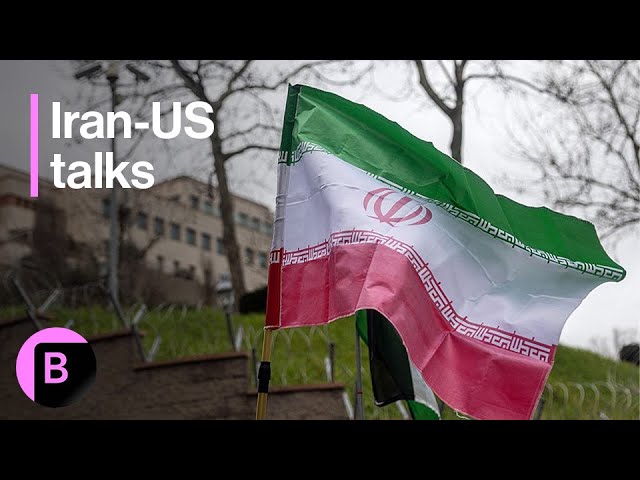
In the hushed corridors of Middle Eastern diplomacy, where gestures are parsed with forensic precision and venues themselves acquire the weight of political symbols, the sudden relocation of high-stakes negotiations between the United States and Iran from Istanbul to Muscat has been read as both a narrow rescue from diplomatic failure and a revealing prelude to the fraught substance of the talks themselves. As World Israel News reported on Wednesday, what was nearly derailed by disputes over format and scope has now been salvaged through a last-minute convergence of regional pressure, American calculation, and Iranian insistence on narrowing the agenda to the nuclear file alone.
The talks, now scheduled to take place in Oman on Friday, were initially envisioned as a discreet encounter in Istanbul between U.S. envoy Steve Witkoff and Iranian Foreign Minister Abbas Araghchi. Istanbul, with its long-standing reputation as a neutral crossroads between East and West, seemed an appropriate stage for exploratory diplomacy. Yet the venue itself became a casualty of deeper strategic disagreements. Tehran’s request to shift the meeting to Oman, a state that has historically cultivated the role of quiet intermediary, was accompanied by an equally consequential demand: that the discussions be confined strictly to Iran’s nuclear program, excluding ballistic missile development and Tehran’s support for regional proxy groups—issues Washington and several regional actors had hoped to place squarely on the table.
The World Israel News report noted that this insistence on a narrowed agenda reflects a familiar Iranian negotiating posture, one that seeks to compartmentalize disputes in order to extract concessions without exposing the full architecture of its regional strategy to scrutiny.
A regional diplomat familiar with Iran’s position summarized the impasse in stark terms, telling Axios that Tehran sought to “change the format” and “change the scope,” confining the dialogue to what it considers the most strategically advantageous terrain. The United States, according to The World Israel News report, initially resisted this recalibration. There was a moment, fraught with consequence, when American officials indicated that the meeting might be canceled altogether rather than proceed on terms perceived as unduly restrictive. Such a cancellation would have reverberated far beyond the immediate diplomatic calendar, reinforcing a narrative of entrenched stalemate at a moment when the region remains precariously poised between confrontation and uneasy restraint.
It was at this juncture that the broader Middle East inserted itself into the calculus. As The World Israel News report detailed, at least nine governments in the region engaged in urgent outreach to the White House, urging the Trump administration to preserve the opening for dialogue, however constrained its initial scope might be. Their intervention underscored a shared anxiety: that the collapse of talks, even preliminary ones, could accelerate the drift toward escalation in an already volatile strategic environment.
One U.S. official acknowledged to Axios that regional partners pressed Washington to “keep the meeting and listen to what the Iranians have to say,” even as American skepticism remained pronounced. The World Israel News report emphasized the ambivalence embedded in this posture, a tension between the desire to avoid diplomatic paralysis and the fear of repeating negotiating patterns that, in Washington’s view, have historically produced little of enduring substance.
The eventual compromise—accepting Oman as the venue and limiting the discussions to bilateral U.S.-Iran talks focused exclusively on the nuclear file—represents a narrowing of ambition that is both pragmatic and revealing. Abbas Araghchi later confirmed on X that the talks were scheduled to take place in Muscat at approximately 10 a.m. Friday, publicly thanking Oman for facilitating the meeting. The World Israel News report observed that this public gratitude serves not merely as diplomatic courtesy but as a signal of Tehran’s comfort with Muscat’s mediating role, one that has often allowed Iranian officials to engage without the performative pressures associated with more publicized venues.
Yet the path to this fragile accord was marked by sharper rhetoric earlier in the week. A senior U.S. official, adopting a tone of resolute finality, had declared that Washington presented Tehran with a stark choice: “this or nothing.” The Iranian response—“OK, then nothing”—appeared to close the door on the prospect of talks altogether. The World Israel News report interpreted this exchange as emblematic of the brittle nature of U.S.-Iranian diplomacy, in which maximalist postures are frequently deployed not merely as bargaining tactics but as expressions of domestic political imperatives on both sides. For Washington, the insistence on a more comprehensive agenda reflected a determination not to replicate what officials view as the deficiencies of past negotiating frameworks. For Tehran, the rejection of broader talks can be read as a strategic effort to insulate its missile program and regional alliances from external scrutiny.
The current iteration of the talks, stripped of their multilateral ambitions, stands in stark contrast to earlier plans that envisioned parallel sessions addressing missiles, proxy activity, and human rights concerns. The World Israel News report underscored the significance of this contraction in scope. By confining the dialogue to the nuclear issue alone, the negotiations risk perpetuating the compartmentalization that has long characterized engagement with Iran, potentially leaving unresolved the very dynamics that fuel regional instability. At the same time, proponents of proceeding even under these constraints argue that incremental progress on the nuclear front could create a foundation, however tenuous, for future discussions on the broader constellation of disputes.
The diplomatic maneuvering surrounding the talks has unfolded against a backdrop of intense consultation with regional allies, particularly Israel. Ahead of the Muscat meeting, Steve Witkoff traveled to Israel, where he met with Prime Minister Benjamin Netanyahu and senior defense officials. World Israel News reported that these consultations were marked by a sober exchange of intelligence assessments and a clear articulation of Israeli concerns regarding Tehran’s intentions. Israeli officials cautioned against any inclination to place undue trust in Iranian assurances, reflecting a deep-seated skepticism shaped by decades of adversarial interaction. The involvement of Jared Kushner in the broader itinerary, with expected travel to Qatar prior to the Oman talks, further signals the administration’s effort to situate the negotiations within a wider regional framework, even as the formal agenda has been narrowed.
Despite the agreement to proceed, American officials have been conspicuously circumspect about the prospects for a substantive breakthrough. “We are not naive about the Iranians,” one official remarked, emphasizing that while Washington is prepared to engage in “a real conversation,” it has no intention of expending diplomatic capital on what it perceives as performative dialogue. The World Israel News report highlighted this cautionary tone as indicative of a broader recalibration in U.S. diplomacy toward Iran, one that seeks to balance openness to engagement with a determination to avoid symbolic negotiations devoid of tangible outcomes.
The choice of Oman as the venue carries its own historical resonance. Muscat has long served as a discreet conduit for backchannel communications in moments when overt diplomacy has proven politically untenable. The World Israel News report noted Oman’s unique position in the regional diplomatic ecosystem, characterized by its ability to maintain working relationships with a diverse array of actors. In this sense, the relocation of the talks to Muscat can be read not merely as a logistical adjustment but as an acknowledgment of the need for a setting that facilitates candor over spectacle.
Yet even as the talks find a venue and a narrowed mandate, the deeper questions that animate U.S.-Iranian relations remain unresolved. The insistence on focusing exclusively on the nuclear file raises the specter of an agreement that, while potentially mitigating one dimension of the conflict, leaves untouched the broader matrix of concerns that define Tehran’s regional posture. The World Israel News report cautioned that any diplomatic outcome divorced from these wider dynamics risks being inherently unstable and susceptible to unraveling under the pressure of events beyond the negotiating table.
In the end, the survival of the Muscat talks from the brink of cancellation calls attention to the paradox at the heart of contemporary diplomacy with Iran: progress is often measured not in breakthroughs but in the mere preservation of dialogue itself. World Israel News framed this moment as one of cautious engagement shadowed by profound doubt, a testament to the enduring difficulty of reconciling strategic mistrust with the imperatives of de-escalation. As the delegations prepare to convene in Oman, the world will watch not only for the substance of what is said but for the silences that persist, the issues deferred, and the fragile hope that even a limited conversation might avert a deeper descent into confrontation.
