



|
Getting your Trinity Audio player ready...
|
Israel Activates Heightened Security Measures, Prepares Civilian Front for Potential War With Iran
By: Fern Sidman
Israel awoke this week to a strategic atmosphere heavy with premonition, as the language of deterrence, readiness, and imminent contingency replaced the cautious rhythms of diplomacy. According to a detailed report that appeared late on Wednesday at Israel Realtime (israelrealtime.com), Israel has entered a heightened defensive posture, with the Home Front Command instructed to prepare the civilian population for the possibility of a near-term conflict. The declaration of a high defensive alert marks one of the most serious escalations in Israel’s domestic security posture in recent years, reflecting assessments among senior officials that a potential confrontation with Iran may be approaching a decisive inflection point.
Israel Realtime, which has tracked the accumulating indicators with real-time updates, reported that Israeli security assessments point to a narrowing window of uncertainty. While officials have been careful not to disclose the precise intelligence streams underpinning these conclusions, Israeli media have cited a convergence of operational signs—some visible, others deliberately opaque—that suggest preparations for escalation are no longer hypothetical. Channel 12 in Israel characterized the moment as approaching “zero hour,” an expression long used in Israel’s security lexicon to denote the transition from contingency planning to operational readiness.
The Home Front Command’s directive carries profound implications for the Israeli public. The report on Israel Realtime noted that the Jerusalem Municipality has begun distributing comprehensive emergency preparedness guidance to residents, including detailed instructions on protective measures, emergency procedures, and the locations of bomb shelters across the capital.
The dissemination of such information is not merely bureaucratic ritual; it signals that Israel’s civil defense architecture is being activated in anticipation of potential missile fire, drone incursions, or other forms of long-range attack that would place civilian resilience at the forefront of national defense. The emphasis on preparedness underscores the reality that any confrontation with Iran would likely extend beyond conventional battlefields, implicating the home front in ways that recall, but may exceed, prior regional conflicts.
The regional dimension of the unfolding crisis adds a further layer of volatility. Israel Realtime reports that Iranian Foreign Minister Hossein Amir-Abdollahian, during a recent visit to Lebanon, conveyed signals interpreted by Israeli analysts as an indication that Hezbollah would not remain on the sidelines in the event of a broader war. A report at Ynet suggested that Tehran’s messaging in Beirut was calibrated to remind all parties that Iran’s network of regional proxies remains integral to its deterrence posture. Hezbollah’s potential involvement would dramatically widen the scope of any conflict, exposing Israel’s northern front to sustained rocket and missile barrages while complicating Israel’s strategic calculus with the prospect of a multi-front confrontation.
Against this backdrop, the United States has undertaken one of the most substantial concentrations of airpower in the Middle East since the early years following September 11, 2001. The Israel Realtime report detailed that within a 48-hour period, a formidable array of American military assets has been repositioned toward the region.
The reported deployment includes dozens of fighter aircraft across multiple platforms, airborne early warning and control systems, a dense network of aerial refueling capabilities, and advanced intelligence-gathering aircraft. Such a surge is not merely symbolic. It constitutes a demonstrable recalibration of U.S. military posture, designed to provide both deterrent signaling and operational readiness should diplomatic efforts fail to restrain the trajectory toward conflict.
The appearance of the USS Gerald R. Ford off the coast of Morocco, as tracked by Israel Realtime, adds a maritime dimension to this evolving picture. The deployment of a nuclear-powered aircraft carrier—the most advanced in the U.S. fleet—represents a mobile projection of power capable of sustaining high-tempo air operations. While official statements have not specified the carrier’s ultimate destination, its presence in the broader theater shines a spotlight on the depth of U.S. preparedness and the seriousness with which Washington is treating the prospect of escalation.
For Israeli planners, the visible integration of American naval and air assets into the region offers both reassurance and a reminder that any conflict with Iran would unfold within a tightly interwoven U.S.-Israeli strategic framework.
Yet the movement of military hardware is only one dimension of the escalating standoff. Iran itself has contributed to the atmosphere of impending confrontation by issuing a Notice to Airmen (NOTAM) warning of ballistic missile tests or live-fire activity over parts of the Gulf of Oman and adjacent airspace. The Israel Realtime report emphasized the timing of this announcement, which coincides with the surge in U.S. deployments and Israel’s heightened defensive alert. The issuance of such warnings, while not unprecedented, functions as a deliberate signal of readiness and resolve, demonstrating Tehran’s willingness to conduct high-visibility military activities even as diplomatic channels remain nominally open.
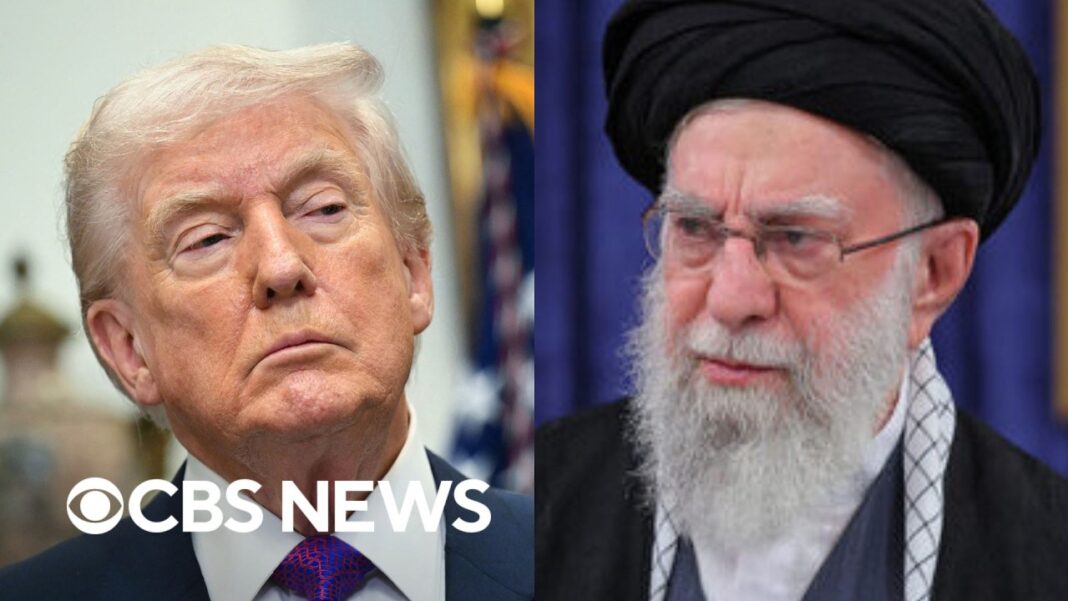
The White House, for its part, has attempted to maintain a posture of calibrated ambiguity. Israel Realtime reported that a spokesperson reiterated President Donald Trump’s stated preference for diplomacy, even as she acknowledged the array of strategic rationales that could justify military action against Iran. The formulation—that diplomacy remains preferred, but that Iran “would be wise to make a deal”—reflects a dual-track approach that has characterized Trump’s foreign policy posture: a readiness to engage in negotiation combined with a conspicuous willingness to deploy overwhelming force should negotiations falter.
In Jerusalem, this stance is interpreted less as indecision than as strategic signaling, intended to maximize leverage over Tehran by coupling diplomatic overtures with unmistakable demonstrations of military preparedness.
The convergence of these developments has generated a palpable sense of anticipation within Israel’s security establishment. Israel Realtime’s continuous coverage highlights how the current moment differs from prior episodes of tension. In earlier confrontations, Israel often confronted isolated threats—missile fire from Gaza, proxy activity along the northern border, or cyber operations attributed to Iranian-linked actors. The present constellation of indicators suggests something more systemic: a potential transition from shadow warfare and indirect confrontation to overt, state-on-state conflict with Iran itself.
This distinction is not merely semantic. It implies a conflict of far greater scale, duration, and regional consequence, one that would test the resilience of alliances, the stability of energy markets, and the capacity of regional institutions to contain cascading escalation.
For Israel, the imperative of preparedness extends beyond military readiness to encompass societal resilience. The Israel Realtime report noted that the Home Front Command’s preparations are designed to ensure continuity of essential services, maintain public morale, and mitigate the disruptive effects of sustained emergency conditions. The emphasis on civilian preparedness reflects lessons learned from prior conflicts, in which the psychological dimension of warfare proved as consequential as kinetic exchanges.
In the event of a conflict with Iran, Israel’s urban centers, critical infrastructure, and transportation networks could become targets of long-range precision strikes. The current efforts to disseminate guidance and bolster shelter readiness represent a preemptive investment in societal fortitude.
The regional ramifications of a potential conflict are no less profound. Hezbollah’s prospective involvement, as reported by Israel Realtime, would likely draw Lebanon into the vortex of confrontation, exacerbating the country’s already severe economic and political fragility. The possibility of Iranian-backed militias in Syria, Iraq, and Yemen joining the fray further complicates the strategic environment, raising the specter of a multi-theater conflict that would strain the capacities of even the most robust military coalitions. In this context, the U.S. airpower surge serves not only as a deterrent to Iran but also as a signal to Tehran’s allies and proxies that any coordinated escalation would encounter a formidable response.
At the same time, the diplomatic dimension remains alive, if increasingly tenuous. Israel Realtime’s report suggests that while channels of communication between Washington and Tehran persist, confidence in their efficacy is waning. The juxtaposition of ongoing diplomatic rhetoric with unprecedented military preparations calls attention to the fragility of the current equilibrium.
In the strategic imagination of both sides, the logic of deterrence is now intertwined with the psychology of brinkmanship. Each movement of aircraft, each missile test notification, each public statement carries symbolic weight, interpreted through the lens of worst-case assumptions.
The implications for global stability extend far beyond the immediate theater. A conflict involving Israel, Iran, and the United States would reverberate across international markets, disrupt shipping lanes in the Gulf of Oman and beyond, and test the cohesion of international institutions already strained by multiple concurrent crises. The Israel Realtime report emphasized that the current escalation risk is being closely monitored by allies and adversaries alike, with capitals across Europe and Asia recalibrating their diplomatic and economic contingencies in response to the shifting strategic landscape.
For the Israeli public, the present moment is characterized by a paradoxical mixture of vigilance and routine. Daily life continues, yet beneath the surface, the infrastructure of emergency preparedness is being quietly activated. Israel Realtime’s updates have become a crucial conduit for information, reflecting a broader societal reliance on rapid, accurate reporting in moments of national uncertainty.
As the region stands on the threshold of what may prove to be a consequential chapter in Middle Eastern geopolitics, the interplay of military readiness, diplomatic signaling, and societal preparedness defines the contours of the moment. Whether the current escalation culminates in open conflict or recedes into another cycle of tense deterrence remains uncertain.
What is clear, as Israel Realtime has documented with meticulous attention to unfolding events, is that the strategic environment has entered a phase of heightened volatility. In such an environment, the decisions made in the coming days—by leaders in Jerusalem, Washington, and Tehran—will reverberate far beyond their immediate constituencies, shaping the security architecture of the region for years to come.
