



|
Getting your Trinity Audio player ready...
|
Ydanis Rodriguez’s Endorsement of Zohran Mamdani Draws Scrutiny from Jewish Constituents and Political Insiders
By: TJVNews.com
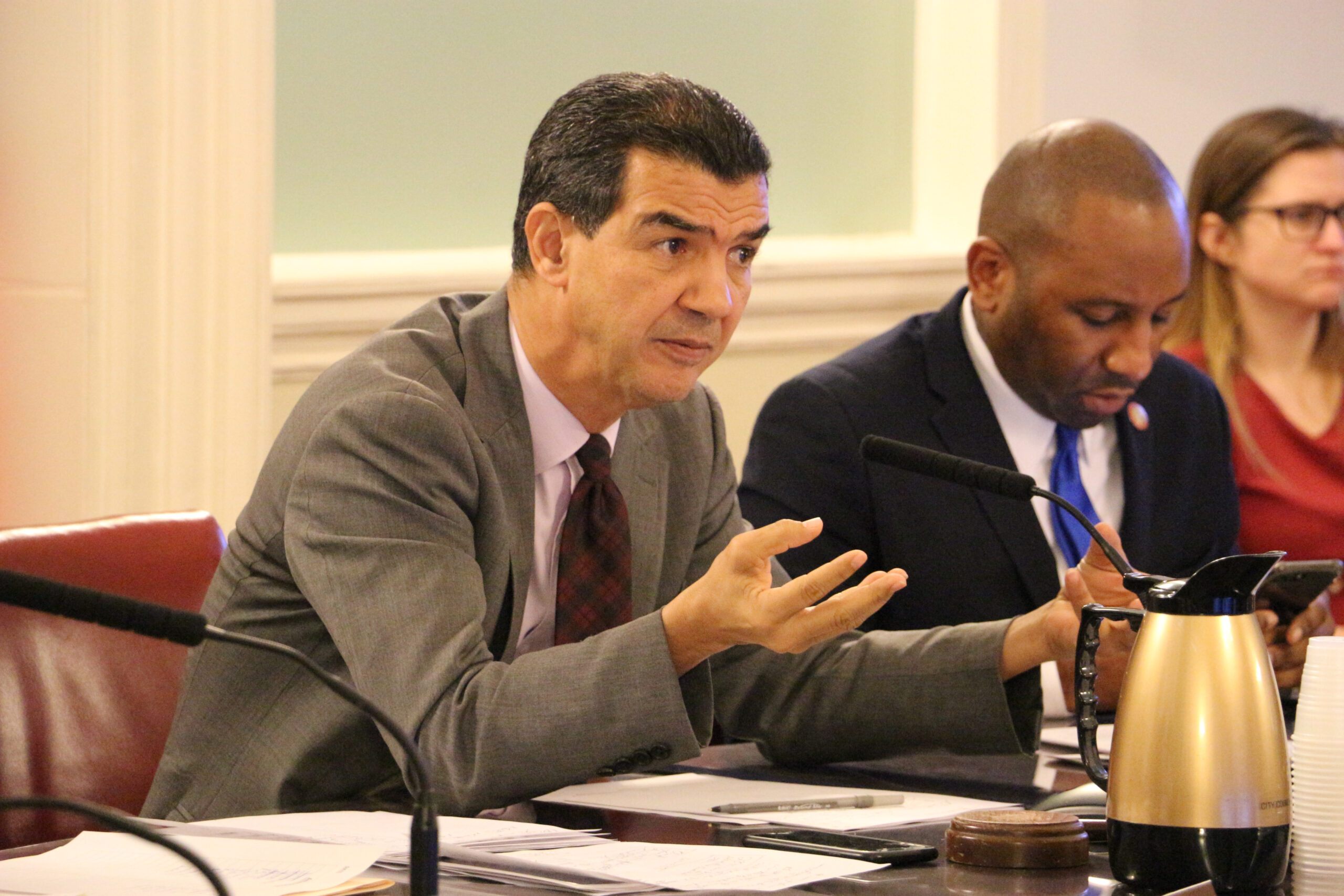
New York City Transportation Commissioner Ydanis Rodriguez, a longtime political ally of Mayor Eric Adams and one of the most visible Latino leaders in city government, made headlines after breaking ranks with most of Adams’ senior team and endorsing Democratic front-runner Zohran Mamdani for mayor. As reported on Sunday in The New York Daily News, Rodriguez delivered his endorsement during a campaign rally in Washington Heights—a symbolic backdrop considering it is the same neighborhood he represented for over a decade in the City Council.
The rally, attended by Congressman Adriano Espaillat, who also threw his support behind Mamdani, marks one of the most consequential endorsements of the race so far. Early voting had just begun the day before, heightening the significance of Rodriguez’s announcement and further sharpening the contrast between Mamdani and his main rival, former Governor Andrew Cuomo, who is running as an independent.
The endorsement has already stirred debate, not only for its political implications but also for what many are describing as a moral contradiction: that Rodriguez, once the elected city council representative for Washington Heights’ diverse population—including a large and deeply rooted Jewish community—is now backing a candidate whose record and rhetoric toward Israel and Jewish concerns have been repeatedly condemned as divisive, inflammatory, and overtly antisemitic.
According to the report in The New York Daily News, Rodriguez’s move makes him one of the few remaining high-ranking members of the Adams administration to publicly wade into the mayoral race. Following Adams’ decision last month to suspend his reelection campaign amid plummeting poll numbers and ongoing political controversies, most of his key advisers swiftly coalesced around Cuomo’s candidacy.
Adams himself endorsed Cuomo, calling him the only candidate with the executive experience needed to govern the city. Other loyalists, including First Deputy Mayor Randy Mastro and longtime Adams confidant Frank Carone, followed suit. Rodriguez’s defection, therefore, stands out—not simply as a political statement, but as a symbolic rupture within the Adams camp.
His decision effectively splits what was once a unified network of political allies who helped deliver Adams’ 2021 victory, a coalition built on minority outreach, union backing, and strong support among Latino and working-class voters. Rodriguez’s endorsement of Mamdani, therefore, does not merely add a new name to the candidate’s growing list of backers—it reshapes the city’s coalition map.
As The Daily News report detailed, Rodriguez’s endorsement gives Mamdani something he sorely needed: credibility within New York’s vast Hispanic electorate. Rodriguez, a Dominican-born politician who has long positioned himself as a bridge between immigrant communities and City Hall, was instrumental in mobilizing Latino voters for Adams during the last election cycle. His backing now carries significant weight for Mamdani, particularly in uptown Manhattan, the Bronx, and parts of Queens where Latino turnout could determine the outcome.
In an interview with The Daily News before the rally, Mamdani notably declined to rule out keeping Rodriguez on as Department of Transportation Commissioner if he wins in November. The comment raised eyebrows among political observers, who saw the endorsement as possibly transactional—a tacit agreement that could preserve Rodriguez’s position in city government under a new administration.
Yet Rodriguez’s decision comes with clear risks. For one, Mamdani’s progressive base often clashes ideologically with the more moderate, pragmatic approach that Rodriguez and Adams cultivated. More controversially, Mamdani’s outspoken hostility toward Israel and his associations with the far-left Democratic Socialists of America have alienated many Jewish voters across the city, particularly those in Washington Heights and other neighborhoods Rodriguez once represented.
For many of Rodriguez’s former constituents in Washington Heights, the endorsement landed as a betrayal. The neighborhood’s Jewish residents—many of whom supported him through his years in the City Council—expressed shock that he would back a candidate who has supported the Boycott, Divestment and Sanctions (BDS) movement and publicly referred to Israel as an “apartheid state.”
Mamdani, a Ugandan-born Assemblyman from Queens and a self-identified “democratic socialist,” has also faced backlash for statements that critics see as antisemitic dog whistles. He has called for the arrest of Israeli Prime Minister Benjamin Netanyahu as a “war criminal” and accused Israel of committing “genocide” in Gaza. Despite subsequent attempts to soften his language, Mamdani has consistently refused to retract those remarks.
In that context, Rodriguez’s embrace of Mamdani feels incongruous with his long record of representing Jewish constituents and advocating for community unity. “It’s difficult to reconcile Ydanis Rodriguez’s history as an inclusive leader with his endorsement of someone whose rhetoric has been deeply hurtful to Jewish New Yorkers,” one former constituent said in response to the Daily News story. “This isn’t about politics—it’s about values.”
The optics are particularly damaging given that Rodriguez built his early career on the principles of coalition-building and cross-cultural solidarity. During his tenure on the City Council, he worked closely with Jewish organizations on education, housing, and neighborhood safety initiatives. His apparent pivot toward Mamdani—a candidate whose positions have sharply divided New York’s Jewish community—suggests either a shift in his political priorities or a gamble that Jewish disapproval won’t carry significant electoral consequences.
Mayor Adams himself has remained conspicuously silent on Rodriguez’s announcement. A spokesperson for the mayor declined comment when contacted by The Daily News on Sunday, a decision that reflects both caution and frustration. Rodriguez’s endorsement of Mamdani undermines Adams’ own political messaging, which has consistently centered on pragmatic governance and strong ties with Jewish voters.
Adams’ administration and Rodriguez’s Department of Transportation have not always seen eye-to-eye, particularly on the pace and scope of the city’s bike-lane expansion. But until now, the two maintained a public alignment rooted in mutual loyalty. By endorsing Mamdani—who has sharply criticized Adams’ leadership and policing policies—Rodriguez effectively distances himself from the mayor’s political brand and aligns with the ideological opposition.
Within City Hall, some staffers view the endorsement as a strategic calculation by Rodriguez to secure his political survival should Mamdani win. Others interpret it as an act of quiet defiance—a signal that Rodriguez no longer feels bound to Adams’ diminished political fortunes after his failed reelection effort.
Rodriguez’s endorsement could influence voter turnout among Latinos and progressives but might simultaneously alienate moderate Democrats and Jewish voters citywide. Mamdani, according to recent polling, leads Cuomo by double digits, while Republican Curtis Sliwa trails distantly. Still, the race remains fluid, and any shift in turnout patterns—particularly among Jewish and centrist voters—could tighten margins dramatically.
The endorsement also exposes deeper tensions within New York’s Democratic establishment. Rodriguez’s break from the Adams-Cuomo alliance underscores an emerging ideological divide between pragmatic Democrats and the resurgent socialist left that Mamdani embodies. As The Daily News report observed, this division mirrors a broader national struggle over the party’s identity: whether it remains a coalition of moderates and working-class voters or yields further to its activist, far-left flank.
For Rodriguez personally, the gamble is immense. Should Mamdani win, Rodriguez may well find himself rewarded—with influence, perhaps, or even a continued Cabinet position. But if Mamdani’s polarizing campaign falters under the weight of its own controversies, Rodriguez’s endorsement will be remembered not as visionary but as opportunistic—a case study in political miscalculation.
In Washington Heights, where diverse communities coexist in a complex but generally respectful equilibrium, Rodriguez’s endorsement reverberates beyond campaign rhetoric. To Jewish residents, it represents a break in a decades-long relationship built on mutual trust and representation. To Latino constituents, it is a reminder that political alliances often shift with the winds of ambition.
Whatever Rodriguez’s motivations—be they ideological conviction, pragmatic foresight, or simple political survival—the decision marks a defining moment in his career. The endorsement may prove to be a turning point not only for him but for the delicate mosaic of communities that make up northern Manhattan.
As The New York Daily News reported, Mamdani remains the clear favorite heading into the November 4 election. But Rodriguez’s choice underscores an uncomfortable reality about New York politics in 2025: that loyalty, especially in a city built on coalitions, can be as fleeting as the next election cycle.
Rodriguez once championed unity across ethnic and religious lines. By aligning himself with a candidate who has sown division among Jewish New Yorkers, he risks forfeiting that legacy. And as his constituents—past and present—watch this new chapter unfold, one question lingers: has Ydanis Rodriguez chosen the future of the city, or merely the fleeting favor of its likely winner?
Either way, as The New York Daily News first reported, his endorsement has changed the contours of the race—and perhaps, the contours of his own political identity—for good.
