



|
Getting your Trinity Audio player ready...
|
By: Rob Otto
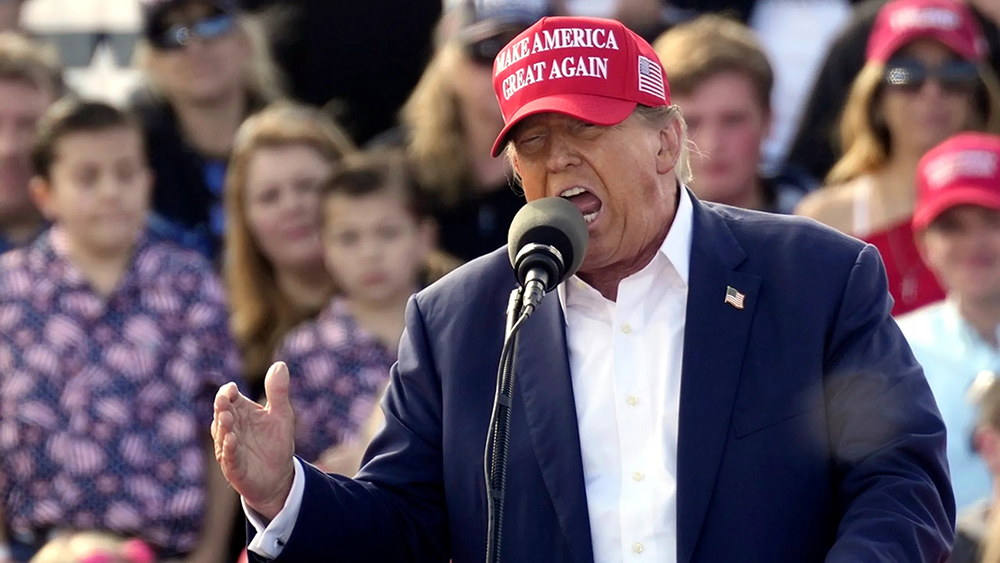
In a recent appearance on the “America First with Sebastian Gorka” podcast, former President Donald Trump ignited controversy, stating that American Jewish support for the Democratic Party signals animosity towards Israel and a loathing for their own religion. Jewish voters in America have historically voted for Democratic candidates since the days of Franklin Roosevelt and the New Deal era.
These remarks come right after Senator Chuck Schumer, betrayed Israel by demanding the Jewish state hold an election in the middle of its battle for survival against Hamas, to unseat Netanyahu.
Schumer has been rightfully criticized by Trump as participating in meddling and “election interference.”
Trump’s diatribe extended beyond individual voters to encompass broader accusations against the Democratic Party itself, asserting that its policies pose a threat to Israel’s security and could lead to the nation’s destruction. Citing Iran’s pursuit of nuclear weapons and the Biden administration’s leniency on sanctions, Trump painted a dire picture of Israel’s future under Democratic leadership.
Central to Trump’s critique was Senate Majority Leader Chuck Schumer, whom he accused of prioritizing political gain over longstanding support for Israel by criticizing Israeli Prime Minister Benjamin Netanyahu.
Trump’s insinuation that Schumer’s remarks were driven solely by a desire for votes underscores the deeply partisan nature of US-Israeli relations, with political considerations often overshadowing diplomatic imperatives.
The swift condemnation of Trump’s comments by both Schumer and the Biden campaign was predictable. Labeling Trump’s remarks as hateful and divisive, they sought to distance themselves from his rhetoric and reaffirm their commitment to bipartisan support for Israel.
The White House spokesperson echoed these sentiments, denouncing Trump’s comments as “vile and unhinged antisemitic rhetoric.” The Biden administration has yet to condemn antisemites such as Rep. Ilhan Omar and Rashida Tlaib.
Trump also finds himself embroiled in a legal battle with activist New York Attorney General Letitia James over a civil fraud case. After failing to secure a bond to appeal the $454 million penalty imposed on him and his children, Trump launched a scathing attack on James and the presiding judge, Arthur Engoron.
Trump’s assertion that the case is a politically motivated “witch hunt” aimed at dismantling his property empire underscores the contentious nature of his relationship with law enforcement and the judicial system. By casting himself as a victim of persecution, Trump seeks to rally support among his base and delegitimize the charges against him.
The inability of Trump’s legal team to secure the necessary bond, despite efforts to solicit support from numerous bond companies, raises questions about the viability of his legal strategy and the potential consequences of failing to meet the looming deadline. With the specter of asset seizure looming, Trump’s defiance in the face of legal challenges underscores the tenacity of his personality and his unwillingness to capitulate to pressure.
If Trump cannot post the $454 million bond, James could seek to freeze some of his bank accounts and properties.
As Trump and his legal adversaries trade barbs in the courtroom and the court of public opinion, the outcome of both the legal battle and its implications for Trump’s political future remain uncertain. Against a backdrop of escalating tensions and mounting scrutiny, Trump’s legal entanglements continue to captivate and polarize the American public.
