



|
Getting your Trinity Audio player ready...
|
By: Jerome Brookshire – Jewish Voice News
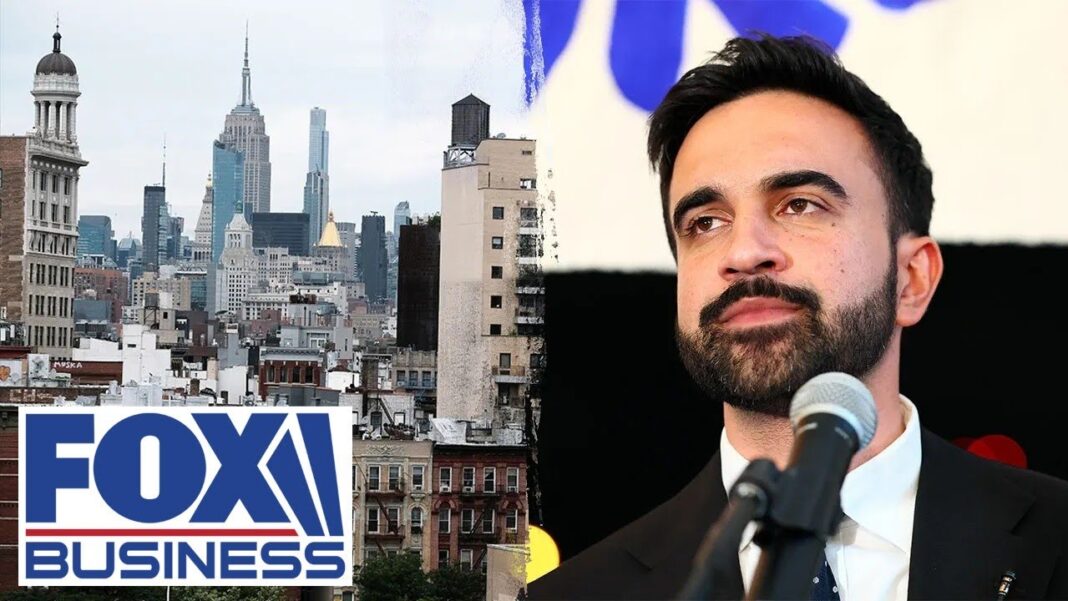
The fallout from Zohran Mamdani’s stunning mayoral victory in New York City is being felt far beyond the five boroughs — and nowhere more visibly than across the state line in Connecticut’s gilded suburbs. As The New York Post reported on Sunday, luxury real estate in towns such as Greenwich, New Canaan, and Stamford has erupted into a full-blown buying frenzy, driven by affluent families fleeing what many now call “the Mamdani Effect.”\
According to brokers quoted in The New York Post report, open houses that once drew a modest flow of weekend browsers are now jam-packed with eager New York buyers anxious to trade the uncertainties of urban life for the safety, order, and manicured calm of Fairfield County. The reason, agents say, lies not only in the allure of Connecticut’s leafy tranquility but in the growing unease over the socialist-leaning policies, public safety concerns, and economic instability that many fear could redefine the nation’s largest city under its new mayor.
“Every lot is desirable in Greenwich now,” said Mary Ann Heaven, a broker with Berkshire Hathaway HomeServices, when speaking with The New York Post. “We’re expecting fifty or sixty parties at an open house this weekend — that’s nearly three times the usual traffic.”
Heaven described the surge in activity as “unlike anything I’ve seen in decades.” Buyers, she said, are motivated by a sense that Connecticut represents not just a lifestyle upgrade, but a kind of ideological refuge. “Greenwich is extremely stable,” she noted. “People are confident that the winds of change that are happening down there [in New York City] are not happening up here.”
The “Mamdani Effect,” as coined by The New York Post, refers to the wave of relocation sparked by Mayor-elect Zohran Mamdani’s progressive agenda — one that includes rent freezes, expansive social programs, and a “free buses for all” initiative that critics say could undermine both safety and fiscal stability.
For many upper-middle-class New Yorkers — professionals in finance, law, and media — the uncertainty has proved too much to stomach. “The people leaving New York City now are not like the people who left four or five years ago,” said Marshall Heaven, of M.H. Heaven Real Estate in Greenwich and husband to Mary Ann.
“They’re not the ultra-rich buying weekend homes,” he told The New York Post. “These are families selling their apartments and moving their lives here. They want out — not a getaway.”
Heaven recounted selling a colonial-style home this week for $2.5 million — half a million over its asking price. “That kind of bidding war used to happen in Manhattan,” he said. “Now it’s happening in Greenwich.”
While rising taxes and rent control proposals have driven real estate anxiety for years, brokers say the tipping point came with Mamdani’s highly controversial public transit policy. The mayor-elect’s plan to make all city buses free of charge, presented as an equity measure, has been lambasted by critics who fear it will turn the transit system into a magnet for disorder and danger.
As The New York Post report noted, some New Yorkers — particularly parents — have voiced alarm at the idea of sending their children across town on “unmonitored, unfiltered” buses potentially overrun by the city’s growing homeless and mentally ill populations.
“I think the major thing that will affect people would be something as simple as free bus tickets,” said John Antretter, a Manhattan and Brooklyn real estate broker quoted by The New York Post. “If people feel unsafe sending their kids across town on the bus every day, they’ll start driving them or paying for car services — and then they’ll start thinking: why not just move altogether?”
Antretter said safety, not ideology, is the true trigger for the migration. “It’s about quality of life. Parents aren’t going to gamble on their kids’ safety — not in a city that seems to be unraveling.”
As a result, the Connecticut real estate market — particularly in the affluent belt stretching from Greenwich to New Canaan and Norwalk — has exploded. Homes that once lingered for months are selling within days, often for sums far above their asking prices.
“The market is screaming,” said Dimitry Melnikov, owner of the interior design firm Putnam Design in Greenwich’s Cos Cob neighborhood, speaking to The New York Post. “It’s hot. Places are selling for much more than they’re worth.”
Melnikov described the pace of sales as “madness.” “A friend put a house up last Friday,” he said. “Within twelve hours — by Monday morning — he had ninety offers. That’s not normal. It’s not sustainable. I know it’s not good for New York City.”
Melnikov, who emigrated from Belarus, drew an ominous comparison between the policies emerging in New York and the socialist governance he fled as a young man. “I grew up in Belarus; I’m familiar with socialism,” he told The New York Post. “It’s not going to work in New York City. To lay socialism on top of capitalism? That’s not going to work.”
The migration from New York City to Connecticut has accelerated sharply since Mamdani’s election, according to agents cited in The New York Post report, and it appears to be reshaping not only property values but the social composition of the communities absorbing the exodus.
Many of the newcomers are in their 30s and 40s — young professionals and families with school-aged children. Unlike the pandemic-era relocations, which often saw hedge funders and media moguls purchasing sprawling estates while keeping their Manhattan pied-à-terres, the new wave is liquidating assets entirely. “They’re not coming for the weekends,” said one Fairfield County agent. “They’re coming for good.”
This shift has created a sudden shortage of inventory and sent home prices soaring across the region. In Greenwich, median home prices have risen by nearly 18% in the past six months, according to market data cited in The New York Post report. Even modest colonials and split-levels are commanding luxury-level offers.
Builders, meanwhile, are struggling to keep up with demand as land becomes scarce. “Every lot is desirable now,” said Mary Ann Heaven. “People are bidding on tear-downs just to get a foothold.”
While Connecticut celebrates its boom, Manhattan’s luxury market tells a different story. The New York Post has chronicled a slump in high-end apartment sales since Mamdani’s victory, as wealthy residents accelerate plans to relocate. Many brokers report listings withdrawn or repriced as political uncertainty cools investment appetite.
Developers, too, are nervous. With Mamdani pledging to “democratize housing” through rent freezes and new restrictions on luxury developments, several high-profile projects in Midtown and Downtown have already been paused pending policy clarification.
“Investors are holding their breath,” one Manhattan property manager told The New York Post. “They’re waiting to see whether the city is still open for business.”
For longtime observers, the “Mamdani Effect” has become more than a real estate trend — it is a referendum on New York’s political direction. “You can’t govern a global city through ideology alone,” said Melnikov. “You need pragmatism, balance, and respect for the people who create jobs and pay taxes. Otherwise, they’ll leave — and they’re already leaving.”
As The New York Post editorialized this week, the city’s new leadership faces a pivotal moment: either restore confidence in New York as a place for innovation and investment, or watch its economic lifeblood seep north across the border.
For now, Greenwich’s open houses remain full, its lawns pristine, and its residents grateful to be far from the city’s new experiment. “People want safety, order, and common sense,” said Heaven. “That’s what they’re buying here — not just a house, but peace of mind.”
And for a growing number of New Yorkers, The New York Post report noted, that peace of mind is worth every penny of the bidding war.
