



|
Getting your Trinity Audio player ready...
|
By: Fern Sidman
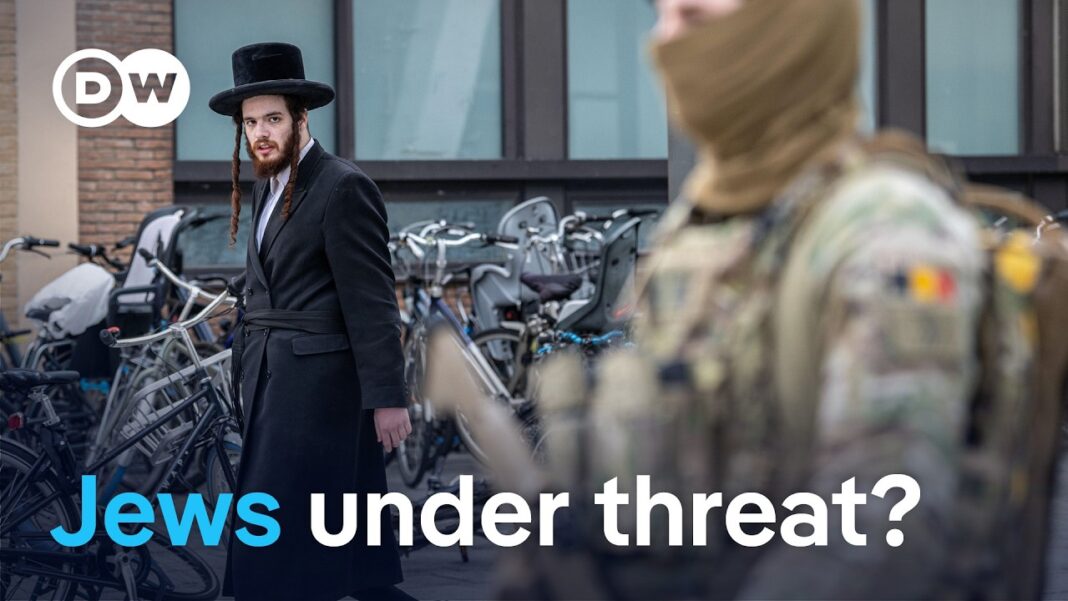
A deeply unsettling pattern of antisemitic violence is unfolding across the globe, marked by an escalation in both frequency and severity that has left Jewish communities increasingly vulnerable. The latest and most alarming episode occurred in London, where two Jewish men were seriously wounded in a stabbing attack in the Golders Green neighborhood—a community long recognized as a center of Jewish life in the United Kingdom. Authorities swiftly classified the assault as a terrorist incident, underscoring the gravity of what has become an unmistakable trend.
According to extensive reporting and monitoring by The Combat Antisemitism Movement (CAM), this attack is not an isolated occurrence but part of a broader and deeply troubling surge in antisemitic incidents worldwide. In the span of a single week, eight Jewish individuals were injured in violent assaults across multiple countries, a statistic that speaks to the scale and urgency of the crisis.
The London stabbing follows closely on the heels of another shocking episode in the same neighborhood, where four Jewish ambulances were deliberately set ablaze. That act of destruction, combined with the recent attack, has heightened fears among residents and raised pressing questions about the effectiveness of existing security measures. For many, the sense of safety that once characterized daily life has been replaced by an atmosphere of uncertainty and apprehension.
Sacha Roytman, chief executive officer of CAM, has issued a stark warning regarding the implications of this trend. “If governments do not respond forcefully at every level, through policing, legislation, education, and the dismantling of incitement networks, this ‘hunting season’ against Jews will continue,” he stated. His choice of words reflects the severity of the situation, conveying a sense of urgency that resonates across the communities most directly affected.
The characterization of a “hunting season” is particularly striking, suggesting not only the persistence of antisemitic violence but also its normalization within certain segments of society. As CAM has repeatedly emphasized, the danger lies not only in individual acts of violence but in the broader environment that allows such acts to occur with increasing frequency.
The events in London are mirrored by incidents in other parts of the world, each contributing to a mosaic of hostility that spans continents. In Italy, Jewish participants at a rally commemorating the liberation from Nazi occupation were forced to leave under police escort after being subjected to chants of “Long live Hitler” and other antisemitic taunts. The symbolism of this incident—occurring at an event dedicated to the defeat of fascism—has not been lost on observers, who view it as a stark reminder of the persistence of hatred even in contexts meant to honor its defeat.
In Germany, the situation is equally troubling. A synagogue in the city of Cottbus was defaced with swastikas, while residential buildings in Berlin were marked with messages such as “Kill all Jews” and “Only a dead Jew is a good Jew.” These expressions of hatred, documented by the Antisemitism Research Center of The Combat Antisemitism Movement, reflect a level of overt hostility that many had hoped belonged to the past.
Across the Atlantic, Canada has not been immune to these developments. In the Toronto area, an individual attempted to forcibly enter a Jewish community center. After being turned away, he assaulted a Jewish father walking with his son to synagogue. The following day, a separate act of vandalism targeted a Judaica store, further contributing to a sense of insecurity within the local community.
Australia, too, has witnessed incidents that, while less overtly violent, nonetheless carry significant implications. A benefit concert in Sydney intended to support victims of a recent attack was canceled after a participating Greek choir refused to perform alongside a Jewish ensemble. This decision, while not an act of violence, reflects a form of exclusion that many view as part of the broader pattern of antisemitism.
Taken together, these incidents illustrate the multifaceted nature of the current crisis. Antisemitism is manifesting not only in physical violence but also in verbal abuse, vandalism, and social exclusion. Each form contributes to an environment in which Jewish individuals and institutions are increasingly targeted, often with little indication that the trend is abating.
The role of CAM in documenting and responding to these developments has been critical. Through its Antisemitism Research Center, the organization has provided a comprehensive overview of incidents worldwide, offering both data and analysis that inform policy discussions and public awareness. Its efforts underscore the importance of coordinated responses to what is, by all accounts, a global phenomenon.
Roytman’s call for action highlights several key areas in which governments must engage. Enhanced policing is essential to provide immediate protection for vulnerable communities. Legislative measures are needed to address gaps in existing frameworks and ensure that perpetrators are held accountable. Educational initiatives play a crucial role in countering the narratives that fuel antisemitism, while efforts to dismantle networks of incitement are necessary to address the root causes of the problem.
Yet despite these recommendations, the pace and scope of governmental responses have often been criticized as insufficient. The persistence of antisemitic incidents suggests that current measures are failing to achieve their intended effect. As CAM has noted, the challenge lies not only in implementing policies but in doing so with the urgency and consistency required to make a tangible difference.
Amid this climate of concern, there have also been efforts to highlight the positive contributions of Jewish communities and to foster a sense of solidarity. In Savannah, Georgia, fifty mayors from across the United States gathered for a forum organized by The Combat Antisemitism Movement to mark the beginning of Jewish American Heritage Month. The event, which celebrated Jewish contributions to American society, served as a reminder of the resilience and vitality of the communities under threat.
The juxtaposition of such celebrations with the ongoing wave of antisemitic incidents underscores the complexity of the current moment. On one hand, there is a recognition of the enduring contributions of Jewish individuals and institutions. On the other, there is a growing awareness of the challenges they face in maintaining their security and sense of belonging.
As the United States approaches its two hundred fiftieth anniversary, the themes explored at the Savannah forum take on added significance. The celebration of diversity and inclusion, central to the nation’s identity, stands in stark contrast to the exclusionary ideologies that underpin antisemitism. The question, then, is how these ideals can be upheld in the face of mounting challenges.
The answer, as suggested by CAM, lies in a comprehensive and sustained effort that addresses both the symptoms and the causes of antisemitism. This includes not only immediate measures to protect Jewish communities but also long-term strategies to counter the narratives that fuel hatred.
The events of recent weeks serve as a stark reminder of the stakes involved. The stabbing in London, the vandalism in Germany, the assault in Canada, and the exclusion in Australia are not isolated incidents but part of a broader pattern that demands attention. The characterization of this trend as a “hunting season” may be unsettling, but it reflects a reality that cannot be ignored.
In confronting this challenge, the role of organizations such as CAM is indispensable. By documenting incidents, raising awareness, and advocating for action, they provide a framework for addressing what is, at its core, a crisis of values.
The path forward will require not only policy changes but a renewed commitment to the principles of tolerance and mutual respect. It will require governments to act decisively, communities to stand together, and individuals to reject the narratives that perpetuate hatred. Above all, it will require a recognition that the fight against antisemitism is not confined to any one group but is a shared responsibility.
As the world grapples with this escalating crisis, the message from CAM is clear: the time for action is now. The consequences of inaction are evident in the events unfolding across the globe, and the opportunity to reverse this trend, while still within reach, is rapidly diminishing.
