



|
Getting your Trinity Audio player ready...
|
By: Justin Winograd
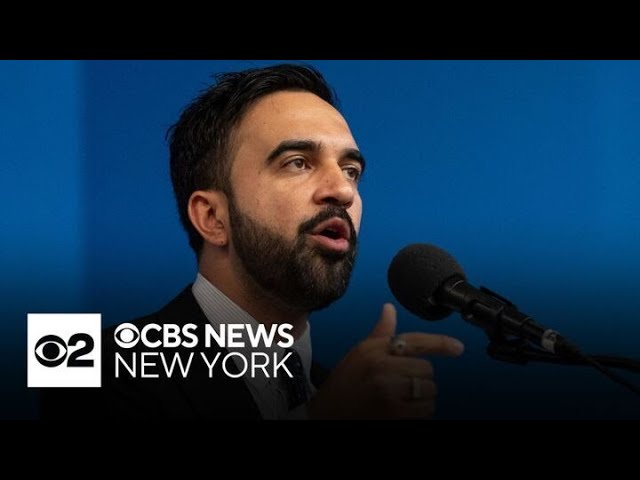
By all available measures, the political winds in New York City are shifting dramatically. A new Marist University Institute for Public Opinion survey released Tuesday revealed that Zohran Mamdani — the 33-year-old Democratic Socialist assemblyman from Queens — has not only surged ahead in the crowded four-way mayoral race but has established a commanding lead of 21 percentage points over his nearest competitor, former Governor Andrew Cuomo.
According to the poll, Mamdani commands 45% support among likely voters, compared to Cuomo’s 24%, Curtis Sliwa’s 17%, and incumbent Mayor Eric Adams’ 9%. Just 5% remain undecided. As The New York Post reported on Tuesday, the survey underscores the degree to which Mamdani has capitalized on a fractured field, energized young progressives, and solidified support among minority voters, particularly Black and Latino New Yorkers.
The Marist findings reflect a consistent trend in recent polls showing Mamdani opening double-digit leads over his rivals. For many observers, the numbers confirm what The New York Post has described as a “runaway momentum” narrative: a previously little-known assemblyman, propelled by a mix of grassroots enthusiasm and demographic shifts, is now on the cusp of becoming the city’s first self-identified socialist mayor in modern history.
Central to Mamdani’s rise is his dominance among younger and left-leaning voters. The survey revealed that 62% of voters under 45 support him, compared to a paltry 14% for Cuomo. Among “very liberal” voters, the figure is even more staggering: 86% back Mamdani, as do nearly two-thirds of all voters who identify as liberal.
“The data are clear: Mamdani is running up the score,” Lee Miringoff, director of the Marist poll, told The New York Post. “It’s getting late early.”
Perhaps most striking is Mamdani’s surge within the Black community, a constituency Cuomo carried comfortably in the Democratic primary earlier this summer. Now, however, the tables have turned. Nearly half of Black respondents — 47% — said they would vote for Mamdani in November, compared to 26% for Cuomo, 11% for Adams, and just 5% for Sliwa.
Latino voters, too, are breaking decisively for Mamdani. A majority — 52% — say they back the Queens assemblyman, compared to 21% for Cuomo, 17% for Sliwa, and 7% for Adams.
As The New York Post report emphasized, Mamdani’s ability to consolidate minority support, particularly in Brooklyn, where he enjoys a massive 33-point advantage, has reshaped the race and complicated Cuomo’s already uphill battle.
Cuomo has sought to capitalize on Mamdani’s controversial record on Israel, repeatedly attacking the socialist’s backing of the Boycott, Divestment, and Sanctions (BDS) movement and his refusal to distance himself from anti-Israel slogans such as “Globalize the Intifada.”
Yet the strategy has yielded mixed results. Jewish voters in the city remain split almost evenly, with 35% supporting Mamdani and 35% backing Cuomo, according to the poll. Adams draws 17% while Sliwa claims 11%.
The numbers reflect what The New York Post report described as a “deep divide” within Jewish communities: while Mamdani’s rhetoric has alarmed moderates and pro-Israel voters, his unapologetically leftist stance appeals to younger, more progressive Jews who view his campaign as part of a broader social-justice agenda.
If Mamdani represents the new face of New York City politics, the incumbent mayor is its most conspicuous casualty. Once seen as a centrist bulwark against the progressive left, Eric Adams now finds himself languishing in single digits with a dismal 68% unfavorable rating.
Curtis Sliwa, founder of the Guardian Angels and the Republican nominee, continues to command a loyal conservative base, with 42% of right-leaning voters backing him. But his overall support remains stuck below 20%. Despite appeals from former President Donald Trump to drop out and consolidate the anti-Mamdani vote, Sliwa has pledged to remain in the race.
The New York Post has argued that Sliwa’s refusal to bow out may inadvertently cement Mamdani’s path to City Hall by dividing the opposition vote and denying Cuomo the opportunity to frame the election as a head-to-head contest.
The Marist poll tested hypothetical scenarios that strip away some of the field’s complexity. In a two-way contest between Mamdani and Cuomo, the socialist’s lead narrows but remains significant: 49% to 39%.
Similarly, if Adams were to drop out, Mamdani would still lead Cuomo by 16 points, with 46% support to Cuomo’s 30%, while Sliwa rises modestly to 18%.
For Cuomo, the numbers underscore a sobering reality: even in scenarios designed to improve his odds, he struggles to overcome Mamdani’s popularity, particularly among younger and minority voters.
Pollster Miringoff noted that beyond policy positions, Mamdani benefits from an intangible but potent advantage: likeability.
According to the survey, 52% of voters have a favorable impression of Mamdani, compared to 40% who view him unfavorably. Cuomo, by contrast, is underwater, with just 39% favorable and a bruising 59% unfavorable rating. Adams fares even worse, with a staggering 68% unfavorable, while Sliwa’s numbers are mixed at 51% unfavorable.
“The challenge for Cuomo and the others is not just political,” Miringoff explained. “Voters simply like Mamdani more.” The New York Post echoed this assessment, noting that personality dynamics, often overlooked in campaign coverage, may be decisive in the final stretch.
The Marist poll was conducted before Governor Kathy Hochul’s surprise endorsement of Mamdani over the weekend, a move that The New York Post described as a “bombshell.” Hochul’s backing gives the socialist candidate establishment validation he previously lacked and could further consolidate Democratic voters behind him.
Cuomo, already hobbled by high unfavorable ratings, now faces the daunting task of countering not only Mamdani’s grassroots momentum but also the imprimatur of the sitting governor.
With less than two months until Election Day, the next major inflection point will likely come during the televised debates. Miringoff told The New York Post that Cuomo must “step it up” by highlighting his progressive record — including his role in legalizing same-sex marriage as governor — if he hopes to break Mamdani’s stranglehold on liberal voters.
The debates could also provide Sliwa an opportunity to press his law-and-order message and appeal to moderates unsettled by Mamdani’s radical positions. But barring a seismic shift, Mamdani enters the final weeks of the campaign as the clear front-runner.
The New York City mayoral race, once expected to be a bruising contest between centrist Democrats and a revived Cuomo, has instead been transformed into a referendum on the city’s ideological direction. As The New York Post has repeatedly emphasized, Mamdani’s surge reflects both the collapse of Adams’ incumbency and the inability of Cuomo or Sliwa to build broad coalitions in a fractured electorate.
If current trends hold, New York is on track to elect a socialist mayor, reshaping the political landscape of America’s largest city. For Mamdani’s supporters, the prospect is exhilarating. For his critics, particularly in Jewish and pro-Israel circles, it is deeply troubling. Either way, the story is one of momentum — and right now, Zohran Mamdani has it in abundance.
