



|
Getting your Trinity Audio player ready...
|
Second Major Subway Power Outage in Three Days Brings Manhattan Commutes to a Standstill
By: Jerome Brookshire
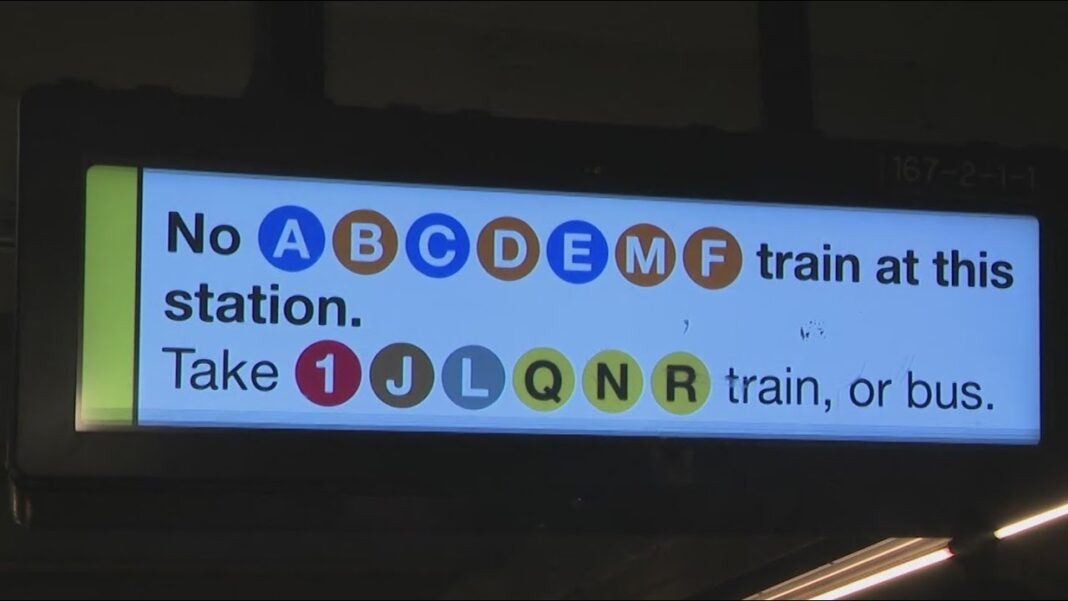
For the second time in less than a week, a critical technical failure near the West 4th Street station caused major disruptions across multiple Manhattan subway lines, leaving thousands of commuters scrambling for alternatives during the Thursday morning rush. According to a report that appeared on Thursday in The New York Daily News, the Metropolitan Transportation Authority (MTA) confirmed the issue stemmed from “power problems” at the downtown transit hub, though the precise cause remains unclear.
The outage had a cascading effect on several lines. As of mid-morning, B train service was suspended in both directions, while F trains were rerouted to bypass Manhattan altogether via the G and E lines. Service on the C line was also affected, D trains were halted between 34th Street–Herald Square and Atlantic Avenue in Brooklyn, and M train service was down between Delancey Street–Essex Street and Forest Hills–71st Avenue.
Commuters reported confusion on crowded platforms and long waits as service updates trickled out. The New York Daily News report noted that many trains already in motion were forced to stop between stations, compounding delays as crews worked to restore power near West 4th Street.
Thursday’s disruption bore a striking resemblance to the breakdown that occurred just two days earlier. On Tuesday morning, a tripped breaker at the same West 4th Street station disabled subway signals, leaving multiple trains stranded underground at red lights for nearly an hour. As The New York Daily News reported at the time, the signal outage prompted a significant investigation by the MTA, though a conclusive explanation for the failure has not yet been released.
The recurrence of problems at the same location has heightened concerns about the resiliency of New York’s aging subway infrastructure. Transit officials have not clarified whether Thursday’s “power problems” were related to the breaker issue earlier in the week, but riders expressed frustration that two separate malfunctions at one station could paralyze so many lines in such quick succession.
An MTA spokesperson told The New York Daily News that crews were dispatched immediately to the scene and were working to restore normal service as quickly as possible. The spokesperson declined to provide further details, citing an ongoing assessment of the situation.
Transit advocates have pointed out that West 4th Street, a key junction in lower Manhattan, is one of the most heavily trafficked points in the system, and breakdowns there can ripple across the entire network. According to the information contained in The New York Daily News report, the incident once again illustrates how a single electrical or signal failure can cause widespread disruption, particularly during peak travel hours.
Straphangers caught in the delays took to social media to vent their anger. Riders described being trapped in stalled trains, rerouted unexpectedly, or forced onto packed alternative lines. Some likened the experience to Tuesday’s incident, questioning why the MTA had not managed to prevent a recurrence just 48 hours later.
As the report in The New York Daily News highlighted, New Yorkers have become accustomed to occasional service interruptions, but two major breakdowns at the same critical junction in three days have intensified calls for transparency from the MTA and for accelerated modernization of the city’s subway infrastructure.
While service gradually resumed on some lines by late morning, the full scope of the disruption’s impact on commuters and the MTA’s operations is still being assessed. The cause of Tuesday’s outage remains under investigation, and now, with Thursday’s power failure compounding the situation, transit officials are under mounting pressure to explain how one station could suffer repeated collapses in such a short span of time.
For now, New Yorkers are left to navigate the unpredictability of a system that remains the lifeblood of the city but continues to show signs of strain.
