



|
Getting your Trinity Audio player ready...
|
Robotaxis Roll Into Gotham: Waymo’s Futuristic Fleet Begins Mapping NYC, But Not Everyone Is Cheering
By: Kaylie McNoor
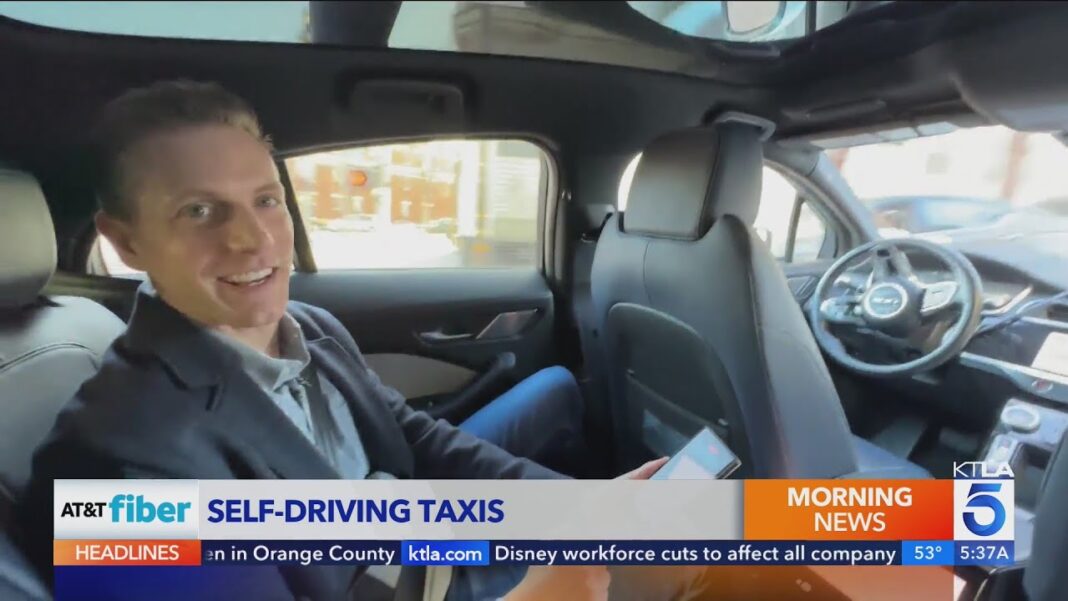
New York City’s yellow cabs—an enduring symbol of the metropolis since the early 20th century—may soon be facing their most existential threat yet. As The New York Post reported on Wednesday, the city’s streets are now the new proving ground for Waymo, the Alphabet-owned autonomous vehicle company that this week deployed a fleet of self-driving robotaxis to begin mapping Manhattan and Brooklyn.
While these sleek electric vehicles are not yet ferrying passengers, their very presence has already sparked intense debate across Gotham—from tech optimists heralding the future, to beleaguered taxi workers fearing economic extinction.
“We’re on the move in the Big Apple,” Waymo posted gleefully on X (formerly Twitter), confirming the launch of its NYC mapping initiative on Monday. The company, a subsidiary of Google’s parent Alphabet, has submitted its application to the Department of Transportation for testing under current state law, which still requires a human “safety operator” behind the wheel.
According to a DOT spokesperson quoted by The New York Post, this is only the beginning: “Waymo is working hard to bring their technology to New Yorkers in the future, starting with this testing and advocating for changes to state law.”
We’re on the move in the Big Apple! 🏙️ We’ve begun testing in New York – be sure to give us a wave and snap a pic if you see us in the city. pic.twitter.com/0cu2XSWAoi
— Waymo (@Waymo) July 8, 2025
If those legal hurdles are cleared—via pending state legislation introduced earlier this year but currently stalled in committee—New York could become the next U.S. city to greenlight fully autonomous ride-hailing. The data collected during this test phase will be pivotal in proving the system’s safety and performance on the city’s notoriously chaotic roads.
But the excitement over driverless technology has cast a long shadow over the livelihoods of more than 200,000 drivers who rely on taxi and rideshare gigs to survive.
“This isn’t just a new app or another rideshare service,” said Bhairavi Desai, executive director of the New York Taxi Workers Alliance, in an interview quoted by The New York Post. “We’re talking about the potential joblessness of over 200,000 New Yorkers—and what’s the plan to keep one million riders a day safe?”
Waymo insists it’s up to the challenge. The company claims that its autonomous system, known as the Waymo Driver, significantly outperforms human drivers in preventing accidents. According to internal data cited by a company spokesperson and reported by The New York Post, Waymo’s trips result in 78% fewer injury-causing collisions, 93% fewer crashes involving pedestrians and 81% fewer involving cyclists.
These numbers may soothe some safety concerns, but they offer little comfort to those worried about a looming labor crisis.
For now, the mapping phase will focus on Manhattan and key areas of Brooklyn, including Brooklyn Heights, DUMBO, Downtown Brooklyn, and Boerum Hill. Nearby cities such as Jersey City and Hoboken are also on the itinerary, as the robotaxis are tasked with ingesting the visual and logistical complexity of the greater metro area—jaywalkers, delivery bikes, horse-drawn carriages, potholes, and all.
It’s not the first time Waymo has dipped its tires in New York. The company previously completed a manual drive through Manhattan in 2021, focusing on weather conditions and other environmental variables, as was reported by The New York Post. This time, however, the goal is more ambitious: to train its advanced AI system to safely navigate—and ultimately dominate—the nation’s most unpredictable urban landscape.
The New York Post report noted that while the robotaxis are still under manual supervision, this is a clear forward thrust in Alphabet’s broader strategy to reshape urban mobility. Waymo currently operates fully autonomous ride-hailing services in San Francisco, Los Angeles, Phoenix, Austin, and Atlanta. Miami is next on the company’s roadmap later this year, with Washington D.C. slated for a 2026 launch.
In contrast, New York remains gridlocked—not just in traffic, but in politics. As The New York Post has reported, the two state bills that would greenlight full autonomous operation remain stuck in committee, and there’s no clear timeline for advancement. The state’s caution may reflect a broader public skepticism, especially as lawmakers weigh labor concerns and liability questions.
For some, the creeping arrival of driverless cars raises a deeper concern about the erosion of human labor in the name of efficiency. For others, it represents a long-overdue leap into the future.
Either way, the sight of a driverless car gliding past a yellow cab on Broadway or Flatbush Avenue may soon become commonplace—a silent symbol of a city on the edge of technological transformation.
As The New York Post report observed: “Futuristic robotaxis are coming to Gotham — and could make the city’s iconic yellow cabs a thing of the past.” Whether that future is welcome or worrisome depends on who’s watching—and who’s still behind the wheel.
