



|
Getting your Trinity Audio player ready...
|
Price Hike Hits NYC’s Guggenheim Museum Amid Post-Pandemic Struggles to Regain Visitors
Edited by: TJVNews.com
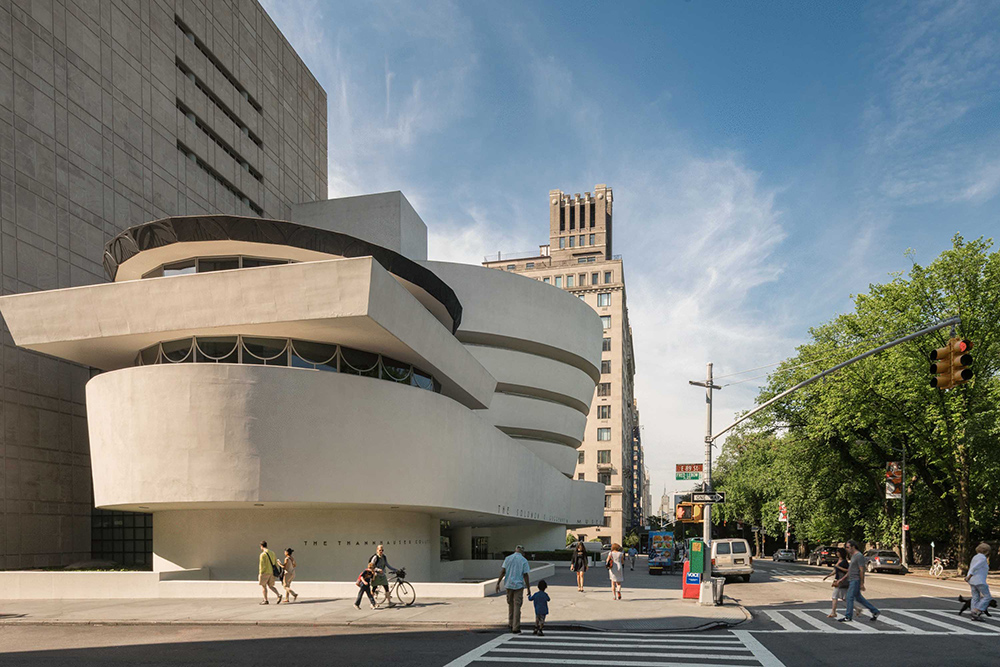
As museums across the country strive to recover from the pandemic-induced decline in visitors, New York City’s esteemed Guggenheim Museum has joined the Metropolitan Museum of Art (MET) and the Whitney Museum in raising admission prices by 20%, the New York Post reported on Thursday. The move comes as these cultural institutions grapple with financial strains and declining visitor levels since the onset of the pandemic.
The Guggenheim, which opened its doors in 1959 with an admission fee of 50 cents (equivalent to just over $5 today), has seen a 16% decrease in visitor levels since 2019, the Post report said. In June, this decline reached 26%, leaving the museum in a fiscal crisis. To offset rising operational costs and recover from the financial impact of the pandemic, the Guggenheim officials made the decision to increase ticket prices.
Admission fees at the Guggenheim now range from $25 to $30, with the museum’s newly unionized staff expressing concerns about rising expenses and inflation affecting their wallets.
The Post reported that the price hike has been met with mixed reactions from museum-goers. Some expressed disappointment and heartbreak at the increased cost of enjoying these cultural treasures. Former New Yorker Laura Siegelman, who now resides in Florida, lamented that while she still finds the Guggenheim to be her favorite museum, the new prices were “ridiculous.” Others shared similar sentiments, believing that museums should be accessible to all and concerned that higher prices might deter some visitors.
“I’ll suffer the indignity of paying $30 because I don’t live here anymore, so it’s more palatable. I can chalk it up to New York being its ridiculously expensive self and then go home to Florida and start saving up for my next trip,” she told The Post on Thursday.
“But I don’t believe for a second that the board or committee, or whoever makes these kinds of decisions, is happy to raise prices to this ridiculous level. I wouldn’t want their job.”
Teresa Accardo, 63, of Huntington said it “breaks the heart” to see the Guggenheim raising prices.
“I’m being dramatic, but it really does,” she told The Post. “Museums aren’t supposed to cost this much.
“I love coming here and I’m going to keep coming here, but with a little chip on my shoulder that I think will impact my ability to enjoy these treasures,” she continued, as was reported by the Post. “I remember coming here in the late ‘70s when the city was going through a whole other kind of crisis, and I don’t remember what I paid but it was a negligible amount. Thirty dollars? You feel that.”
Canadian visitor Kristen Manuel questioned the morality of raising ticket prices, arguing that art should be accessible to everyone. She worried that the increased fees might limit access to art for those who cannot afford it, resulting in a turnoff for potential visitors.
“I think $30 is pretty steep, but then again, so is $25. Everything is skyrocketing,” she told The Post. “I can sympathize with the plight of museums seeing memberships decline, but I’m not sure the solution is to raise prices. The old model in which tickets were affordable to just about everybody seemed to work.”
The Guggenheim spokesperson, Sara Fox, defended the price increase, stating that it was necessary to support the museum’s operational costs and aligns with other museums in New York City, as was reported by the Post. Both the MET and the Whitney have also raised their admission fees to $30, citing similar financial pressures.
“As we recover from the lingering financial strain caused by the pandemic, the museum needs to increase its admission prices, which have not been adjusted since 2015,” Guggenheim spokesperson Sara Fox told The Times.
“The new rates align with those of the museum community in New York City and will help support the operational costs of the museum.”
The MET raised its prices $5 in July 2022, effectively making it the most expensive museum in the city at the time, the Post reported on Thursday.
“The Museum is always seeking a balance between ensuring that we are providing as wide access as possible, and generating critical support for our programming,” a museum spokesperson told The Post at the time. “We think… having a modest increase for out-of-state and international visitors, for the first time in 11 years, is fair and appropriate.”
However, some museums still offer pay-as-you-wish options for local residents, which helps maintain a balance between generating critical support and providing access to a wider audience, the Post report noted. The MET, for instance, continues to offer this option for New York residents and students from certain neighboring states.
The Post report noted that some of NYC’s richest cultural institutions also got federal bailouts during the pandemic — including the Guggenheim and the Whitney.
The Guggenheim received a $5.94 million Paycheck Protection Program loan in 2020 after furloughing 92 staffers and projecting a $15 million revenue loss, as was reported by the Post. The Whitney laid off 76 people and got a PPP loan between $5 million and $10 million.
The New York Botanical Garden, Carnegie Hall, Jazz at Lincoln Center, the Frick Collection, and the Morgan Library and Museum also received PPP loans in 2020, according to the Post report.
Across the country, other museums are facing similar challenges. The Philadelphia Museum of Art raised its admission fee to $30, while the Art Institute of Chicago has become the most expensive with tickets priced at $32 for out-of-state visitors. Many institutions have received government subsidies and federal bailouts during the pandemic, aiding their recovery efforts.
As museums navigate the delicate balance between financial sustainability and accessibility, they are seeking ways to attract diverse audiences while managing rising costs. The younger generation’s perception of culture as something freely accessible on digital platforms poses an additional challenge, leading museums to carefully consider how to strike a balance that ensures culture remains available to all.
