



|
Getting your Trinity Audio player ready...
|
NYC Takes Flight into the Future: Mayor Unveils Plans for Electric Helicopter Hub
Edited by: TJVNews.com
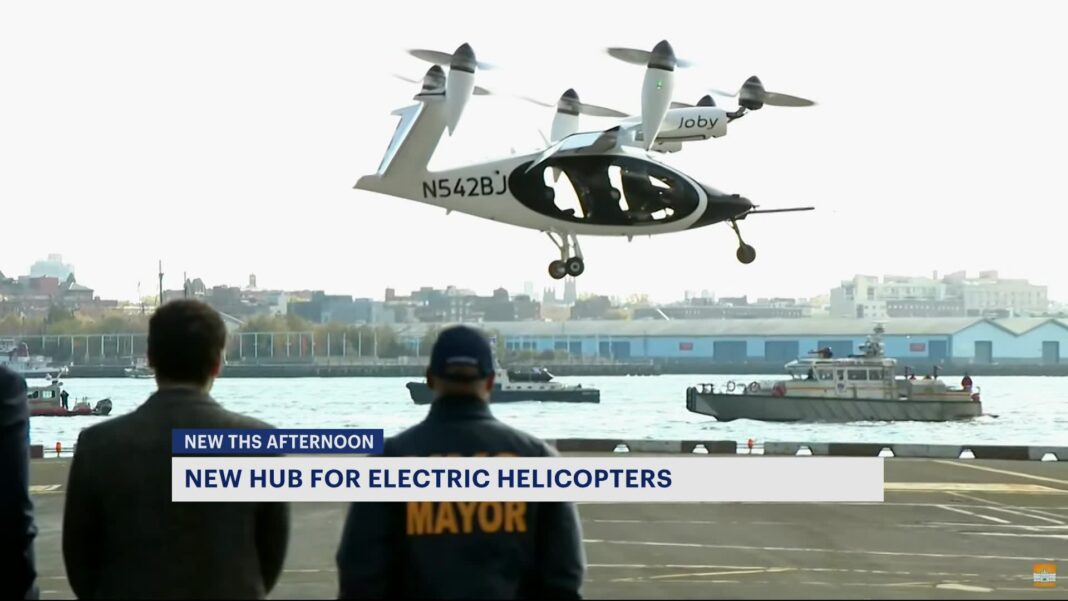
In a groundbreaking move towards sustainable transportation, New York City Mayor Eric Adams revealed ambitious plans to transform New York City’s main heliport into a hub for electric flights, as was reported by the New York Post. The announcement, made on Monday, showcased cutting-edge electric helicopters manufactured by Joby and Volocopter, signaling a futuristic leap in air travel.
The event unfolded at the Downtown Manhattan Heliport in Lower Manhattan, where Mayor Adams witnessed the quiet takeoff of these innovative electric helicopters. The Post report indicated that one of the helicopters, equipped with six different rotors, exemplified the city’s commitment to embracing next-generation aviation technology.
Speaking at the event, Mayor Adams emphasized the significance of bringing sustainability to the skies and streets of the city. The mayor declared, “Today, we are taking sustainability to the sky and our streets, and New Yorkers can feel the electricity in the air in our city as we electrify our heliport infrastructure,” as was reported by the Post.
The initiative is being spearheaded by the New York City Economic Development Corporation (NYCEDC), which is currently in the process of seeking an operator to overhaul the city-owned heliport with the necessary infrastructure for electric flights, as was reported by the Post. This includes the installation of charge cube stations to power up the helicopters between flights.
Mayor Adams envisions the Downtown Manhattan Heliport becoming the world’s first heliport specifically designed for electric-powered aircraft. As was noted in the Post report, the goal is to establish it as a hub for sustainable transportation and local deliveries, reducing the reliance on traditional, noise-polluting helicopters.
“Our vision for the Downtown Manhattan Heliport will create the world’s first heliport with infrastructure for electric-powered aircraft and put this public asset to work for New Yorkers as a hub for sustainable transportation and local deliveries,” Adams said, the Post reported. “We will not only put New York City at the cutting edge of sustainable flight technology while addressing a persistent quality-of-life issue with helicopter noise, but also get trucks off the road and make our streets safer.”
While details about the funding for the heliport upgrade were not disclosed, it is expected that the chosen operator will cover the costs. The Post also reported that the city is urging the operator to begin preparing the infrastructure in advance of Federal Aviation Administration (FAA) approval, which is anticipated as early as 2025.
NYCEDC CEO Andrew Kimball expressed optimism about the rapid deployment of commercial electric flights, anticipating that flights could commence shortly after receiving FAA certification, the Post report said. According to Kimball, New Yorkers might experience electric helicopter flights across the East River within the next two to three years.
The convenience of electric helicopters extends beyond sustainability, with the potential to significantly reduce travel times. Kimball envisions a future where New Yorkers can reach airports like JFK, LaGuardia, or Newark in a mere 10 minutes, a stark contrast to the hour-long journeys typical of ground transportation.
“If you needed to get to JFK or LaGuardia or Newark, you hop on one of these things and get there in 10 minutes instead of an hour,” he said, according to the Post report.
One notable aspect of the showcased electric helicopters is their design to emit noise comparable to typical city sounds, addressing concerns about the disruptive noise associated with traditional helicopters, the report in the Post said. Joby, one of the manufacturers, highlighted that these new-age choppers aim to integrate seamlessly into the urban environment.
As New York City propels itself into the future of sustainable air travel, the heliport transformation stands as a pioneering step towards redefining urban transportation and reducing the city’s carbon footprint.
