































|
Getting your Trinity Audio player ready...
|
Edited by: TJVNews.com
New York City’s ambitious push to enhance the environmental sustainability of its buildings is now facing a critical challenge: maintaining comfortable indoor temperatures for tenants. The city’s stringent Local Law 97 mandates property owners to significantly reduce their buildings’ greenhouse gas emissions. Adding to this complexity, a newly proposed City Council bill stipulates that buildings must keep indoor temperatures at or below 78 degrees Fahrenheit when outdoor temperatures reach 82 degrees or higher.
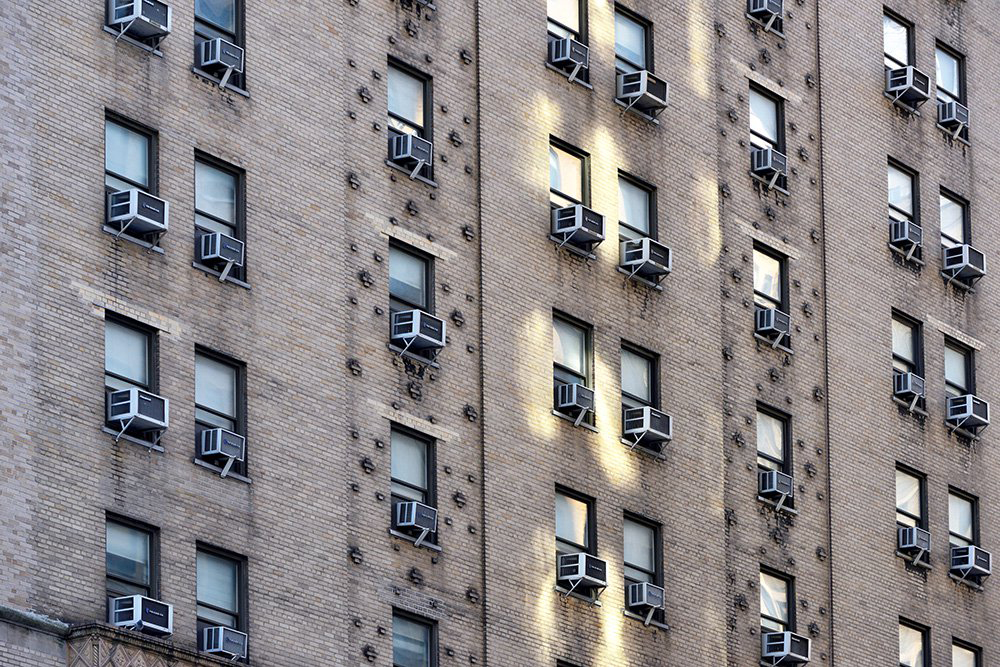
Air conditioning (AC) is crucial for tenant comfort during the sweltering summer months, yet it is a major contributor to greenhouse gas emissions. The reliance on AC systems for cooling poses a dilemma for building owners striving to meet both the environmental goals of Local Law 97 and the comfort needs of their occupants. AC systems consume a considerable amount of energy, predominantly derived from fossil fuels, thereby exacerbating the carbon footprint that the city aims to minimize.
While reducing greenhouse gas emissions is a priority, the health implications of extreme heat cannot be ignored. New York City experiences significant health risks during heat waves, with approximately 350 deaths each summer attributed to hot weather. The vast majority of these fatalities (around 340) are classified as “heat-exacerbated,” indicating that high temperatures aggravate pre-existing health conditions such as cardiovascular and respiratory diseases. The increased frequency and intensity of heat waves due to climate change amplify the urgency of addressing both environmental and health concerns.
The dual objectives of reducing emissions and ensuring tenant comfort create a challenging landscape for property owners and city planners. To comply with Local Law 97, buildings need to implement energy-efficient measures such as improved insulation, upgraded HVAC systems, and the integration of renewable energy sources. However, these measures must also align with the requirement to maintain indoor temperatures within a safe and comfortable range.
Innovations in building technologies and smart climate control systems offer potential solutions. Energy-efficient AC units, coupled with smart thermostats and sensors, can optimize cooling while minimizing energy consumption. Building owners might also invest in passive cooling techniques, such as green roofs, reflective building materials, and increased shading, to reduce the reliance on AC systems.
The city’s ambitious Local Law 97, aimed at curbing greenhouse gas emissions, now faces additional complexities with a proposed City Council bill that mandates maintaining indoor temperatures at or below 78 degrees Fahrenheit when outdoor temperatures soar to 82 degrees or higher. This initiative, while laudable, is part of a broader conversation about statewide and city-specific cooling regulations that vary significantly across the United States.
In contrast to New York City’s stringent new requirements, other cities with historically high temperatures have implemented a variety of regulations to manage indoor cooling:
Houston mandates that landlords provide cooling options capable of maintaining indoor temperatures 20 degrees lower than the outside temperature or at 80 degrees, whichever is warmer.
Dallas requires cooling equipment that keeps indoor temperatures at least 15 degrees cooler than outside and no hotter than 85 degrees.
Phoenix sets the bar at maintaining temperatures at 82 degrees or lower with air conditioning, or 86 degrees with evaporative coolers.
Oregon has legislation preventing landlords from banning air conditioners in rental units.
Los Angeles County is contemplating similar measures to ensure tenant comfort.
Florida, despite its warm climate, has struggled to pass a comprehensive statewide mandate on cooling standards.
Landlord groups in New York City have voiced significant concerns about the feasibility of meeting the new cooling efficiency standards. The primary worry centers on the financial and logistical burdens of retrofitting buildings with energy-efficient cooling systems.



