



|
Getting your Trinity Audio player ready...
|
Edited by: Fern Sidman
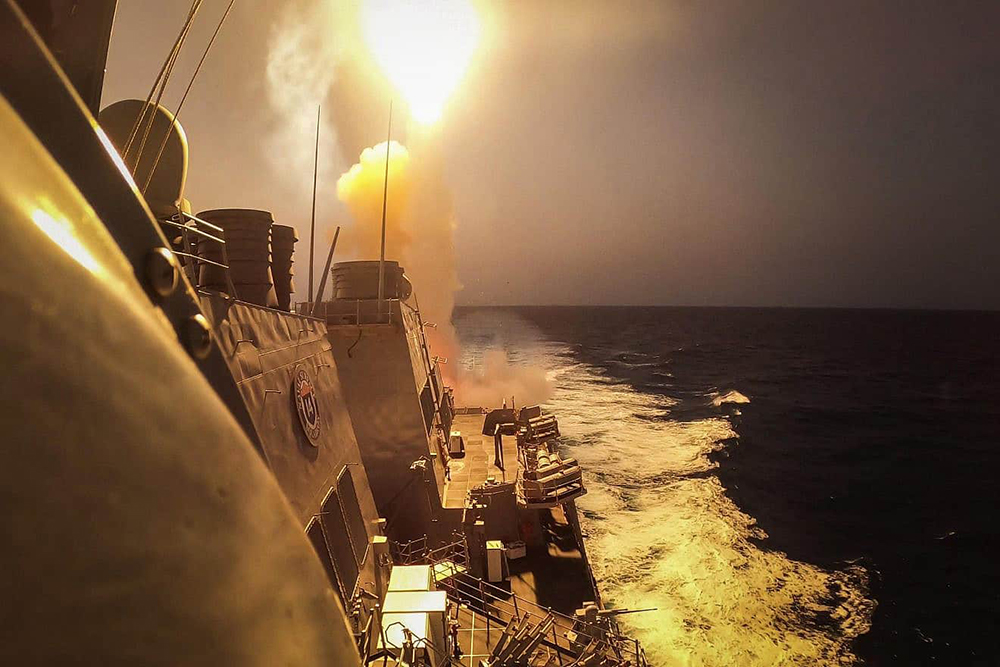
In response to escalating Houthi rebel attacks that pose a threat to the critical Suez Canal, the United States has announced the establishment of a multinational naval force. Named Operation Prosperity Guardian, the initiative aims to protect merchant vessels in the Red Sea from potential ballistic missile and drone attacks launched by Iranian-backed Houthi terror groups based in Yemen, as was reported by the Wall Street Journal. Defense Secretary, Lloyd Austin, emphasized the international nature of the problem, leading to a collaborative effort involving the United Kingdom, Bahrain, France, Norway, and other nations.
The Houthi attacks have prompted major shipping lines, oil producers, and cargo owners to reroute their vessels, causing disruptions in global trade. The diversion of ships from the region has led to a notable increase in oil prices and insurance rates. The WSJ also reported that shipping giant A.P. Moller-Maersk’s decision to reroute its vessels around the Cape of Good Hope rather than risk the turbulent waters of the Red Sea underscores the persisting concerns and challenges surrounding one of the world’s most critical trade routes.
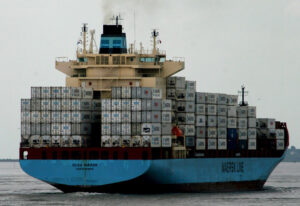
A.P. Moller-Maersk’s cautious decision to reroute its vessels signals the industry’s ongoing apprehensions and underscores the multitude of geopolitical and logistical challenges at play. While the U.S. navy’s announced task force aims to deter Houthi strikes by escorting individual or groups of vessels through the Red Sea, the risks associated with the attacks have raised concerns among industry executives and analysts, the report in the WSJ said.
Speaking in Tel Aviv, Defense Secretary Austin stressed the importance of an international response to the situation. Operation Prosperity Guardian involves collaboration with key allies, but efforts to secure the support of Saudi Arabia and the United Arab Emirates, major players in the Yemeni civil war, have faced challenges, according to the WSJ report. The two countries, at odds over how to handle the Houthi threat, have opted to stay out of the multinational initiative for now.
Oil giant British Petroleum (BP) joined a growing list of companies halting tanker movements through the Red Sea, reflecting the industry’s concerns over the security of the vital waterway, as was indicated in the WSJ report. Shipping giants like A.P. Moller-Maersk, Hapag-Lloyd, MSC, and CMA CGM have also decided to divert some of their vessels. As per the WSJ report, three major shipping alliances, comprising the world’s top 10 boxship players, issued a “pending” notice on Red Sea routes, allowing ships to drift or divert on a case-by-case basis.

The possibility of the Red Sea becoming a restricted zone for most tankers has raised alarms among traders and brokers. Such a scenario could reshape the global oil market, following disruptions caused by the war in Ukraine and related sanctions that forced Russia to seek new markets for its petroleum, the report in the WSJ said. Analysts warn that this situation could lead to a surge in oil prices and tanker rates, exacerbating existing challenges, including the slowdown in transit through the Panama Canal due to low water levels.
The global oil market faces renewed challenges as tensions rise in the Red Sea, prompting a surge in oil prices and influencing maritime operations. The WSJ reported that Brent crude futures, the international benchmark, experienced a 2% increase, reaching around $78 per barrel in Monday trading. Escalating concerns have led to a rise in the costs of chartering tankers in the region, as ship owners pass on elevated insurance expenses to traders renting their vessels. This development has not only impacted oil prices but has also boosted shares of tanker owners, including Frontline and Tsakos Energy, the WSJ report said.
The Red Sea, a crucial waterway separating Africa from the Middle Eastern Gulf, has become a focal point due to recent Houthi rebel attacks. In response, Lars Barstad, the CEO of Norway-based Frontline, noted that the company is diverting some tankers, emphasizing the importance of increased security even if it leads to slower passages.
The Red Sea, flanked by Egypt’s Suez Canal to the north and Bab el-Mandeb to the south, plays a pivotal role in global trade. As was noted in the WSJ report, the Suez Canal and Bab el-Mandeb, along with the Sumed pipeline through Egypt, accounted for 12% of all oil traded by sea in the first half of 2023, according to the U.S. Energy Information Administration. Additionally, about 8% of the world’s liquefied natural gas (LNG) trade transits through these routes.

Houthi rebels, in mid-November, declared their intention to target Israeli ships and expanded the threat to all ships heading to Israel if more humanitarian aid isn’t allowed into Gaza, the WSJ report said. Maritime security firm Ambrey reported attacks on vessels unrelated to Israel, raising concerns about the broader stability in the region. Instability in northern Somalia has also heightened the risk of piracy.
Oil traders anticipate that a significant decline in tanker traffic through the Red Sea would impact the market for refined products, such as diesel and gasoline, more than the crude market. According to the information provided in the WSJ report, Europe’s heavy reliance on refined fuels from the Middle East and India, following reduced shipments from Russia, makes it vulnerable to disruptions in these routes.
The changing dynamics of oil flows through the Red Sea add complexity to the situation. The WSJ also reported that Russian crude and fuel, previously destined for European refineries, now traverses the Red Sea to reach buyers in India, China, and other rapidly growing Asian markets. Daily southbound flows through the Suez Canal have increased by about 1.5 million barrels to 4.7 million barrels a day, while northbound volumes are up by approximately 300,000 barrels daily to 3.5 million.
For ship owners and chartering companies, the increased risks associated with sailing through the Red Sea present both financial and reputational challenges. While insurance premiums have risen, there is no clear financial incentive to choose longer routes around Africa, the WSJ reported added. Historically, ship companies have operated in war zones, charging higher fees for their services.
The Houthi forces, with the backing from Iran, have escalated their attacks in the southern end of the Red Sea, near the strategically vital Bab el-Mandeb, also known as the Gate of Tears.
The Red Sea, situated between the Mediterranean Sea and the Indian Ocean, is a critical conduit for global trade. Bookended by the Suez Canal to the north and Bab el-Mandeb to the south, these two straits, along with an Egyptian pipeline, handle approximately 12% of the world’s seaborne oil and 8% of its liquefied natural gas, the WSJ report noted. Moreover, over 20% of the world’s container trade passes through the Suez Canal, highlighting its strategic importance in facilitating global commerce.
Unlike during the Iran-Iraq war in the 1980s when naval vessels escorted oil tankers through the region, the current volume of shipping traffic through the Red Sea is too high to rely on protective convoys feasibly, the WSJ report added. Gene Moran, a retired U.S. Navy captain, predicts that the U.S. may soon resort to striking Houthi targets on land to mitigate the ongoing threat.
One significant limitation of the multinational task force is the absence of major regional powers such as Saudi Arabia and the United Arab Emirates. These nations have substantial financial stakes in the uninterrupted flow of tankers through the Red Sea, as it serves as a crucial route for their oil exports to Europe, according to the WSJ report. The potential economic impact of a protracted slowdown in tanker traffic has led these countries to exercise caution in committing to the task force.
Despite the urgent need for international cooperation in keeping shipping lanes open, the U.S. has faced challenges in garnering regional support, particularly from key players in the Middle East, the WSJ report said. Bahrain, a close ally of the West, is the only Middle Eastern nation that has officially joined the task force. Analysts suggest that the U.S. faces difficulties in balancing its support for Israel in the conflict with Hamas alongside its commercial interests in the region.
The reluctance of Middle Eastern states, especially Saudi Arabia and the UAE, to join the task force is linked to the ongoing conflict in Gaza. The states are wary of appearing to take a clear side against the Houthi rebels, given the complexity of regional dynamics, according to the WSJ report. The U.S. has partially succeeded in garnering international cooperation to address the Red Sea threats, but securing buy-in from local states remains a challenge.
During Secretary of Defense Lloyd Austin’s diplomatic efforts in the Middle East, a conference call was convened with leaders from 43 countries, the European Union, and NATO to discuss the Red Sea threats. The WSJ reported that Austin emphasized the reckless and dangerous nature of the attacks, stressing that they violate international law.
Yemen’s civil war, which began in 2015, has left the country divided between Houthi rebels controlling the north and an internationally recognized government in the south, as was reported by the WSJ. The Arab military coalition, led by Saudi Arabia and the UAE, intervened in an attempt to stabilize the region. However, the two nations have diverged on conflict resolution strategies. The UAE withdrew its forces in 2019, while Saudi Arabia pursued direct talks with the Houthi rebels, leading to disagreements on how to navigate the Yemeni crisis, the report added.
Despite shared interests in keeping the Red Sea shipping lanes open, Saudi Arabia and the UAE differ in their approaches to managing the Houthi threat. As was noted in the WSJ report, the withdrawal of Emirati forces in 2019 has shifted the dynamics, prompting concerns about responsibility for maintaining the shipping lanes amid the escalating conflict.
China, a major importer of oil through the Red Sea, maintains a military base in Djibouti on the Horn of Africa. While Beijing acknowledges the importance of keeping the shipping lanes open, it appears reluctant to participate in initiatives led or dominated by the U.S, the WSJ report said. This underscores the geopolitical complexities surrounding the Red Sea crisis and the delicate balance of power in the region.
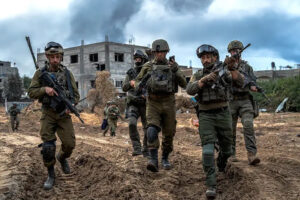
As to the ongoing war between Israel and Hamas terrorists in Gaza, on Tuesday, Israel National News reported that the 162nd Division of the Israel Defense Forces is currently engaged in military operations in the Jabaliya area in Gaza. As part of their activities in the area, the soldiers eliminated hundreds of terrorists in encounters and battles while directing artillery fire and airstrikes at terrorists in the area.
As part of several special operations carried out by the division, five bodies of soldiers and hostages were recovered and returned, as was reported by INN.
Now the forces of the division are operating in what has been called ‘Hamas’ most important center of gravity’, both on the ground and underground.
INN also reported that in one Hamas outpost in Jabaliya, soldiers from the division found documents with maps of the Israeli communities in the Gaza Envelope and on them with markings of vulnerable points such as schools and dining rooms.
At the same time, one of the main Hamas training bases was located between Jabaliya and the center of Gaza City, and intelligence materials were seized that significantly aided the Israeli forces in the course of the battles.
In one of the raids on the Rantisi hospital, it emerged that hostages were being held underground at the hospital – but were moved away before IDF forces entered the complex, as was noted in the INN report.
The IDF stated that about a thousand terrorists have been killed during the fighting in Gaza, over 3,000 were taken prisoner – some of whom took part in the October 7th massacre.
About 500 terrorist suspects surrendered in the Jabaliya area, many of whom were confirmed to be affiliated with the Hamas or Islamic Jihad terrorist organizations, and some of whom were confirmed to have taken part in the October 7 massacre, the report added.
Some of the surrendered terrorists barricaded themselves among the civilian population in hospitals and schools. INN also reported that during the soldiers’ operations, a great deal of enemy infrastructures were destroyed, including training complexes, underground and command and control complexes, and factories for the production of rockets.
