



|
Getting your Trinity Audio player ready...
|
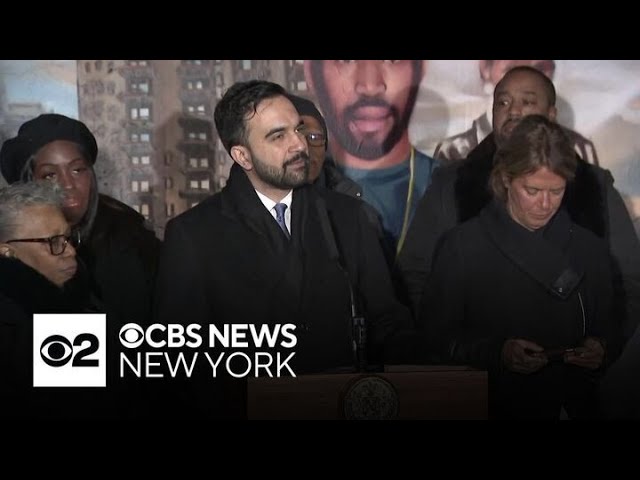
(TJV NEWS) When Mayor Zohran Mamdani unveiled what his administration grandly titled New York City’s first-ever “Rental Ripoff Hearings,” the announcement on Tuesday was framed as an act of moral rectitude: a populist overture to embattled tenants, a performative gesture of solidarity with renters who feel battered by the city’s relentless affordability crisis. The language was suffused with indignation, the rhetoric sharpened by a familiar adversary. Landlords, brokers, developers, and the entire real estate ecosystem were implicitly cast as culprits in a morality play in which City Hall would don the robes of prosecutor, jury, and judge.
Yet beneath the theatrical cadence of the rollout lies a far more consequential reality. The hearings, established by Executive Order 08 and scheduled across all five boroughs, are not merely forums for catharsis. They are the opening salvo in what amounts to an all-out regulatory assault on New York City’s housing market—an assault that threatens to exacerbate the very conditions it purports to remedy. In its zeal to dramatize tenant grievances and convert them into policy ammunition, the Mamdani administration risks entrenching a punitive regulatory regime that will constrict supply, inflate costs, and ultimately boomerang back onto tenants in the form of higher rents, fewer housing options, and deteriorating building conditions.
The administration’s framing of the initiative is calculatedly emotive. Tenants are invited to recount experiences of mold, broken appliances, unsafe construction, hidden fees, and surprise charges. Senior officials from housing, consumer protection, and buildings agencies will be on hand, ostensibly to “listen.” Within ninety days of the final hearing, City Hall promises a report that will propose new “policy interventions” to combat alleged “ripoff tactics,” feeding into a broader housing plan. The mayor assures New Yorkers that their testimony will not yield “empty promises,” but will guide the policies advanced to build a city people can “afford to call home.”
It is precisely here that the contradiction emerges. New York’s housing market is not suffering from an absence of regulation; it is suffocating under an accretion of it. Over decades, layers of well-intentioned but often incoherent rules have metastasized into a labyrinth of compliance obligations, fines, penalties, inspection regimes, and legal risks. Property owners navigate a minefield of building codes, tenant protection statutes, consumer protection mandates, and bureaucratic edicts that impose escalating costs on every aspect of ownership and operation.
In this environment, the marginal cost of maintaining a unit—let alone renovating or constructing new housing—has soared.
When City Hall amplifies this regulatory burden under the banner of tenant advocacy, it does not absorb the costs; it displaces them. Landlords, whether mom-and-pop owners of a handful of units or institutional managers of large portfolios, do not conjure operating capital from thin air. Increased fines, heightened inspection requirements, expanded enforcement actions, and additional compliance mandates translate directly into higher operating expenses. Those expenses, in turn, are reflected in rents, fees, and reduced investment in maintenance and upgrades. The bitter irony is that policies marketed as protections for tenants often function as rent accelerants, pushing the very affordability crisis they claim to combat.
The hearings’ conceptual architecture also reveals a troubling conflation of anecdote with evidence-based policy. By privileging individual grievances as the primary engine of reform, the administration risks crafting sweeping regulatory interventions on the basis of selectively curated narratives. While no serious observer denies that substandard housing conditions exist or that unscrupulous practices occur, policymaking by testimonial theater is a precarious enterprise. It invites the instrumentalization of suffering into a political cudgel wielded against an entire industry, rather than a sober assessment of structural constraints, market dynamics, and unintended consequences.
Moreover, the rhetoric emanating from City Hall and allied agencies suggests a predisposition toward adversarial governance. Officials speak of “holding landlords and brokers accountable,” of deploying “every tool at our disposal” to combat “predatory practices,” and of intensifying enforcement strategies. The Department of Buildings underscores its commitment to rigorous safety protocols and strict inspection standards, framing property owners as default suspects in a citywide case against negligence. This prosecutorial posture, when elevated to governing philosophy, corrodes the conditions necessary for productive partnership between the public sector and the private entities that actually build, maintain, and finance housing.
Developers, for their part, are acutely sensitive to regulatory risk. New York’s chronic housing shortage is not a mystery; it is the predictable consequence of zoning restrictions, protracted approval processes, escalating construction costs, and an unpredictable regulatory climate that disincentivizes long-term investment. When City Hall signals that the real estate industry is a political enemy to be disciplined rather than a partner to be engaged, capital does what capital always does: it migrates to more hospitable jurisdictions. The result is fewer projects, slower development, and a constricted housing supply—conditions that exert upward pressure on rents and intensify competition for existing units.
Tenants, paradoxically, bear the brunt of this dynamic. As supply tightens and compliance costs mount, landlords are compelled to raise rents where legally permissible to maintain solvency. Even in regulated units, deferred maintenance becomes a rational—if regrettable—response to squeezed margins. The city’s enforcement-heavy approach can thus engender the very outcomes tenants decry: deteriorating conditions, delayed repairs, and escalating costs. The hearings may provide a forum for venting frustration, but they do little to address the structural drivers of housing scarcity and affordability.
The Mamdani administration’s initiative also risks entrenching a politics of performative antagonism. By staging hearings in each borough and inviting tenants to meet one-on-one with senior officials, City Hall cultivates the optics of empathy and accessibility. Yet the spectacle of listening sessions, followed by the issuance of a report laden with punitive policy prescriptions, may serve more as political theater than as a catalyst for sustainable reform. The promise that testimony will “shape real policy reforms” sounds reassuring, but it masks a deeper question: what kind of reforms, and to what end? If the answer is an intensification of regulatory hostility toward landlords and developers, the city may find itself doubling down on a strategy that has already failed to deliver affordability.
There is, too, a broader philosophical concern. The framing of the rental market as a domain of exploitation to be disciplined by state power reflects a reflexive suspicion of private enterprise that has long animated New York’s housing policy. This suspicion is not without historical context; abuses have occurred, and tenants have often been vulnerable. But the pendulum has swung so far toward punitive regulation that the city now appears to be engaged in a self-sabotaging crusade against the very mechanisms that produce and sustain housing. The result is a paradoxical regime in which City Hall proclaims its commitment to affordability while erecting barriers that make affordable housing ever more elusive.
The hearings, scheduled from late February through early April across Brooklyn, Queens, the Bronx, Manhattan, and Staten Island, will undoubtedly generate a torrent of grievances. Mold, broken tiles, unresponsive management, surprise charges—these are real frustrations, and they deserve attention. But addressing them through a lens of antagonism rather than partnership is unlikely to yield durable solutions. Effective housing policy requires a delicate equilibrium: robust tenant protections paired with incentives for maintenance, development, and responsible ownership. It requires regulatory clarity, not regulatory proliferation; predictability, not perpetual policy churn.
If the Mamdani administration is serious about building a city that New Yorkers can afford to call home, it must confront an uncomfortable truth. The affordability crisis is not primarily a function of landlord malfeasance; it is the product of structural scarcity exacerbated by a policy environment that treats housing as a political battleground rather than an economic ecosystem. By casting the real estate industry as an adversary to be subdued, City Hall risks deepening the crisis it decries.
The Rental Ripoff Hearings may well produce a cathartic outpouring of tenant testimony and a glossy report adorned with the language of reform. But unless the administration recalibrates its approach—shifting from punitive reflexes to pragmatic collaboration—the initiative will stand as another chapter in New York’s long and tragic tradition of housing policies that promise relief while delivering ruin.

He should go to hell
Why should “New Yorkers” afford to call it home? Why should anyone be able to live in the greatest city in the world? If you can’t afford it, live where you can afford. Common sense. The taxpayer should not have to subsidize anyone so they can live in NYC. The people they talk about are not necessarily New Yorkers. They are often people who come here from elsewhere because of the generous welfare benefits. Why encourage this? No coincidence that Jews are heavily invested in NY real estate. The big joke is the NYCHA tenants complaining that NYC is a worse landlord than the rest. Why doesn’t the Mayor fixt that problem first?