



|
Getting your Trinity Audio player ready...
|
By: Rufus McGee
The drama surrounding New York City’s rent-stabilized apartments has entered a decisive new chapter, one that could reshape the balance between tenants, landlords, and City Hall for years to come. As The New York Post reported on Wednesday, Mayor Zohran Mamdani appears poised to translate his most resonant campaign promise—freezing rents—into policy, following a sweeping set of appointments to the city’s Rent Guidelines Board that leaves him with a majority of sympathetic voices on the nine-member panel.
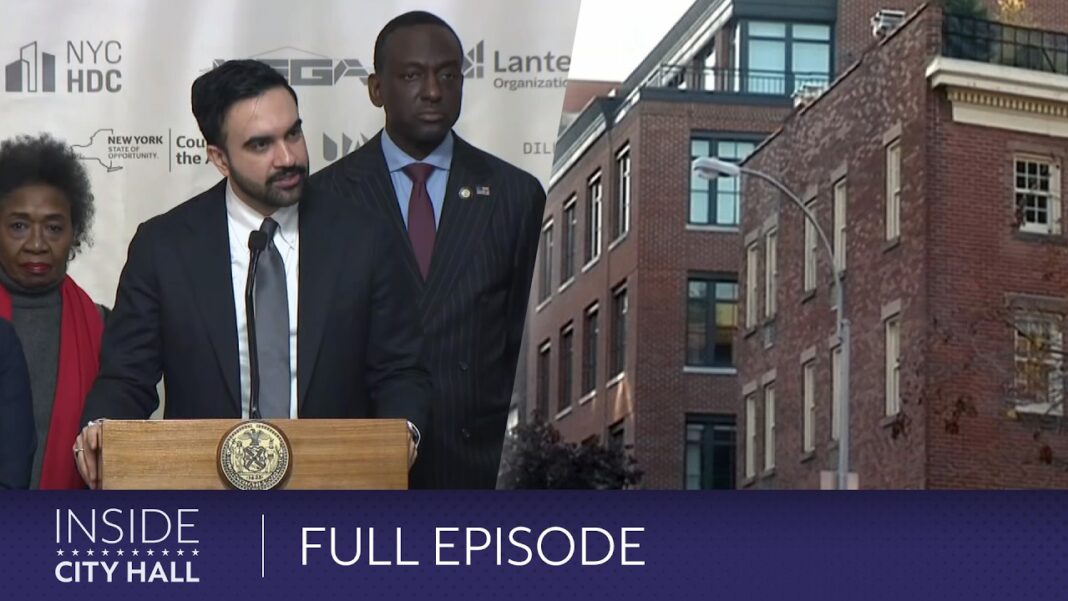
The mayor, standing outside a Harlem affordable housing complex as he unveiled the latest selections, struck a careful note of confidence. He said he trusted the new board members to “consider all the factors” affecting rent-stabilized tenants and to reach what he called an “appropriate decision.” Yet to critics, and even to some cautious supporters, the move looked less like a neutral rebalancing and more like a calculated effort to secure the votes necessary to halt rent increases across roughly one million stabilized units. The New York Post report described the development as the clearest sign yet that Mamdani intends to pursue a freeze not merely as rhetoric, but as governing doctrine.
The Rent Guidelines Board, though formally independent, has long been one of the most politically sensitive bodies in city government. Its annual vote determines whether rents on stabilized apartments will rise, remain flat, or—more rarely—fall. Over the decades, the board’s decisions have become a proxy battleground for competing visions of the city’s economic future: one that prioritizes affordability and tenant stability, and another that emphasizes the financial sustainability of aging housing stock and the viability of property ownership.
Mamdani’s latest slate all but ensures that his influence will be decisive. He appointed five new members and reappointed a sixth, giving him a majority of handpicked voices on the panel. Three of the newcomers were designated as “public members,” but their professional and political backgrounds place them squarely within the mayor’s ideological orbit. Among them is Brandon Mancilla, a self-described “disruptive” labor leader whose activism has extended well beyond housing into international political causes. Mancilla’s public record includes a five-day hunger strike calling for a ceasefire in Gaza and social media posts likening protests against Israel to the moral urgency of opposing fascism in World War II.
To supporters, this history signals moral clarity and a willingness to confront entrenched power. To detractors, it raises doubts about whether the board’s deliberations will remain focused on the technical realities of housing economics rather than broader ideological campaigns.
Joining Mancilla is Lauren Melodia, an advocacy economist whose work has often emphasized worker protections over traditional macroeconomic concerns. She co-authored a Roosevelt Institute brief in 2021 arguing against interest-rate hikes, contending that monetary policy should be more responsive to labor needs. Her résumé also includes a decade of involvement in causes ranging from criminal justice reform to anti-prison activism.
The new chair of the board, Chantella Mitchell, brings a different but equally values-driven profile. A former city housing official with a master’s degree in social work from Columbia University, Mitchell currently oversees grantmaking at the New York Community Trust and has spent much of her career in affordable housing and anti-poverty initiatives. As The New York Post report observed, her background suggests a deep familiarity with the human consequences of housing instability, but also a worldview firmly rooted in the nonprofit advocacy sector.
Mamdani also appointed Maksim Wynn as one of the two landlord representatives. Wynn’s career path—from the city’s Department of Homeless Services to managing affordable housing for a private developer—positions him as a bridge figure between public policy and private enterprise. Still, skeptics quoted by The New York Post question whether his professional history will translate into a robust defense of owners’ financial concerns in a board now dominated by members with advocacy-oriented résumés.
The tenant representative, Adán Soltren, was reappointed. A housing attorney and lecturer, Soltren has built a reputation on the board as a persistent critic of rent increases. Though he voted for a hike in 2023, he did so reluctantly, and in subsequent years he has cast votes against increases, warning that they would be “devastating” for low- and moderate-income New Yorkers, particularly in predominantly Black and brown communities.
The composition of the board is not merely an abstract question of governance. It is the hinge on which Mamdani’s political future may swing. His promise to freeze rents during his first term was a cornerstone of his campaign, one that energized tenant groups and helped propel him into office. The New York Post has reported that this pledge distinguished him sharply from his predecessors, who tended to frame rent policy in more incremental terms. Former Mayor Eric Adams, for example, presided over a board that approved a cumulative 12% increase in stabilized rents. Under Mayor Bill de Blasio, by contrast, the board implemented freezes three times, reflecting a more tenant-friendly posture. Mamdani’s ambition, however, is more sweeping: a sustained freeze that would lock in current rents for years.
The path to this moment was not without political intrigue. Adams, in the final days of his administration, attempted to appoint two members to the board in what many saw as an effort to constrain his successor. Those appointees ultimately withdrew, a development that The New York Post and other outlets reported as a quiet but consequential setback for the outgoing mayor’s strategy.
Then, on Tuesday, board member Alex Armlovich resigned, clearing the way for Mamdani to secure his majority. The timing and sequence of events have only reinforced perceptions that the board’s independence, while enshrined in statute, remains deeply entangled with mayoral politics.
Mamdani, for his part, has tried to strike a balance between conviction and caution. He has reiterated that “rent stabilized tenants deserve a rent freeze,” while also acknowledging that the board is independent and must weigh evidence, including the city’s efforts to lower costs for property owners. Yet the mayor’s broader fiscal posture has complicated this message. As The New York Post report detailed, Mamdani has warned that if Governor Kathy Hochul does not agree to impose a 2.2% tax on millionaires, he may resort to a 9.5% property tax increase to balance the city’s budget. He has described this as a “last resort,” but critics argue that such a move would, in practice, function as a backdoor rent increase, even for stabilized tenants.
Kenny Burgos, CEO of the New York Apartment Association, has been among the most vocal critics of this approach. In remarks to The New York Post, Burgos warned that higher property taxes would inevitably squeeze landlords, leading to deferred maintenance, financial distress, and a deterioration of housing quality. “Increased property taxes equals a rent increase,” he wrote on social media, distilling a complex fiscal argument into a blunt equation. Even if stabilized rents are legally frozen, Burgos and others contend, the financial pressures will surface elsewhere, in the form of reduced services, delayed repairs, or, in the worst cases, building abandonment.
This tension underscores a central paradox of Mamdani’s strategy. By focusing so intently on rent levels, the administration risks underestimating the broader ecosystem that sustains the city’s housing stock. New York’s rent-stabilized buildings are, in many cases, decades old, with aging infrastructure that demands constant investment. Heating systems, roofs, elevators, and facades do not freeze in time when rents do. The New York Post has published numerous accounts of landlords who argue that without periodic increases, even modest ones, they will struggle to finance necessary upgrades, especially as labor and materials costs continue to climb.
Tenant advocates counter that these warnings have been repeated for decades and have often failed to materialize at the scale predicted. They point to years of rent hikes that did not prevent disrepair in some buildings, and to owners who, in their view, prioritized profits over maintenance even when revenues were rising. For them, a freeze represents not only economic relief but also a moral corrective, a reassertion of housing as a social good rather than a speculative asset. This argument resonates strongly in neighborhoods where displacement and gentrification have hollowed out long-standing communities.
The ideological profiles of the new board members suggest that these debates will not be settled quietly. Mancilla’s background in labor activism and international political protest, Melodia’s history of policy advocacy, and Mitchell’s career in nonprofit housing work all point toward a board that may view its mandate through a broader social justice lens. Whether that perspective can coexist with the technocratic analysis the board is supposed to provide remains an open question. The RGB’s formal charge is to analyze data on both landlord costs and tenant affordability, and to translate that analysis into annual guidelines. The fear among critics, echoed in The New York Post, is that the data will become secondary to predetermined ideological conclusions.
Yet it would be a mistake to reduce the situation to caricature. Wynn’s presence as a landlord representative and the board’s statutory structure ensure that dissenting views will still be voiced. Moreover, the political stakes for Mamdani are high enough that a misstep could reverberate far beyond housing policy. If a prolonged freeze leads to visible deterioration in building conditions or a slowdown in maintenance and investment, the mayor will own the consequences as surely as he would own the benefits of short-term tenant relief.
The broader fiscal context adds another layer of complexity. New York City faces persistent budget pressures, and the mayor’s flirtation with a significant property tax increase has unsettled both landlords and some tenant groups who worry about unintended consequences. The interplay between city and state politics, particularly Mamdani’s standoff with Governor Hochul over a millionaire’s tax, suggests that housing policy cannot be disentangled from the larger question of how the city funds its obligations. The New York Post report highlighted how these fiscal debates intersect with the rent freeze proposal, creating a policy puzzle in which each piece affects the others.
As the board prepares to meet and eventually vote, likely around June, the city’s political class is bracing for a showdown. Tenant organizations are mobilizing, eager to see the mayor deliver on his promise. Landlord groups are marshalling data and legal arguments, warning of long-term damage to the housing stock. Elected officials, particularly those in the City Council and Albany, are watching closely, aware that the outcome will shape not only the city’s housing market but also the trajectory of Mamdani’s administration.
In the end, the question is not simply whether rents will be frozen, but what kind of city New York aspires to be in the coming decade. Is it a city that prioritizes immediate affordability even at the risk of long-term strain, or one that seeks a more calibrated balance between social protection and economic sustainability? The answer will not be found in slogans or campaign promises alone. It will emerge, incrementally and contentiously, from the deliberations of a board whose composition now reflects the mayor’s vision more closely than ever before.
The stakes could hardly be higher. For millions of tenants, the board’s decision will shape their ability to remain in their homes. For thousands of property owners, it will determine whether their buildings remain financially viable. And for Mayor Mamdani, it will serve as the first great test of whether his brand of ideological clarity can be translated into durable, effective governance in a city where every policy choice reverberates through a vast and intricate urban system.

The goal of Mayor Mandami’s policies of a property tax hike coupled with a rent freeze is to implement his ideological disdain for private property ownership. The eventual outcome when landlords are unable to afford maintaining their properties will be a governmental seizure of private property.