



By Ellen Cans
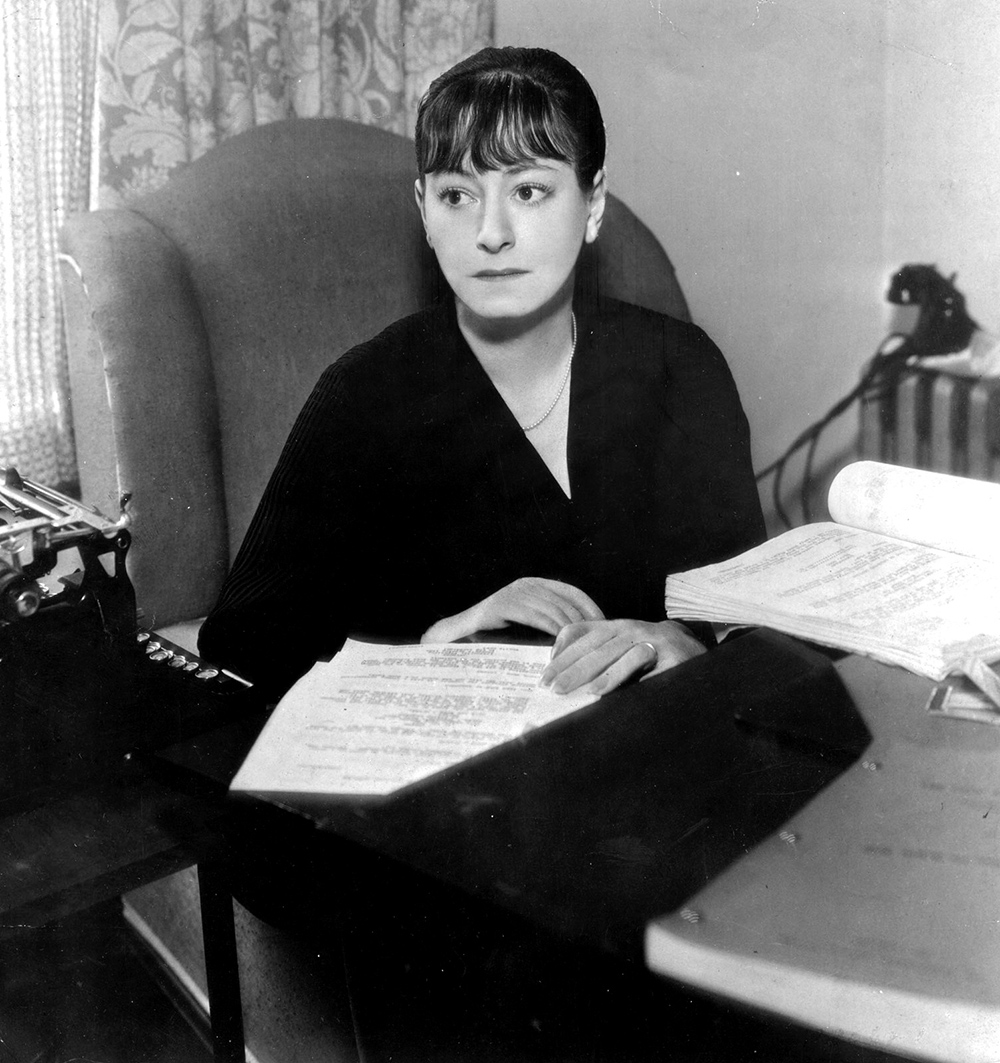
Dorothy Parker was finally and officially laid to rest on Monday, with her tombstone unveiled in The Bronx, as reported by the NY Post.
The Jazz Age writer, poet and satirist, born in 1893, died back in June of 1967. The ceremony at Woodlawn Cemetery concluded years of effort in trying to give Parker a proper resting spot. “This is finally her homecoming to her beloved New York City,” said Kevin Fitzpatrick, president of the Dorothy Parker Society, a non-profit which promotes the work of the writer. Parker’s family traveled from upstate New York to join. As reported by the NY Post, the ceremony was supposed to take place on Sunday, to coincide with her birthday. Tropical Storm Henri hit, however, forcing the proceedings to be delayed to Monday, when the sun did come out. The famed humorist had been born in a hurricane and some said the threat of a hurricane was befitting weather for the event.
Her ashes had been through a long and circuitous route, starting when it was discovered that she left her entire estate, including all future royalties, to Martin Luther King Jr. When he died, her estate became the property of the NAACP. Her will, however, left no instructions on what to do with her own remains. So, for six year her ashes just sat in an urn in a Westchester crematory. Then for another 15 years they sat in a filing cabinet at the Manhattan office of her lawyer. In 1988, gossip columnist Liz Smith wrote a piece about Parker’s ashes, and the NAACP finally decided to create a memorial for her outside its Baltimore headquarters. By the time they came to take the ashes to Washington, DC, Parker’s family chimed in. In 2006, her family demanding her ashes be disinterred and returned to New York. Finally in 2020, Parker’s ashes were buried at the family’s plot at Woodlawn. The headstone was just revealed on Monday with the ceremony.
The ceremony on Monday featured a jazz band and readings from Parker’s work, as per the Post. Many of the attendees brought flasks of gin which they poured on the grave, remembering that she had been a lover of gin martinis.
She once wrote: “That would be a good thing for them to cut on my tombstone: Wherever she went, including here, it was against her better judgment.” (Published in ‘But the One on the Right’ in The New Yorker in 1929).
