



|
Getting your Trinity Audio player ready...
|
By: Arthur Popowitz
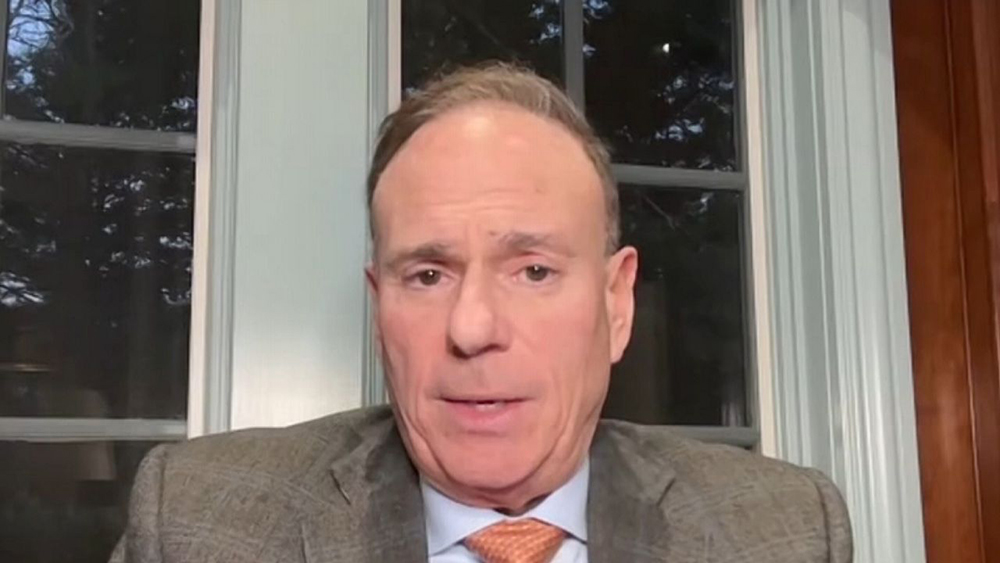
New York’s Democratic Party finds itself mired in a bruising internal conflict after its longtime chair, Jay Jacobs, announced Thursday that he would not endorse Zohran Mamdani, the Democratic nominee for New York City mayor. Jacobs’ statement, pointed and deeply personal, not only widened the rift between moderates and progressives in the state but also placed him on a direct collision course with Gov. Kathy Hochul, who shocked many by endorsing Mamdani earlier this week.
As The New York Post reported on Thursday, Jacobs’ refusal to support Mamdani represents an extraordinary breach of party orthodoxy, in which state chairs traditionally rally behind nominees after primaries. Instead, Jacobs released a declaration that sounded more like an ideological manifesto than a perfunctory political statement, underscoring how profoundly unsettled Democrats have become over Mamdani’s candidacy.
Jacobs, who has chaired the state party since 2019 and remains the leader of Nassau County Democrats, issued a carefully worded but unmistakably forceful rejection of Mamdani.
“Mr. Mamdani and I are in agreement that America’s greatest problem is the continued growth in income disparity in our nation. On how to address it – we fundamentally disagree,” Jacobs began, in remarks reported in The New York Post.
He went on to detail his objections: “Furthermore, as I expressed to him directly, I strongly disagree with his views on the State of Israel, along with certain key policy positions. I reject the platform of the so-called ‘Democratic Socialists of America’ and do not believe that it represents the principles, values or policies of the Democratic Party. For those reasons I will not be endorsing Mr. Mamdani for Mayor of the City of New York.”
The statement reverberated across the political landscape, not least because it directly contradicted Hochul’s Sunday endorsement of Mamdani. The governor’s embrace of the left-wing Assemblyman had already stunned moderate Democrats; Jacobs’ defiance made the divide public, undeniable, and politically dangerous.
According to the information provided in The New York Post report, Jacobs was furious at Hochul’s decision to endorse Mamdani, which he viewed as a betrayal both personally and institutionally. One Democratic official told the paper: “She’s putting him in a bad situation. The governor is trying to get him to stay on, but he’s saying he’s not going to step back and be for this guy who is against Jews.”
The reference to Mamdani’s stance on Israel illustrates a central grievance. Jacobs, a staunch supporter of the Jewish state, has made defense of Israel a defining feature of his leadership. Mamdani, by contrast, is an outspoken ally of the Democratic Socialists of America and a vocal supporter of the BDS movement against Israel.
This clash over Israel, as The New York Post report highlighted, exemplifies the broader ideological schism tearing apart New York Democrats: the tension between suburban moderates, who prioritize pragmatic governance and electoral viability, and urban progressives, who champion leftist causes even at the cost of alienating swing voters.
Almost immediately after Jacobs’ statement, rumors circulated that he might resign. Some party insiders speculated that he faced an impossible choice: remain loyal to his principles and lose credibility as state chair, or back Mamdani and risk alienating Nassau County voters, where anti-socialist sentiment runs deep.
