












|
Getting your Trinity Audio player ready...
|
By: Fern Sidman – Jewish Voice News
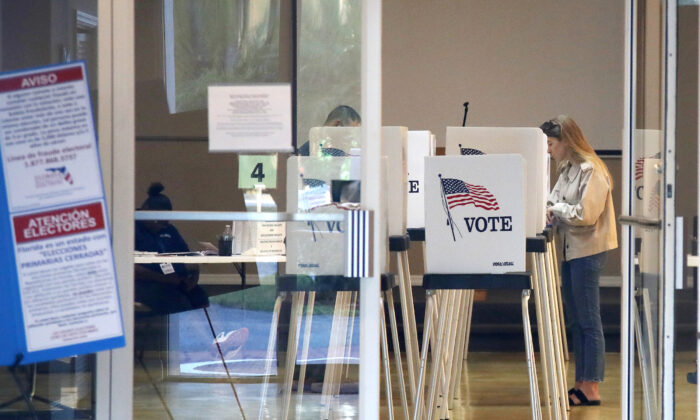
New York City — the financial capital of the world, a crucible of capitalism, enterprise, and unmatched ambition — has just elected a self-described democratic socialist as its next mayor. According to a report on Tuesday evening in The New York Times, Zohran Kwame Mamdani, the 34-year-old assemblyman from Queens, pulled off one of the most astonishing political upsets in the city’s modern history, defeating former Governor Andrew M. Cuomo and Republican Curtis Sliwa to become the city’s 111th mayor.
The New York Post reported that Mamdani carried 50.4% of votes to Andrew Cuomo’s 41.3% at around 9:40 p.m. The projection — which came with 75% of votes counted — also found GOP nominee Curtis Sliwa with rock-bottom 7.5%.
The victory of Mamdani — an immigrant from Uganda, of Indian descent, and a loud critic of capitalism — marks a seismic shift in the political landscape of America’s largest city. But beyond its historic “firsts” — the first Muslim, first South Asian, and youngest mayor since the 19th century — the win raises profound questions about the ideological future of New York and the fragility of its social fabric.
While The New York Times chronicled Mamdani’s ascent as a story of generational energy and immigrant empowerment, it also acknowledged the deep unease that his brand of radical politics has stirred among Jewish New Yorkers, business leaders, and moderate Democrats who see in his victory the triumph of resentment over realism.
Just a year ago, as The New York Times reported, Mamdani was little more than a protest candidate — a political novice with a thin résumé and almost no citywide profile. Yet through a shrewd mastery of social media, an unrelenting focus on “affordability,” and a cultivated image of optimism, Mamdani transformed frustration into momentum.
His campaign drew heavily from the playbook of the Democratic Socialists of America (DSA), echoing slogans of class struggle and inequality. He championed an aggressive redistributionist agenda, calling for steep tax hikes on the wealthy, the elimination of subway fares, free child care, and a citywide rent freeze.
But as The New York Times report noted, these proposals were “not merely aspirational.” Mamdani vowed to “redistribute power and wealth” in New York — a declaration that sent shockwaves through Wall Street, the real estate sector, and the city’s business community.
In a city that thrives on private capital, global finance, and entrepreneurial energy, his rhetoric sounded less like reform and more like revolution.
“We will build a city that serves the many, not the few,” Mamdani declared at his victory rally, as reported by The New York Times. “We will end the politics of greed and start the politics of justice.”
For his supporters, this was an electrifying call to arms. For many others — particularly those who remember the fiscal crises of the 1970s — it was a chilling reminder of how easily populism can morph into economic vandalism.
Mamdani’s rise, The New York Times report observed, represents not just a generational shift but an ideological one — away from pragmatic governance and toward a doctrinaire leftism that views capitalism as the enemy and wealth creation as exploitation.
His “socialist revival” agenda promises sweeping reforms that would dramatically expand the city’s bureaucracy while undermining private enterprise. Among his most radical proposals are the municipalization of housing, a freeze on all rent-stabilized properties, and the creation of a “People’s Transit Authority” to make public transportation free.
Even The New York Times conceded that Mamdani faces “profound challenges” implementing these ideas, given that Albany controls much of the fiscal machinery required to fund them. But as observers have noted, the real danger is not merely in his ability to act — it is in the normalization of his ideas.
A city that once prided itself on dynamism, innovation, and meritocratic aspiration now risks being recast as a laboratory for ideological experimentation — with consequences that could ripple far beyond the five boroughs.
Perhaps the most disturbing dimension of Mamdani’s rise, as highlighted by The New York Times, is his history of anti-Israel rhetoric and his associations with groups that have trafficked in antisemitic sentiment.
Mamdani has repeatedly refused to recognize Israel’s right to exist as a Jewish state and has publicly defended the boycott, divestment, and sanctions (BDS) movement — a campaign that seeks to economically isolate Israel and has been widely condemned as antisemitic by Jewish organizations across the political spectrum.
In 2021, Mamdani was one of the most vocal proponents of a bill to bar New York state contracts with companies that do business with Israel, calling the Jewish state an “apartheid regime.” His rhetoric, according to the report in The New York Times, often blurs the line between legitimate criticism of Israeli policy and the demonization of Jewish identity itself.
Jewish leaders have expressed alarm at what they describe as Mamdani’s “casual hostility” toward Jewish New Yorkers. His refusal during the campaign to denounce the slogan “From the river to the sea, Palestine will be free” — widely understood as a call for Israel’s destruction — further deepened those concerns.
“We must separate the oppressors from the oppressed,” Mamdani said at a campaign forum last year, referring to the conflict in Gaza. As The New York Times report pointed out, his statement was met with applause from the far-left but condemnation from mainstream Democrats, who accused him of moral blindness in equating Israel’s self-defense with terrorism.
As The New York Times reported, many Jewish neighborhoods in Brooklyn and Queens voted overwhelmingly against Mamdani, with some precincts delivering Cuomo margins exceeding 80 percent. The distrust was palpable. For these voters, Mamdani’s victory represents not a new beginning, but a warning — that antisemitic narratives have found a foothold in mainstream politics under the guise of social justice.
In the closing days of the campaign, tensions flared between Mamdani’s supporters and Jewish community groups. Accusations of antisemitism and Islamophobia ricocheted through the airwaves, turning the campaign into a cultural tinderbox.
Even The New York Times, often sympathetic to progressive causes, acknowledged the “exceptionally bitter” nature of the race and the unease among Jewish voters who felt targeted rather than represented.
While Mamdani’s rhetoric captivated disillusioned young voters, his grasp of the city’s economic architecture remains alarmingly shallow. His proposal for a universal rent freeze ignores the fragile balance that sustains New York’s housing market, where private landlords provide nearly 70% of rental units.
His promise to “make buses and child care free” — as detailed in The New York Times report — comes with no credible funding mechanism, aside from raising taxes on high earners and corporations already threatening to relocate to Florida or Texas.
The danger, economists warn, is that Mamdani’s policies could trigger a capital flight that devastates the tax base, cripples public services, and rekindles the urban decay that haunted New York in the 1970s.
“We are witnessing the ideological capture of City Hall,” one senior real estate executive told The New York Times. “If his policies are enacted, investment will dry up, jobs will vanish, and the city will start hemorrhaging talent.”
President Donald Trump, who had endorsed Cuomo in the final days of the campaign, wasted no time labeling Mamdani “a little communist mayor,” according to The New York Times report. Trump’s administration is reportedly reviewing whether to withhold federal funds from New York if Mamdani pursues policies deemed hostile to business or public safety.
Mamdani’s election will almost certainly serve as a rallying cry for the Democratic Party’s far-left flank, emboldening the next wave of socialist candidates across the country. Yet as The New York Times report noted, his victory also exposes the deep fractures within the Democratic coalition — between moderates alarmed by extremism and progressives intoxicated by revolution.
New York now stands at a perilous inflection point. Mamdani’s triumph, celebrated by activists as a “revolution from below,” may well test the city’s resilience as never before.
As The New York Times report observed, “Mamdani’s New York will be a grand experiment — a city caught between its capitalist legacy and its socialist future.”
For those who built, invested in, and defended this city through its darkest days, the prospect of such an experiment is not inspiring — it is terrifying.
Mamdani may have captured City Hall through charisma and discontent, but governing a global metropolis requires more than slogans. It demands prudence, discipline, and moral clarity — qualities the new mayor has yet to demonstrate.
If he fails, as many fear he will, New York may once again learn the hard lesson that utopia promised is often dystopia delivered



