



|
Getting your Trinity Audio player ready...
|
By: Fern Sidman
With New York City’s political temperature rising and just weeks to go before Election Day, NBC News announced that the city’s first general election mayoral debate will take place Thursday, October 16, at 30 Rockefeller Center, marking a pivotal moment in one of the most ideologically charged mayoral contests in recent history. The debate, hosted by NBC 4 New York (WNBC), Telemundo 47 (WNJU), and POLITICO New York, has been officially sanctioned by the New York City Campaign Finance Board as the first of two head-to-head encounters before voters cast their ballots in November. According to NBC News, the debate will begin promptly at 7 p.m. Eastern and will be broadcast live from WNBC’s state-of-the-art studios in Midtown Manhattan — with no live audience present, ensuring a tightly controlled, policy-focused exchange.
Viewers can tune in across multiple platforms, NBC News reported, including live television on WNBC-TV and WNJU-TV, as well as the networks’ digital and streaming channels — NBC 4 New York’s News app, Telemundo Noreste, and affiliated websites. The broadcast will feature full Spanish-language translation for Telemundo audiences, while both the English and Spanish feeds will include sign-language interpretation and closed-captioning for the hearing impaired, reflecting what NBC News described as “a debate designed for every New Yorker.” The tri-network collaboration marks a rare joint production between NBC’s English- and Spanish-language affiliates, underscoring the multicultural and multilingual fabric of the city’s electorate.
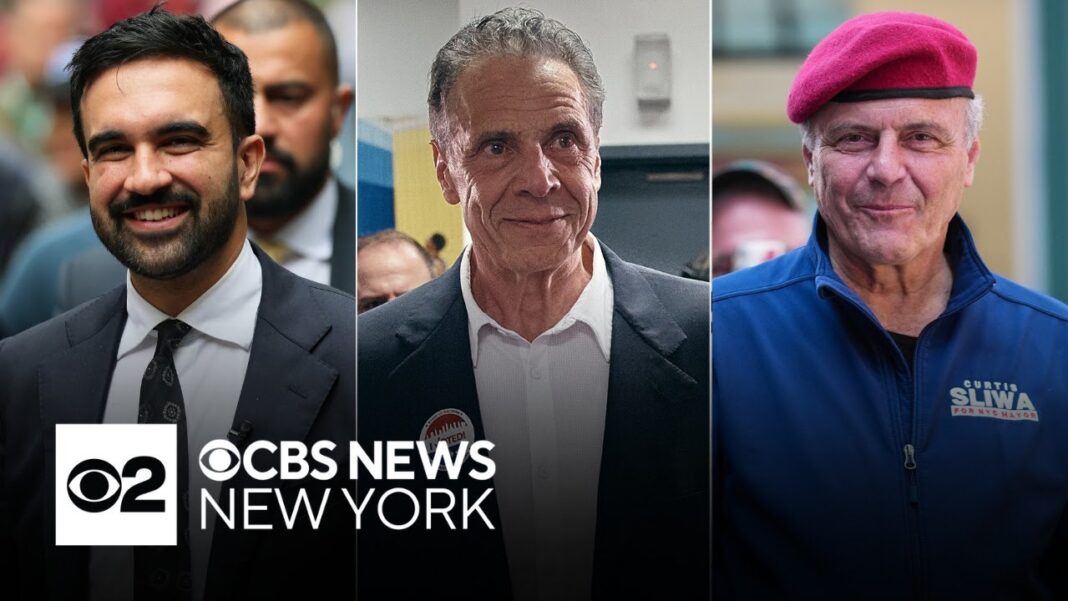
The three candidates who qualified for the debate, according to the Campaign Finance Board, represent a striking cross-section of New York’s political identity: Andrew Cuomo, the former three-term governor running as an independent; Zohran Mamdani, the Democratic nominee and a leading figure in the city’s progressive movement; and Curtis Sliwa, the Republican challenger and founder of the Guardian Angels. The lineup, NBC News observed, is as combustible as it is diverse — promising a collision of political styles, ideologies, and personal narratives that could redefine the race’s trajectory.
NBC News political analyst Melissa Russo noted that Cuomo’s presence “brings a level of gravitas and executive experience unseen in recent city races,” while Mamdani’s insurgent candidacy “embodies the generational and ideological tension roiling the Democratic Party.” Sliwa, meanwhile, injects a populist edge, leveraging his law-and-order persona to appeal to disenchanted voters frustrated by rising crime and cost-of-living issues. With the city’s electorate split across partisan and cultural lines, NBC News described Thursday’s debate as a “defining moment for New York’s political future.”
According to NBC News, the debate format will be structured and brisk, with candidates allotted equal time for opening statements, issue-specific questions, and direct rebuttals. Moderators from NBC 4 New York, Telemundo 47, and POLITICO New York will alternate questions covering public safety, housing affordability, education, climate resilience, and New York’s economic recovery. In addition, each candidate will face a rapid-fire “accountability round” — an innovation the network says is intended to force concise answers on contentious topics, from policing to campaign ethics.
Behind the scenes, the NBC News production team has spent weeks preparing for the broadcast, outfitting Studio 6A — a legendary television space at 30 Rock — with updated lighting, camera rigs, and digital backdrops to create what the network calls “a modern, high-impact visual experience.” Security around the Rockefeller Center complex has also been tightened, with NYPD units coordinating with the Secret Service due to Cuomo’s former gubernatorial status and the expected protests surrounding Mamdani’s participation.
As NBC News concluded in its preview segment Monday night, the stakes “could not be higher.” In a city still grappling with post-pandemic recovery, demographic shifts, and deep political polarization, the October 16th debate may not just determine the next mayor — it may redefine the city’s political center of gravity.
Background On Each Candidate
Andrew Cuomo has reemerged on New York City’s political stage as the steady, battle-tested statesman in a race defined by volatility and ideology. The former three-term governor, running as an independent, has framed his campaign around competence, pragmatism, and results — themes that resonate with voters weary of political extremes. Cuomo’s long record of managing crises, from rebuilding after Superstorm Sandy to steering the state through the COVID-19 pandemic, underscores his argument that experience matters. His deep understanding of city and state governance gives him an edge that neither of his rivals can match. On the campaign trail, Cuomo has emphasized restoring public safety, revitalizing the city’s economic engine, and rebuilding public trust in government. “This city doesn’t need slogans — it needs solutions,” he told supporters recently, summing up a platform that blends fiscal discipline with social compassion.
Cuomo’s political resurrection has been fueled by a coalition of centrists, disillusioned Democrats, and independents seeking a viable alternative to the city’s far-left direction under Zohran Mamdani. Many see him as the only candidate capable of bridging New York’s widening ideological divide and reclaiming the city’s global stature. While critics point to the controversies that ended his governorship, his supporters argue that Cuomo’s resilience — and his ability to govern under pressure — make him uniquely qualified for the mayoralty. “He’s tough, he’s flawed, but he knows how to make New York work,” one supporter told The New York Post. In a race where ideological purity dominates the conversation, Cuomo has positioned himself as the grown-up in the room — the only contender with the managerial strength and political gravity to stop Mamdani’s momentum and restore balance to City Hall.
Zohran Mamdani, the Democratic nominee and a self-described democratic socialist, has ignited fierce controversy in New York’s mayoral race — not only for his far-left economic and policing agenda but for his polarizing stance on Israel and antisemitism. The Queens assemblyman, long backed by the Democratic Socialists of America, has alienated much of the city’s Jewish community with a record and rhetoric that critics describe as openly hostile toward Israel and dismissive of Jewish concerns. Mamdani has repeatedly denounced Israel’s right to self-defense, referred to it as an “apartheid state,” and publicly opposed the International Holocaust Remembrance Alliance (IHRA) definition of antisemitism — the globally recognized framework adopted by the U.S. State Department and many democratic nations to combat anti-Jewish hate. His calls to “abolish the IHRA standard,” which he claims conflates anti-Zionism with antisemitism, have been condemned by Jewish leaders across the political spectrum as dangerous and deeply offensive.
As Jewish Insider and The New York Post have both reported, Mamdani’s positions have placed him at odds with New York’s Jewish electorate — a community of more than one million residents that has historically played a decisive role in city politics. His refusal to condemn Hamas’s October 7th massacre of Israelis and his attendance at rallies where demonstrators chanted pro-Hamas slogans have only deepened public outrage. Many Jewish voters, including former Democratic loyalists, now view Mamdani as emblematic of the progressive movement’s turn toward anti-Israel extremism. Prominent Jewish organizations, including the American Jewish Committee and the Anti-Defamation League, have called his statements “morally reprehensible” and “beyond the bounds of acceptable political discourse.” Even within his own party, moderates have distanced themselves, fearing that his rhetoric could fracture New York’s delicate multicultural balance.
Within Jewish neighborhoods from Borough Park to Riverdale, community leaders have mobilized against him, launching voter drives and public statements warning that his election could make City Hall hostile territory for Jewish New Yorkers. “This isn’t about politics anymore — it’s about safety and respect,” said one Brooklyn rabbi in a recent interview.
His critics argue that his views mirror the extremist rhetoric of campus activists and global boycott movements that have normalized antisemitism under the guise of “human rights.” “He’s brought the worst of campus politics to City Hall,” said one political strategist quoted by The New York Post. “And New York — with its vibrant Jewish population and its moral leadership — will not stand for that.”
Curtis Sliwa, the Republican nominee and founder of the Guardian Angels, brings to the race his signature mix of charisma, populist fervor, and street-level authenticity. A lifelong New Yorker and media personality, Sliwa has framed his campaign as a crusade to restore “law, order, and common sense” to a city he says is spiraling under progressive mismanagement. His blunt rhetoric and trademark red beret have made him one of New York’s most recognizable figures. Sliwa’s platform calls for an expansion of police patrols, stricter enforcement of quality-of-life laws, and the reinstatement of gifted-and-talented programs in public schools. He has also tapped into public frustration over congestion pricing, crime on the subways, and the cost of living — issues that cut across party lines.
However, despite his strong name recognition, Sliwa faces steep odds in a city where Republican candidates have struggled to break through in recent decades. His pugnacious style, while entertaining, often overshadows his policy depth, and many moderates view him as a protest candidate rather than a viable contender. Still, his loyal base — a mix of working-class New Yorkers, outer-borough voters, and conservatives disillusioned with City Hall — ensures he remains a factor in the race. If Mamdani embodies ideology and Cuomo represents experience, Sliwa provides the populist counterpoint — fiery, unconventional, and unafraid to say what others won’t. Yet in a three-way race, it is Cuomo’s coalition of pragmatists and centrists that many analysts believe could define the city’s political future and determine whether Mamdani’s progressive surge can be contained.

This is about Jew hate. Mamdani does not belong in NYC. If NYC falls for an anti-Jew Mayor, so will go the rest of the major cities. That is what his pro-Hamas backers are counting on. DON’T VOTE FOR MAMDANI. Vote for Cuomo. Cuomo is our only hope.
Meanwhile, our Governor and Attorney General support him. Where does that leave their Jewish constituents?