



|
Getting your Trinity Audio player ready...
|
By Jared Evan
In her forthcoming memoir titled “What’s Left Unsaid: My Life at the Center of Power, Politics & Crisis,” former Governor Andrew Cuomo’s top aide, Melissa DeRosa, sheds light on a contentious episode during the 2020 Black Lives Matter insurrection in New York City.
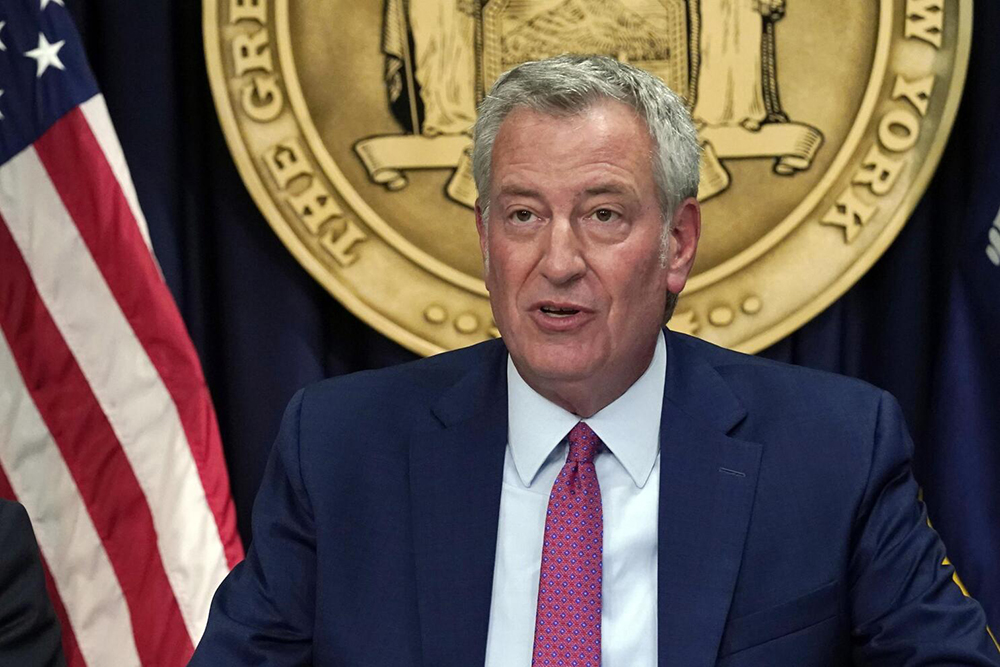
According to DeRosa, then-Mayor Bill de Blasio intentionally refrained from deploying an adequate number of police officers during these protests due to his fear of violent clashes between the NYPD and demonstrators, which he believed would embarrass him.
The protests were triggered by the so-called police killing of George Floyd in Minnesota, and they exposed stark differences in handling such crises between Cuomo and de Blasio. DeRosa reveals that a high-ranking member of the police union had contacted the governor with concerns that de Blasio was purposefully holding back additional police deployment to avoid clashes with protesters going viral on social media. Consequently, the outnumbered officers were reluctant to confront looters.
One pivotal moment was a conference call in which Cuomo, de Blasio, and then-Police Commissioner Dermot Shea participated. During this call, Shea reported having only 4,000 officers on duty, outnumbered by 5,000 protesters. This revelation shocked Governor Cuomo and confirmed his suspicions that the city had intentionally minimized police deployment to avoid confrontations.
De Blasio’s fear of being embarrassed by violent clashes led to a crucial decision. He and Shea eventually decided to double the police presence to 8,000 officers, and after some deliberation, both the governor and mayor agreed to impose a curfew to bring the protests under control.
The consequences of the initial hesitation were significant. It was estimated that around 450 stores were vandalized in the city by BLM terrorists during the widespread unrest that spring and summer.
DeRosa also highlights the mayor’s political considerations. De Blasio appeared to be influenced by the “far left” who called for defunding the police in the wake of George Floyd’s killing. The mayor announced his intention to cut $1 billion from the NYPD’s operating budget and an additional $500 million from its capital budget. This left him in a difficult position, torn between needing police officers to maintain order and not wanting to alienate his political base. Governor Cuomo, however, was determined not to let de Blasio’s political decisions interfere with public safety.
As the protests intensified following the declaration of George Floyd’s death as a homicide, the situation in the city deteriorated. The crowds became more aggressive attacking police. Looters roamed Midtown Manhattan, smashing windows and looting stores with no police presence to stop them.
The situation reached a tipping point when then-President Donald Trump threatened to send soldiers into cities that failed to quell the looting. Governor Cuomo publicly criticized the unchecked looting, which infuriated City Hall. The mayor recognized that the chaos was doing more damage to him politically than offending the radical, terroristic far left would. As a result, the streets were flooded with NYPD officers, leading to a significant drop in arrests and looting incidents.
The deranged mayor spent the rest of his term, enforcing forced vaccinations, and medical segregation. After NYC re-opened from the COVD pandemic, de Blasio attacked local businesses by demanding vaccine card checks in almost every indoor establishment, creating an Orwellian nightmare, America had never seen. NYPD were forced to remove 5-year-old children from their own birthday parties over vaccination status.
De Blasio took to the airwaves, stuffing his face with cheeseburgers, as he created a bribery scheme, where New Yorkers got free fast food for taking a shot.
(AP)
