



|
Getting your Trinity Audio player ready...
|
By: Marty Raminoff
New Jersey officials are warning of a dangerous jellyfish found in the waters off the Jersey Shore.
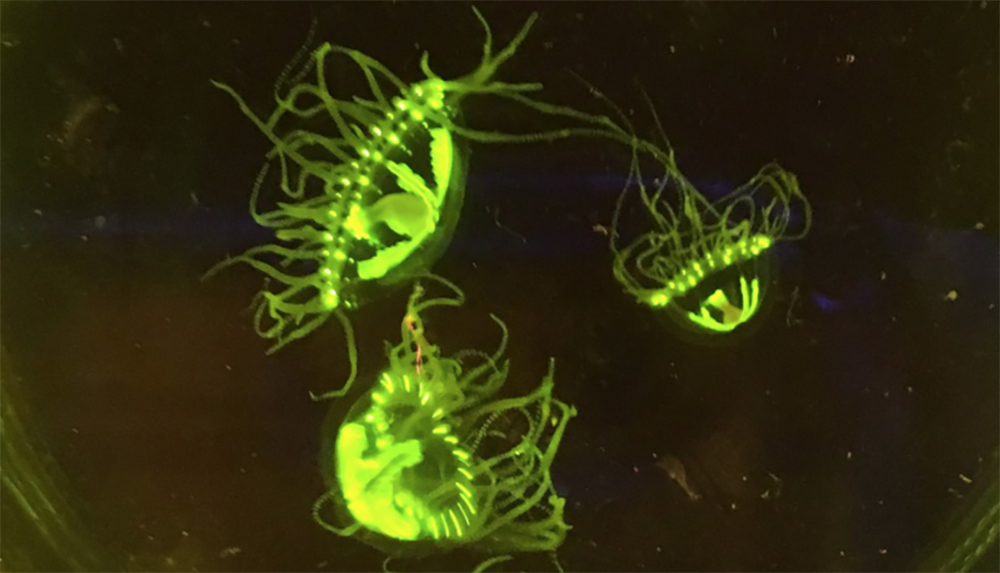
As reported by Fox Weather, these jellyfish are different in many ways, and will add one more risk for beach goers this summer. The Clinging jellyfish are mostly transparent with a single reddish-orange cross and 60 to 80 tentacles that can produce a “very potent” and severely painful sting, New Jersey officials said. On Monday, Montclair State University professor Dr. Paul Bologna explained on FOX Weather that this type of jellyfish is different in that the sting may not be felt for hours after it latches onto your skin while wading in the water.
“So, these organisms have a variety of mechanisms that they work with,” Dr. Bologna said. “And the problem with them is that when, in fact, they’re sort of stinging you, it’s sort of a small sting initially.” The clinging jellyfish have paralysis toxins which continue to work through your system over time, he added. “And it’s usually hours later that somebody actually starts to feel those effects. The muscles start to tighten up,” he added. “And then you’ve got, you know, hours later that they’re really in incredible pain.” Symptoms can last three to five days. Dr. Bologna warned that many times the victims end up in the hospital at a loss as to what happened, not knowing that their pain is due to a brush with a clinging jellyfish.
Per Fox, officials say that if you do notice getting stung, your first reactions should be rinsing the area with saltwater, and then removing any remaining tentacles or parts using gloves, a plastic card or towel.
The clinging jellyfish, as they are called, are new to the area. It is not known how they made their way to the Jersey Shore and along the East Coast, said Dr. Bologna. “Some of our genetic data says that they look very similar to the ones that invaded the Mediterranean, but this species has kind of gone global,” he said. Bologna added that the clinging jellyfish have made their way to Cape May, New Jersey, but they can also be found along the coasts of New York, Connecticut, Rhode Island, Maine and Massachusetts. “So, this is a potential problem for a lot of the Northeast coast,” he said.
Dr. Bologna noted that relief will come when the water temperature heats up to about 82 degrees Fahrenheit, which will cause the jellyfish to die off. New Jersey will have better luck with that. “But those waters don’t necessarily get that warm up in Connecticut and Rhode Island,” he said. “And several years ago in Rhode Island in August, they had, I think, 18 to 20 people that headed to the emergency room because of the stings.”
Beach goers who are able to spot a clinging jellyfish, can report the finding on the New Jersey Jellyspotters Facebook page, so as to warn the public. “Just a heads-up folks. I picked up a couple of clinging jellyfish in the northern part of Barnegat Bay this weekend,” Bologna warned in a recent Facebook post. “So if you are in the shallow grass beds be wary of these little nasty stingers.”
