



|
Getting your Trinity Audio player ready...
|
By: Andrew Carlson
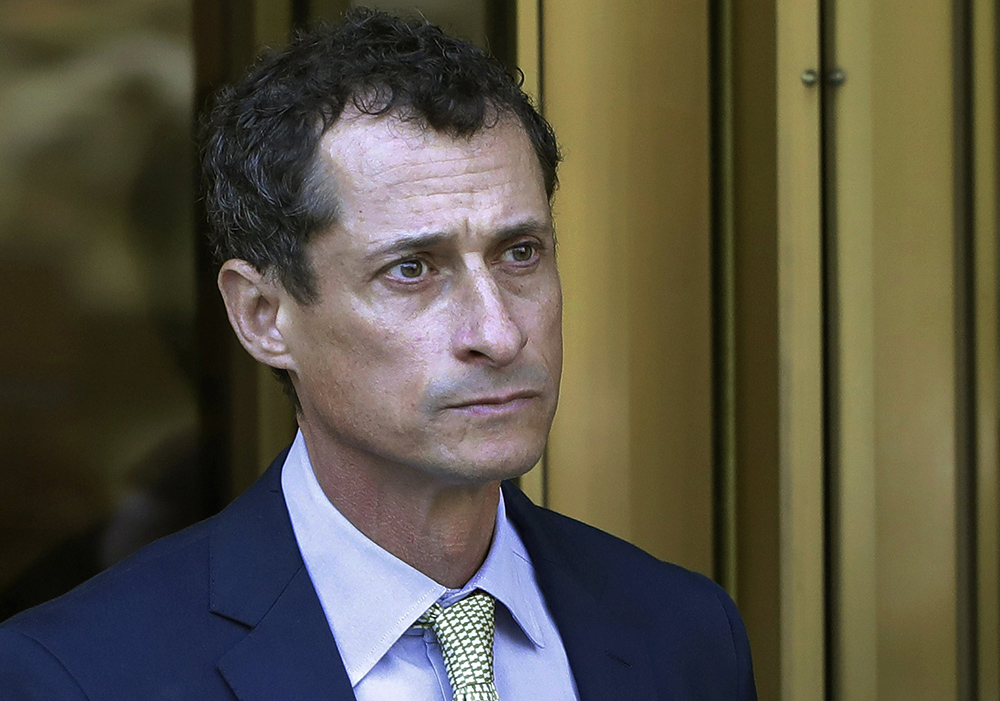
The seismic shift within New York’s Democratic Party was laid bare this week when former congressman Anthony Weiner — himself no stranger to political notoriety — declared that the party’s top brass, including Senate Minority Leader Chuck Schumer and House Minority Leader Hakeem Jeffries, will ultimately have no choice but to endorse left-wing Assemblyman Zohran Mamdani for mayor.
As reported by The New York Post on Sunday, Weiner, appearing on John Catsimatidis’ “The Cats Roundtable” on WABC 770 AM, argued that despite personal distaste for Mamdani’s unabashed socialist platform, national party leaders will be compelled by political reality to rally behind their nominee. “At the end of the day, people like Chuck Schumer and Hakeem Jeffries, they are going to have to endorse the nominee of their party [Mamdani],” Weiner said, describing the situation as “inevitable.”
Schumer and Jeffries, both Brooklyn Democrats who have built reputations as pragmatic party operators, have thus far withheld their endorsements of Mamdani following his stunning victory in the Democratic primary. As The New York Post report observed, their reticence stems from concerns about the national implications of aligning themselves with an avowed socialist whose rhetoric often mirrors that of Rep. Alexandria Ocasio-Cortez and the Democratic Socialists of America.
“The reason Chuck and Hakeem have been so slow to endorse Zohran is because they don’t want to harm their moderate candidates all around the country, which are the ones they need to take back the House and Senate,” Weiner explained. “That’s a political question for them.”
According to the information provided in The New York Post report, both Schumer and Jeffries face a delicate balancing act: on one hand, party unity demands they eventually support Mamdani; on the other, premature or enthusiastic endorsement risks handing Republicans a potent weapon in battleground districts where linking Democrats to the New York socialist could prove toxic.
Weiner described the dilemma vividly: “Some people can stay on the sidelines, and I think you’re going to see a lot of people do that. But the leaders of the party, which Chuck and Hakeem are, are caught between the devil and the deep blue sea.”
As The New York Post report pointed out, that bind is emblematic of the Democratic Party’s broader struggles in recent years — torn between an energized progressive wing and a cautious establishment fearful of alienating moderates. Mamdani’s triumph in the Democratic primary has once again forced the leadership to confront the potency of insurgent leftist candidates, even as doubts linger about their capacity to govern effectively.
Mamdani’s ascendance comes against the backdrop of a fractured general election field. Both incumbent Mayor Eric Adams, who opted not to compete in the June primary, and former Governor Andrew Cuomo have launched independent bids in an effort to reclaim political ground.
Yet Weiner was dismissive of their chances, arguing that running outside the Democratic Party apparatus in a city dominated by Democratic voters is an exercise in futility. “Unfortunately, or fortunately … I think we’re going to have Zohran Mamdani as the mayor in New York City,” he said.
If Weiner’s forecast proves accurate, Mamdani would become the city’s first openly socialist mayor in generations, a development that underscores the shifting ideological sands of New York politics.
Weiner’s remarks, as highlighted in The New York Post report, come from a man whose once-promising political career imploded spectacularly. A former congressman representing parts of Brooklyn and Queens, Weiner resigned in 2011 after admitting to sending explicit photographs to multiple women. His attempted comeback during the 2013 mayoral race collapsed when further revelations emerged that he continued the behavior under the alias “Carlos Danger.”
He later pleaded guilty to sexting with a minor, serving time in federal prison. As The New York Post reminded readers, Weiner attempted yet another comeback this June, mounting an unsuccessful campaign for a City Council seat in Manhattan’s East Side, where he was decisively defeated by Assemblyman Harvey Epstein.
Despite his scandal-ridden past, Weiner has attempted to carve out a role as a political commentator. His analysis of Mamdani’s rise, however, is filtered through both his own brand of moderate Democratic politics and his longstanding concern about the leftward drift of the party.
Weiner framed Mamdani’s victory within a broader narrative of anxiety among moderate Democrats who fear being unseated by insurgent progressives. “Right now, the Democratic Party in a lot of parts of New York … is very, very left to the point of falling off the edge of the cliff,” he told Catsimatidis.
As The New York Post reported, Weiner warned that many mainstream lawmakers are “looking over their shoulders wondering if the next AOC or Zohran Mamdani is going to be coming out of the woodwork to win in a primary.”
The rise of progressive firebrands, propelled by grassroots enthusiasm and activist networks, has already reshaped the Democratic Party in New York. Yet Weiner questioned whether such figures can translate electoral insurgency into competent governance.
“The one thing that the left hasn’t shown that they can do — if you look at Chicago and San Francisco — they haven’t shown that they can govern yet,” Weiner argued, citing examples of progressive mayors who have faced mounting criticism for perceived failures in public safety, homelessness, and fiscal management.
For New Yorkers, Weiner posed a stark question: “The bigger problem is what outcomes are we going to get as citizens and taxpayers if these candidates are successful? Unfortunately, it looks like we’re going to find out in New York City.”
As The New York Post detailed, this skepticism reflects a broader critique of progressive governance, one amplified by Republicans who are already seizing on Mamdani’s nomination to paint Democrats nationwide as beholden to radical leftists.
Indeed, Republicans have wasted no time attempting to nationalize Mamdani’s candidacy. As The New York Post report observed, GOP operatives are linking Democratic candidates across New York State to Mamdani’s socialist agenda, using it as a cudgel in municipal and state races.
For Schumer and Jeffries, this dynamic explains much of their hesitation. Endorsing Mamdani too quickly risks confirming the Republican narrative that Democrats are drifting irrevocably to the left. Yet failure to endorse risks alienating the party’s energized activist base. It is a precarious balancing act with implications well beyond New York City.
At its core, the Mamdani moment represents more than a single mayoral race. As The New York Post report emphasized, it is a test case for the Democratic Party’s identity and direction. Will the party leadership embrace the insurgent energy of its socialist wing, or will it continue to hedge, wary of alienating moderates and independents?
Anthony Weiner’s prediction suggests that, at least in the short term, unity will trump ideology. Schumer and Jeffries, as leaders of the party, cannot credibly withhold support from their nominee. But the political consequences — both in New York and across the nation — remain uncertain.
Anthony Weiner, despite his scandal-stained record, has once again thrust himself into the city’s political conversation with a stark assessment: the Democratic establishment, however reluctantly, will fall in line behind Zohran Mamdani. His forecast paints a portrait of a party caught in ideological crosscurrents, struggling to reconcile its progressive insurgency with the demands of national competitiveness.
Whether Mamdani can govern effectively — and whether his mayoralty will vindicate or undermine the left’s ambitions — remains an open question. But one reality, as Weiner framed it, appears settled: the Democratic Party’s leaders will eventually “swallow hard” and endorse him, even as they brace for the electoral fallout.
For New York City, and perhaps for the Democratic Party nationwide, the consequences of that endorsement may reverberate for years to come.
