



|
Getting your Trinity Audio player ready...
|
An Evening of Conviction in Gravesend: Brooklyn Republicans Rally, Endorse, and Reassert a Politics of Community and Resolve
By: Fern Sidman
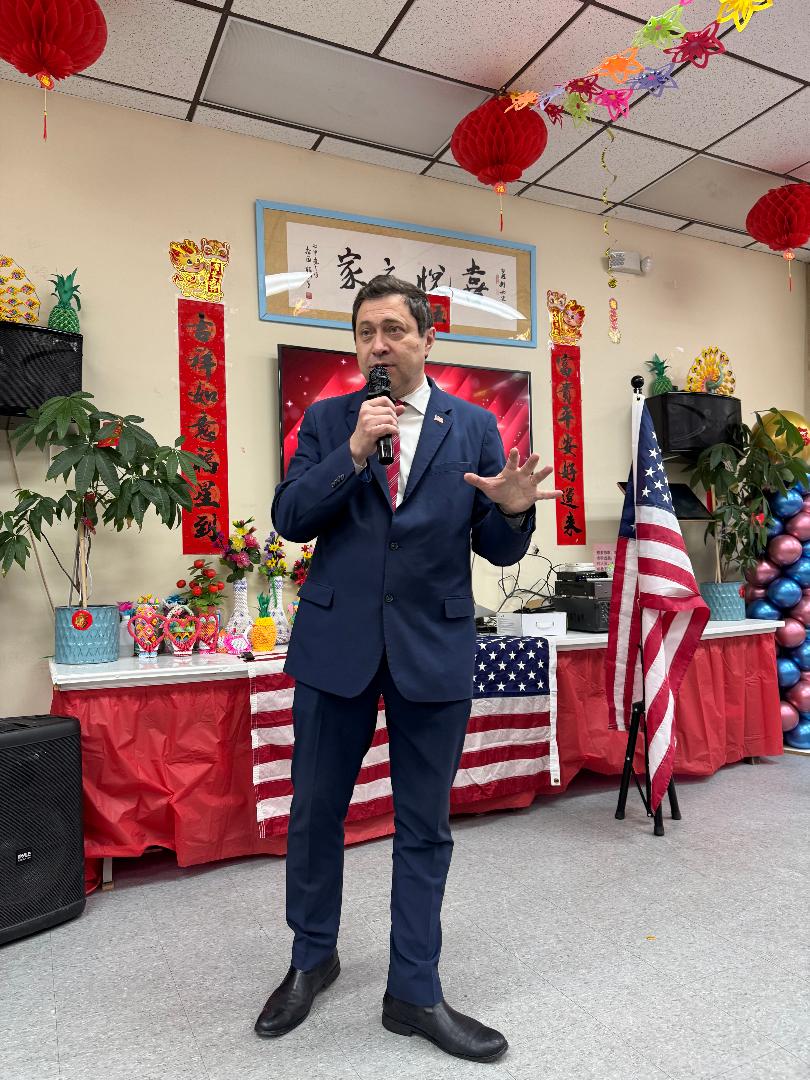
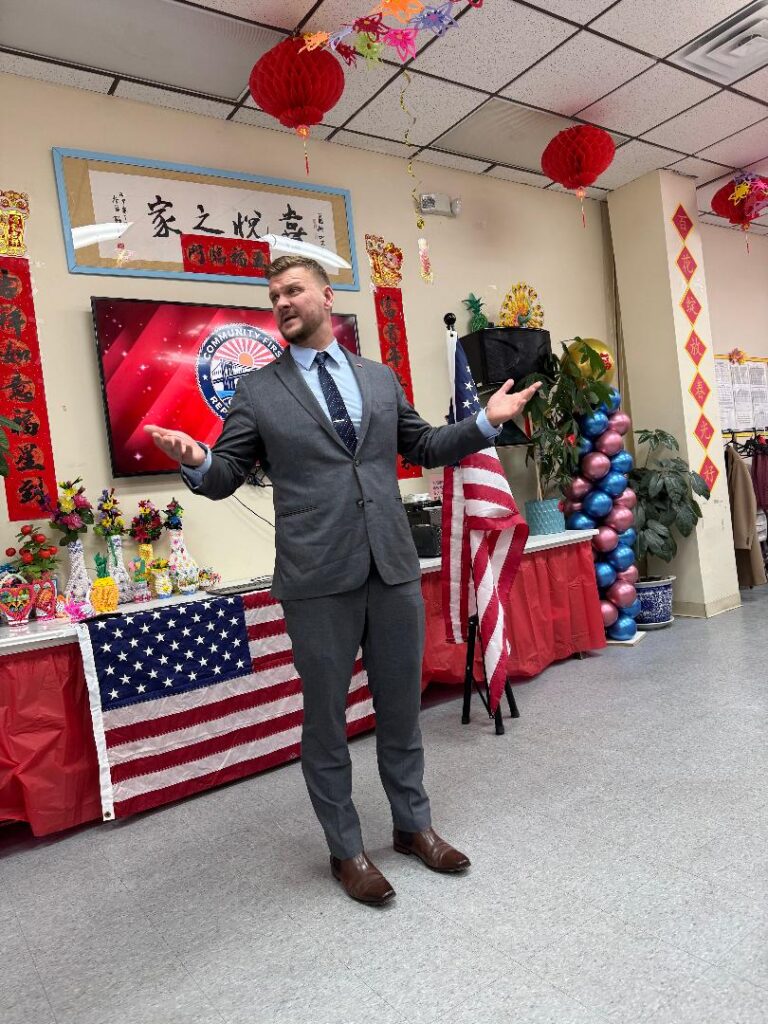
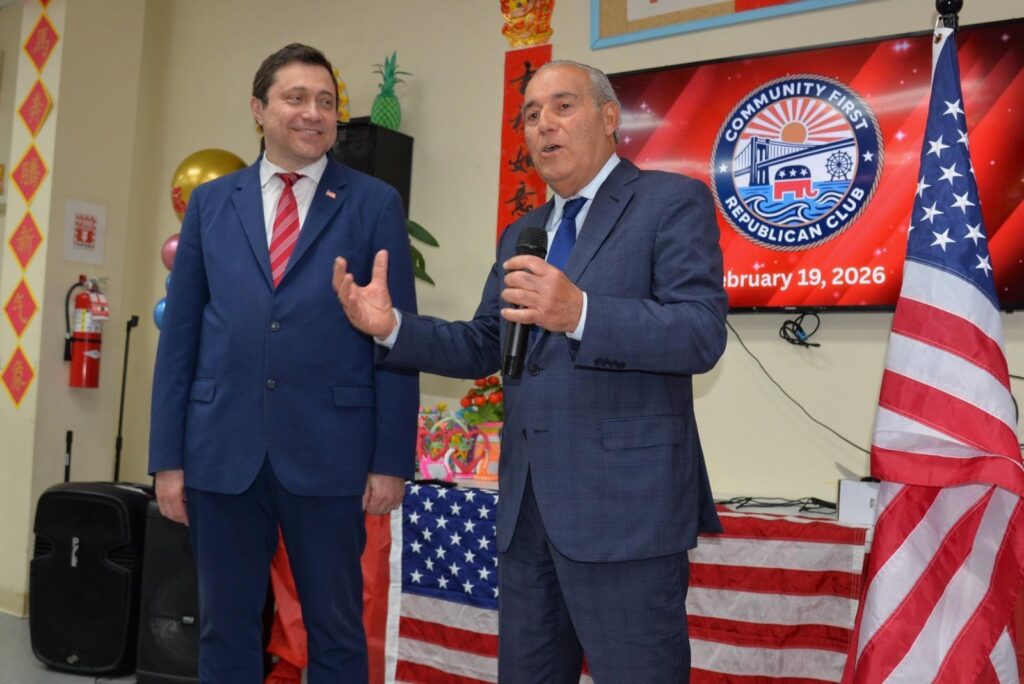
On Thursday evening in the Gravesend section of Brooklyn, the Community First Republican Club convened for what would become far more than a routine monthly gathering. The meeting unfolded as a tableau of political resolve, personal narrative, and ideological affirmation, bringing together a cross-section of Brooklynites who gathered not merely to share a buffet dinner but to articulate a vision of civic engagement rooted in community, tradition, and an unyielding belief in the redemptive possibilities of the American experiment. The evening, marked by a series of endorsements for Republican candidates ahead of the coming electoral season, was also an occasion for reflection on identity, migration, public service, and the enduring power of conviction in an age of political volatility.
Presiding over the evening as master of ceremonies was Ari Kagan, the former New York City councilman and long-time community activist whose political career has been shaped by the neighborhoods of southern Brooklyn. With the cadence of a seasoned orator and the ease of a familiar neighbor, Kagan welcomed the attendees—men and women of varied ages and ethnic backgrounds—before introducing the evening’s speakers and candidates. His remarks were suffused with a tone of gratitude and recognition, emphasizing the professional achievements of those present and their willingness to place public service at the center of their lives.
In an era often characterized by cynicism toward politics, Kagan sought to restore a sense of civic dignity, praising those who had chosen to stand before their communities and accept the burdens of leadership.
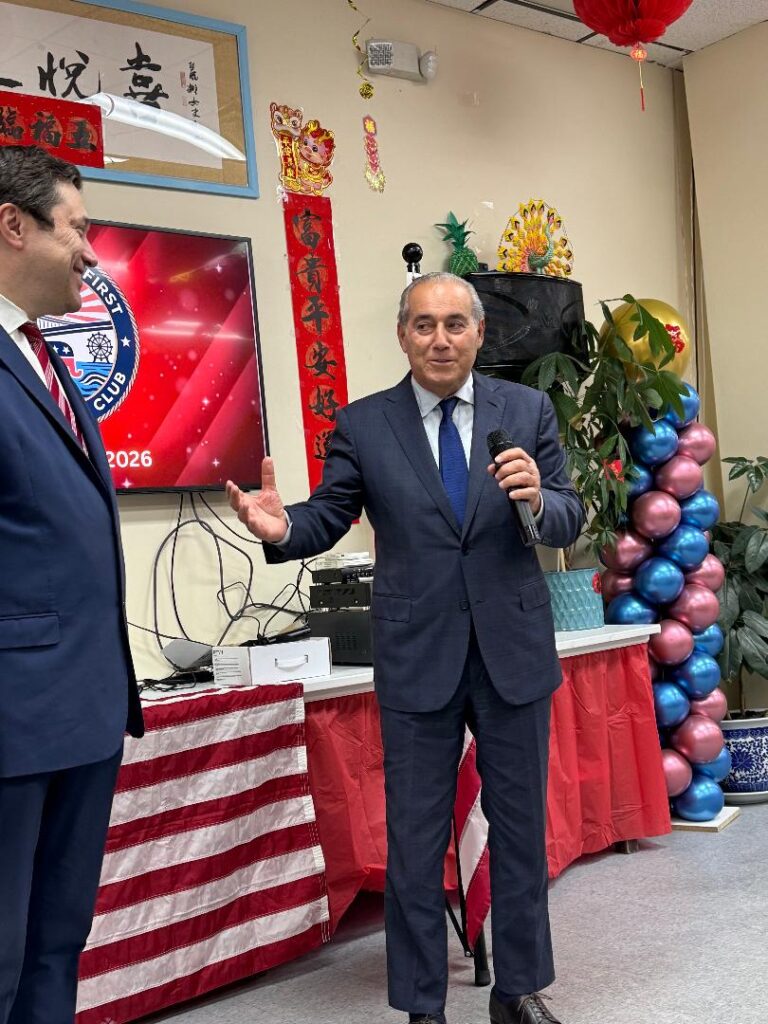
Kagan told The Jewish Voice that the Community First Republican Club has moved with remarkable velocity since its founding in December 2025, rapidly transforming from a fledgling civic initiative into a highly visible presence within Brooklyn’s political landscape. Beyond its formal role in endorsing candidates and embedding itself in the mechanisms of local governance, Kagan said the organization has made a deliberate effort to cultivate direct, personal relationships with community groups and residents. That outreach, he noted, has included small but symbolically resonant gestures, such as distributing cookies to the neighborhood firehouse, as well as maintaining regular contact with constituents seeking assistance—an approach intended to anchor partisan activity in tangible acts of neighborhood service.
The evening saw the club offer its endorsement to Nassau County Executive Bruce Blakeman in the race for New York State governor, Joseph Hernandez in the contest for state comptroller, and Saritha Komatireddy in her bid for attorney general. Members also delivered emphatic backing to a slate of Republican incumbents seeking re-election, including Congresswoman Nicole Malliotakis, State Senator Steve Chan, and Assembly members Michael Novakhov, Alec Brooke-Krasny, and Lester Chang, emphasizing the club’s commitment to consolidating existing GOP footholds in Brooklyn and beyond.
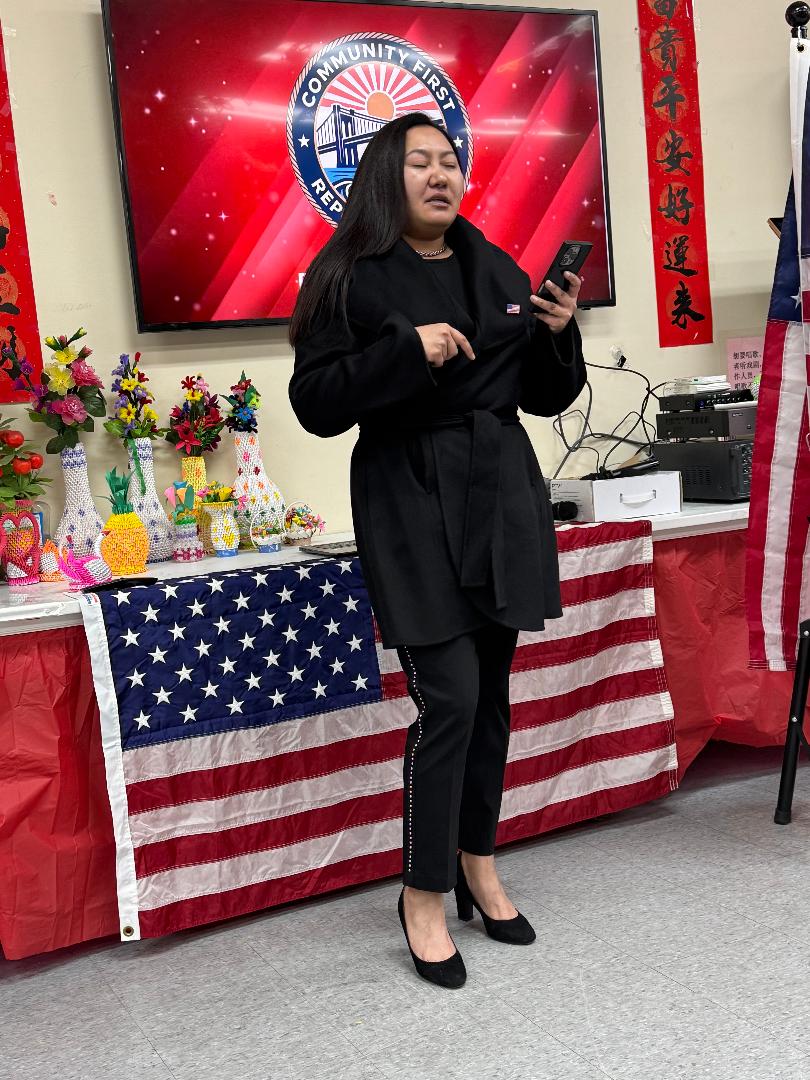
The organization’s ambitions extend to nurturing its own leadership cadre. The club formally endorsed board member Karina Bertaeva in her campaign for the New York State Assembly in the 47th District, which encompasses Bensonhurst, Gravesend, Bath Beach, and Dyker Heights—neighborhoods that have become increasingly contested terrain in city and state politics. In parallel, the club has opened its platform to a range of Republican candidates who addressed members on the issues animating voters in their respective districts.
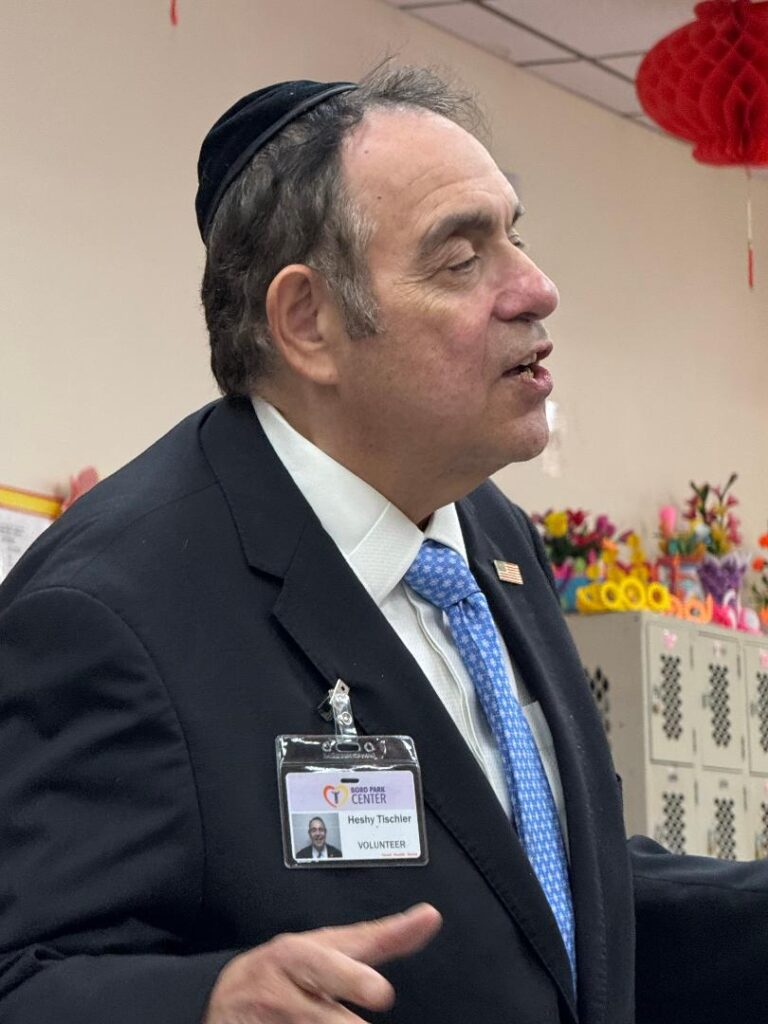
Among those welcomed were Etan Harris, a graduate of Syracuse University Law School seeking a judgeship in the 8th Municipal District; Ruslan Shamal, who is mounting a State Senate campaign in the district that represents Staten Island and southern Brooklyn; as well as community activist and media figure Heshy Tischler, who is weighing a run for the State Senate seat representing Borough Park, Midwood, Gravesend, and Sheepshead Bay.
Together, these appearances signaled the club’s intent to position itself not merely as an endorsement body, but as a convening hub for Republican aspirants seeking to engage directly with Brooklyn’s diverse and often politically fluid electorate.
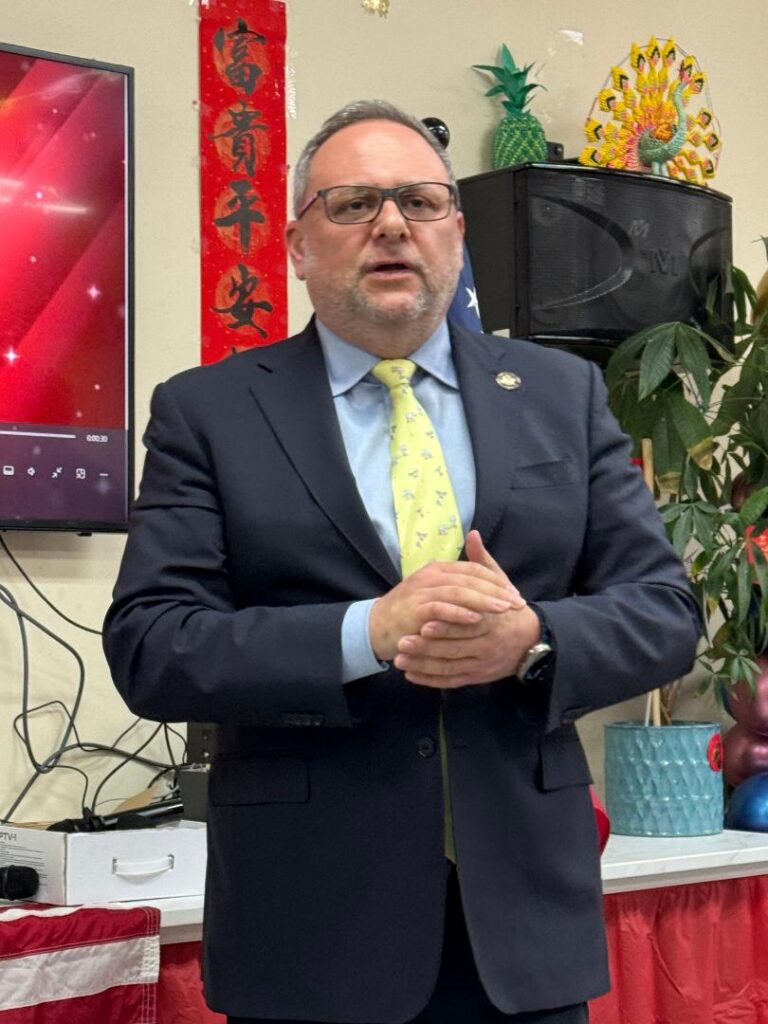
The first major address came from Michael Novakhov, a figure whose biography has become emblematic of the immigrant narrative that continues to shape New York’s civic culture. Elected to the New York State Assembly in 2022, Novakhov represents the 45th Assembly District, a diverse swath of Brooklyn encompassing Sheepshead Bay, Midwood, Manhattan Beach, Gravesend, and Brighton Beach. His presence at the podium symbolized the convergence of personal history and public responsibility. Born in the former Soviet Union, Novakhov immigrated to the United States with his family, arriving in a country whose promise of opportunity would come to define his professional trajectory.
Novakhov spoke with candor about the long arc of his journey, recounting how two decades in the radio industry culminated in the co-founding of Freedom FM in 2019, now widely recognized as the most listened-to Russian-language radio station in the nation. His career in broadcasting, he suggested, had afforded him an intimate understanding of the concerns, anxieties, and aspirations of immigrant communities who often feel marginalized within the broader political discourse.
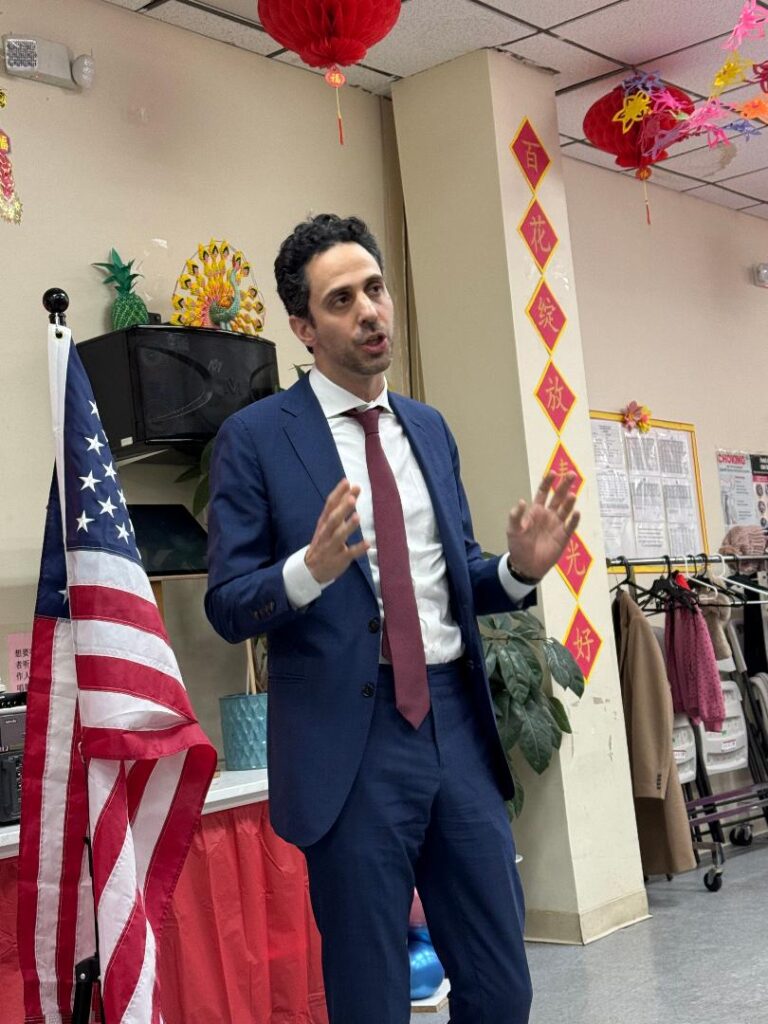
The narrative he offered was not one of facile triumphalism but of persistence in the face of structural and cultural obstacles. In presenting himself as a living embodiment of the American Dream, Novakhov called attention to the moral weight he attaches to public office, arguing that those who have benefited from the nation’s openness bear a particular obligation to safeguard its institutions and civic traditions.
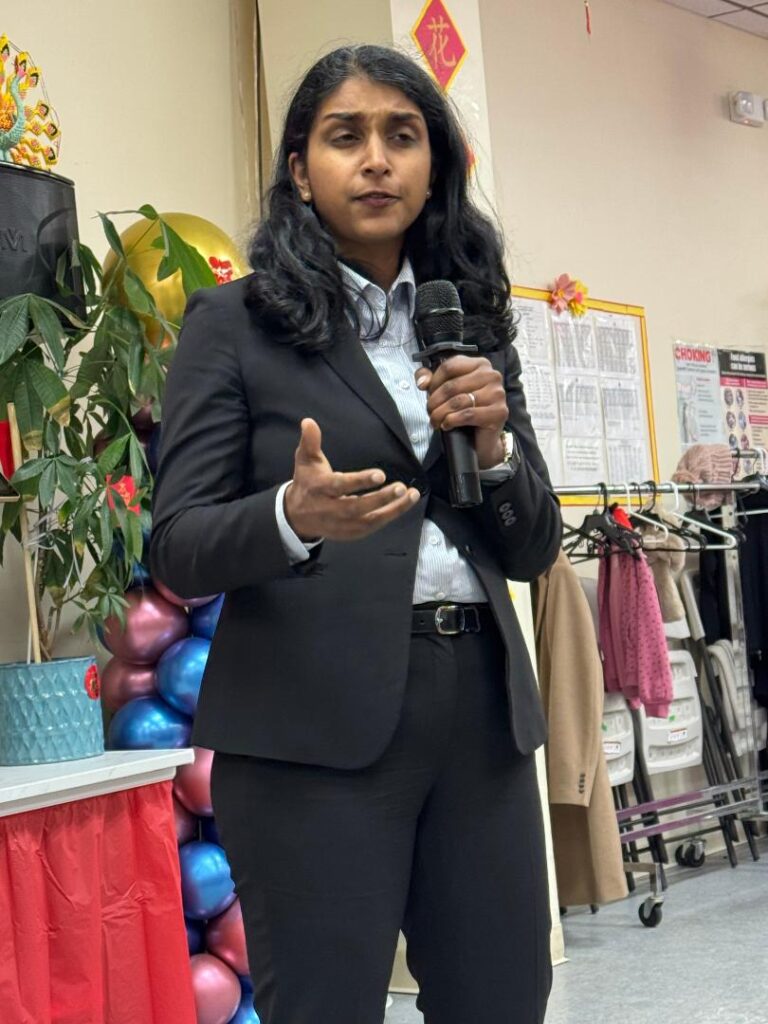
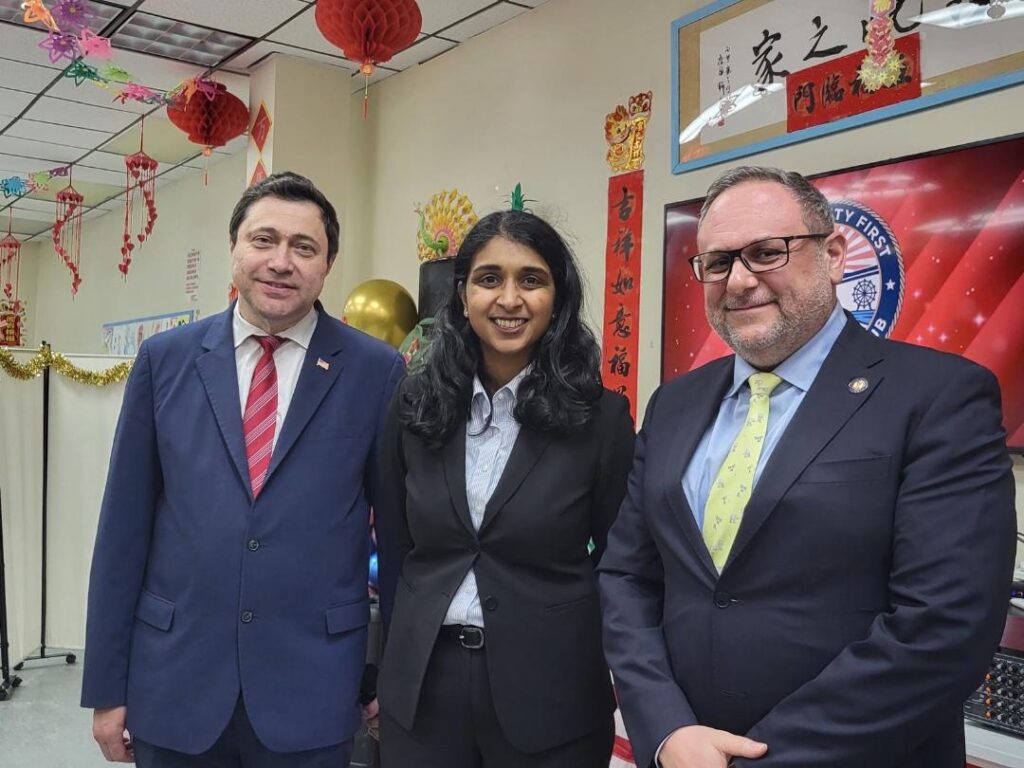
The evening’s tone shifted from the reflective to the prosecutorial with the address of Saritha Komatireddy, the Republican nominee for New York State Attorney General in the 2026 election. Komatireddy’s candidacy represents a direct challenge to the incumbent, Letitia James, who is seeking a third term. A former federal prosecutor with more than a decade of experience in the U.S. Attorney’s Office for the Eastern District of New York, Komatireddy brought to the gathering the gravitas of a jurist steeped in the mechanics of criminal justice.
Her résumé, which includes service as Chief of International Narcotics and Money Laundering, Deputy Chief of Appeals, Deputy Chief of General Crimes, and Chief of Staff of the Drug Enforcement Administration, lent her words a weight that resonated deeply with an audience increasingly concerned about public safety.
Komatireddy framed her campaign as a return to what she described as the foundational mission of the attorney general’s office: the protection of New Yorkers and the impartial enforcement of the law. In a pointed critique of her opponent, she accused the current administration of prioritizing partisan agendas over the quotidian work of combating crime and ensuring public order.
Her rhetoric was unapologetically “law-and-order,” reflecting a belief that the erosion of public safety in New York demands a prosecutorial philosophy unencumbered by ideological preoccupations. Educated at Harvard College and Harvard Law School, and having clerked for Supreme Court Justice Brett Kavanaugh during his tenure on the U.S. Court of Appeals, Komatireddy presented herself as a candidate uniquely equipped to navigate the intersection of legal sophistication and prosecutorial rigor.
The most personal and ideologically charged address of the evening came from David Ben Hooren, a prominent figure within New York’s Jewish community and the founder and executive publisher of The Jewish Voice, a weekly newspaper based in Brooklyn.
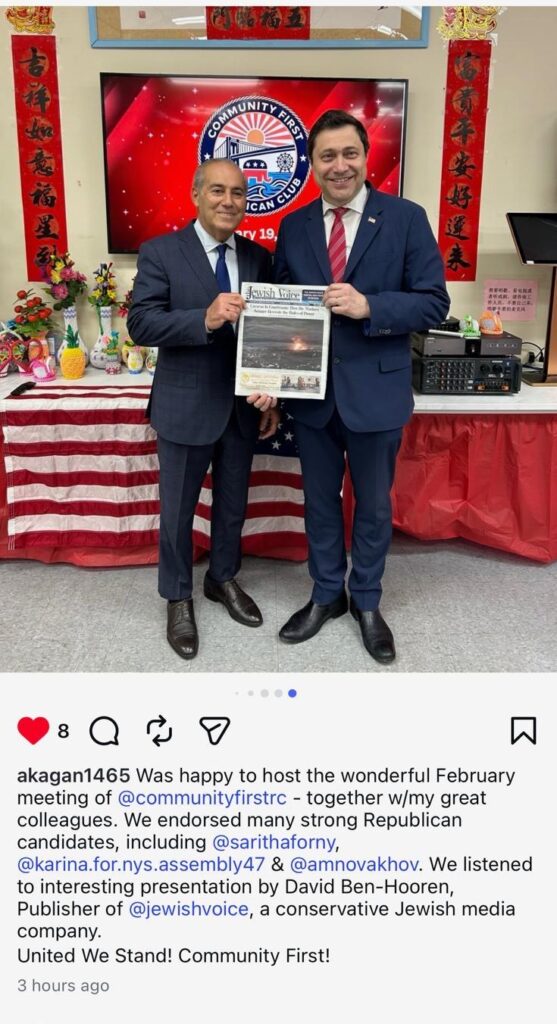
Ben Hooren’s speech unfolded as a meditation on identity, resilience, and the moral imperatives of journalism in a fractured public sphere. He spoke of his childhood in Israel and his service as a paratrooper in the Israel Defense Forces, experiences that, he suggested, instilled in him a discipline and fortitude that would later shape his professional life. His father’s devotion to newspapers, he recalled, cultivated in him an early reverence for the written word as a vehicle of truth and civic instruction.
After completing his military service, Ben Hooren embarked on a period of itinerancy across Europe, living in Italy and France before ultimately settling in New York City. It was here, through a chance encounter with a Russian scientist who encouraged him to pursue journalism, that he resolved to devote his life to reporting “the news that matters most to people.” The narrative he offered was suffused with the language of vocation rather than mere occupation, framing journalism as a moral calling rather than a commercial enterprise.
Ben Hooren’s reflections on the state of Jewish media were sobering. He noted that approximately seventy percent of Jewish newspapers have been forced to shutter in recent years, casualties of shifting media economics and the digital transformation of news consumption. Against this bleak backdrop, he presented The Jewish Voice as an outlier that has not only survived but persisted with vigor. The newspaper’s endurance, he argued, is a testament to the power of editorial independence and the willingness to stake out positions that run counter to prevailing orthodoxies.
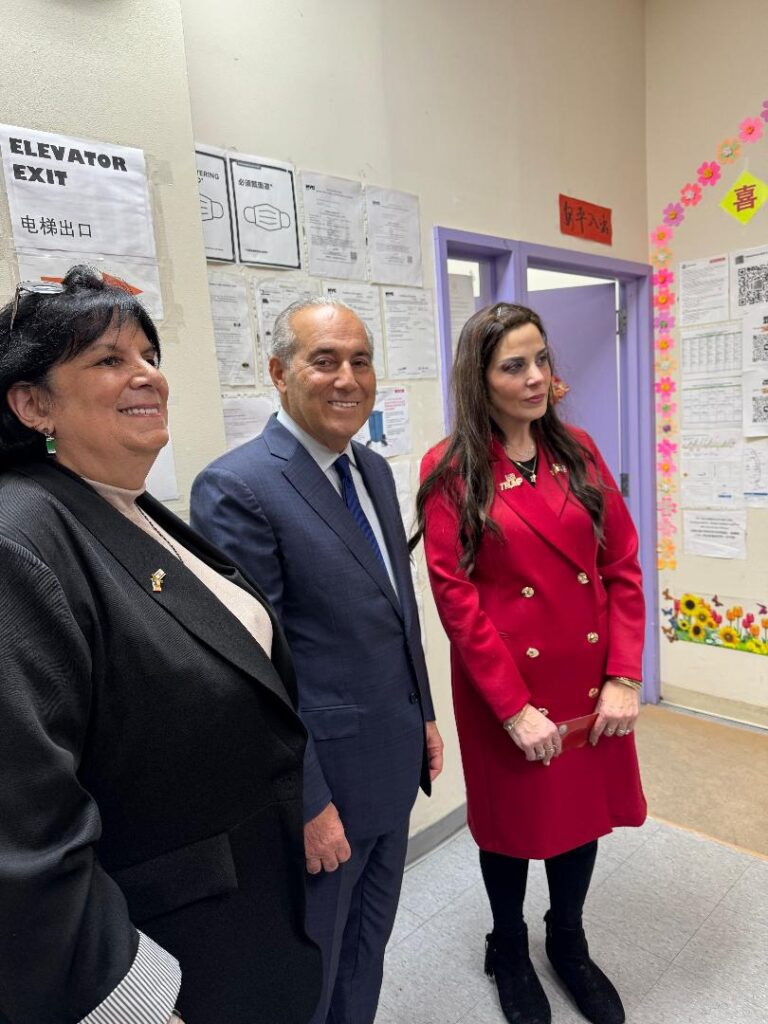
He recounted how The Jewish Voice had endorsed President Trump three times, a decision that distinguished it sharply from the majority of Jewish publications. He recalled that when the Abraham Accords were signed at the White House, The Jewish Voice, alongside Newsmax, was present, underscoring what he framed as the publication’s commitment to bearing witness to events of historical consequence. His speech returned repeatedly to the theme of conviction, suggesting that true success arises not from conforming to the “flow” of consensus but from adhering to one’s principles even in the face of opprobrium.
This ethos of dissent was illustrated in his recollection of The Jewish Voice’s opposition to the Obama administration’s Iran nuclear deal. While other outlets, he claimed, had lauded the agreement, his newspaper publicly protested it, warning of strategic and moral hazards. He extended this narrative of journalistic contrarianism to other issues, asserting that when official narratives claimed the U.S. border was closed, The Jewish Voice exposed its permeability, and when allegations of fraud in the 2020 presidential election were dismissed by mainstream media, his publication insisted on the legitimacy of such concerns.
Ben Hooren concluded by addressing the resurgence of antisemitism on American college campuses in the wake of the Hamas massacre of October 7, 2023, and the subsequent war in Gaza. He described how Jewish students were counseled by some to withdraw from elite universities amid hostile environments, yet The Jewish Voice urged them to remain and confront intolerance directly. In his telling, these students chose resistance over retreat, embodying a spirit of resilience that he presented as emblematic of the broader Jewish historical experience.
Also taking the podium was Heshy Tischler, a community organizer, media figure, and civic advocate whose public life has been shaped by sustained grassroots engagement. Reflecting on his highly visible opposition to New York City’s COVID-era restrictions in 2020, as well as his quieter, long-term efforts to secure shelter for the homeless, his establishment of a soup kitchen in Borough Park, and his work and support of children with physical and emotional challenges, Tischler presented a portrait of activism grounded in lived responsibility. Throughout his remarks, his deep attachment to the community he serves was unmistakable, conveyed through a distinctive blend of candor, warmth, and disarming humor that animated the room.
As the evening in Gravesend drew to a close, the gathering revealed itself not merely as a political meeting but as a ritual of affirmation for a community seeking coherence in turbulent times. The endorsements extended that night were embedded within a larger narrative of belonging, struggle, and ideological clarity. In the speeches of Novakhov, Komatireddy, and Ben Hooren, one discerned a shared insistence that politics, at its best, remains inseparable from biography, that public service derives its moral force from personal histories of migration, sacrifice, and conviction.
The Community First Republican Club’s February meeting thus stood as a microcosm of Brooklyn’s complex political mosaic, a reminder that in the city’s boroughs, national debates are refracted through the intimate lenses of lived experience and communal memory.

I can’t wait to attend a meeting! AS ALWAYS thank you for being there for your fellow men and women! I cannot believe how absolutely crazy my district has become without your representation.
Yours truly,
Kelly Starr