



By: Steven Reinberg
Enlarged spaces in the brain that fill with fluid around small blood vessels may be a harbinger of impending dementia, a new Australian study suggests.
Typically, these so-called perivascular spaces help clear waste and toxins from the brain and might be linked with changes in the aging brain, researchers say.
“Dilated perivascular spaces, which are a common MRI finding, especially in the elderly, are not just an incidental finding,” said study author Dr. Matt Paradise, a psychiatrist and research fellow at the Centre for Healthy Brain Ageing at the University of New South Wales in Sydney. “Instead, they should be taken seriously, and assessing their severity may be able to help clinicians and researchers better diagnose dementia and help predict the trajectory of people with cognitive decline.”
Paradise noted, however, that the study does not prove that enlarged perivascular spaces cause thinking and memory problems, only that there is an association.
“Dilated perivascular spaces may be a marker of the disease process, but not necessarily drive it,” he explained. ‘The underlying mechanisms for dilated perivascular spaces are complex and need unraveling.”
One neurologist agreed that relationship between these enlarged spaces and dementia is complicated.
“We all have perivascular spaces. They are natural, but they’re usually very small, so small that when we do pictures of the brain, we don’t usually see them,” explained Dr. Glenn Finney, a neurologist at the Geisinger Specialty Clinic in Wilkes Barre, Pa. “Some people have a few enlarged ones that are probably just normal.”
“But when we see a large amount of these extra spaces developing, that is when we start to suspect there’s probably something more going on in terms of brain health,” Finney added. “This is not something that happens to everybody.”
These spaces can enlarge when brain matter is lost or there is a build-up of materials that are normally cleared in those spaces, he explained.
“What we know is that we can see them more with age,” he said. “In some cases, we can see them associated with vascular damage in the brain.”
Finney doesn’t think that these enlarged spaces will be a diagnostic tool, and instead, “It’s really going to be a marker of risk. It’s not going to tell you if you have dementia, it’s not going to tell you if you’re going to get it. It’s just going to tell you that you may be at a little higher risk.”
Looking for connections
For the study, the researchers tested more than 400 people, average age 80. Participants were given tests of thinking and memory skills and assessed for dementia at the beginning of the study and every two years for eight years.
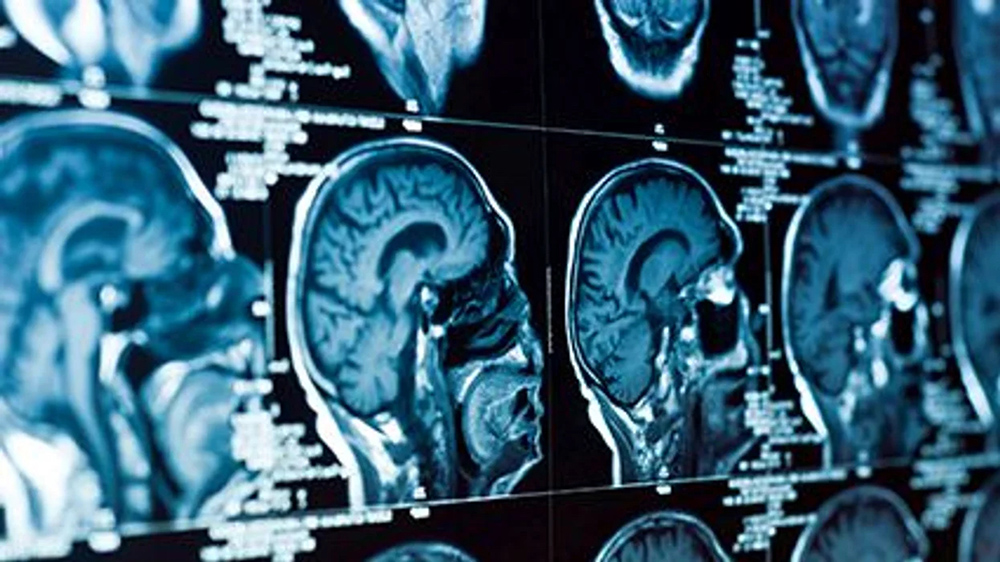
Also, the participants had MRI brain scans to look for enlarged perivascular spaces in two key areas of the brain at the start of the study and every two years for eight years.
The researchers compared the top 25% of those who had the largest number of enlarged perivascular spaces with those with fewer or no enlarged spaces.
They found that those with the most enlarged perivascular spaces were nearly three times more likely to develop dementia than those with fewer or no enlarged spaces.
In all, 24%, or 97 participants, developed dementia during the study. Of the 31 people with enlarged perivascular spaces in both areas of the brain that the researchers looked at, 39% developed dementia.
The people with severe enlargement of perivascular spaces in both areas of the brain were also more likely to have greater decline four years later on their overall scores of cognition than people with mild or no enlargement of spaces.
The results remain unchanged after the researchers took into account other factors that could affect scores on tests or the development of dementia, such as age, high blood pressure and diabetes.
They also accounted for other signs of disease in the small blood vessels in the brain, which can also be a risk of dementia.
The picture is actually more complex, Paradise said. “There may be differential effects for the two main regions where dilated perivascular spaces were measured, as this effect was not seen in all groups. This might be due to different mechanism of disease in those two areas. But broadly speaking, dilated perivascular spaces are a marker for disease of the microscopic blood vessels of the brain,” he said.
The report was published online Jan. 27 in the journal Neurology.
