



|
Getting your Trinity Audio player ready...
|
By: George Citroner
Anemia and heart disease may be more closely related than previously thought.
Recent research has uncovered a concerning link between anemia and cardiovascular diseases such as atrial fibrillation (AFib), a type of arrhythmia, and heart failure, which occurs when the heart fails to pump sufficient blood to meet the body’s demands.
“Since the job of the heart is to supply blood to the rest of the body, if there is anemia, [then there is] decreased concentration of red blood cells,” Dr. Michael Goyfman, chief of cardiology and director of echocardiography at Northwell Long Island Jewish Forest Hills in New York, told The Epoch Times. “Then the heart may need to provide a larger volume of blood to meet the demands of the body, whether by pumping faster or harder.”
This may cause increased strain on the heart and could exacerbate some underlying heart conditions, Dr. Goyfman added.
Approximately 6.5 million Americans over the age of 20 suffer from heart failure, according to the Heart Failure Society of America. AFib, the most common form of irregular heartbeat, currently affects over 5 million U.S. adults, with projections from the CDC suggesting that the number of affected individuals will increase to around 12.1 million by 2030.
Iron’s Impact on Heart Problems
Anemia, characterized by a scarcity of red blood cells or hemoglobin to carry oxygen to the body’s tissues, often manifests through symptoms like fatigue and weakness.
A comprehensive review conducted in 2022 revealed that both iron deficiency and chronic inflammation contribute to anemia. Iron deficiency hinders the production of healthy red blood cells due to inadequate iron levels. Chronic inflammation disrupts iron metabolism, impairing red blood cell production.
Another review of studies published in 2022 by BioMed Central revealed a strong association between iron-deficiency-related anemia and AFib, an irregular heartbeat. Restoring iron to healthy levels was found to be an effective treatment.
Research has also found that anemia is a risk factor for several other conditions, including:
Cardiac hypertrophy (thickening of the heart muscle walls)
Angina (heart pain)
Multiorgan failure (a life-threatening complication if anemia is left untreated)
Risk Factors for Anemia
Anemia risk factors include poor diet, intestinal disorders, chronic diseases, and infections. However, women who are menstruating or pregnant and those with chronic medical conditions are at greatest risk for this condition. Anemia risk also increases with age.
In some cases, anemia can be triggered by certain medications, leading to a condition known as drug-induced immune hemolytic anemia (DIIHA). Differentiating DIIHA from other causes of anemia can be challenging, potentially delaying its diagnosis and treatment. Antibiotics like penicillin and cephalosporins are commonly associated with DIIHA.
Moreover, medications used in cancer treatment are known to cause myelosuppression. In this condition, the bone marrow decreases the production of various blood cells, including red blood cells, Dr. Goyfman said.
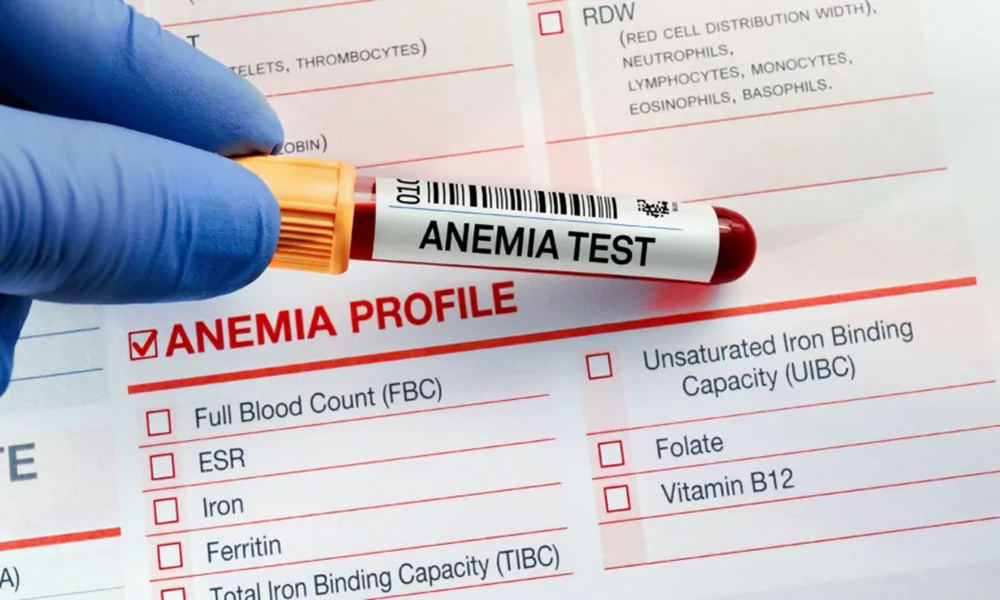
The condition is diagnosed by blood test and is indicated when the test shows a hemoglobin value of less than 13.5 gm/dl (grams per deciliter) for men or below 12.0 gm/dl in women. Healthy levels for children can vary with age.
OTC Drugs That Increase Anemia Risk
Aspirin, a widely used medication, has been traditionally believed to reduce the risk of blood clots leading to heart attacks or strokes. Several surveys have found that more than 20 percent of Americans aged 40 and over take low-dose aspirin on a daily basis.
