



|
Getting your Trinity Audio player ready...
|
By: Amy Denney
Adrenal cocktails, or non-alcoholic drinks aimed at lowering stress, are a social media trend registered dietitian Abby Hueber wholeheartedly endorses for waking up a sluggish thyroid.
Hueber takes it a step further, telling new clients to try basic mineral-rich drink recipes as a simple strategy to boost energy and mood–two early indicators of hypothyroidism–as they await lab results directing more targeted therapies.
“For many people, men and women, it’s like the lights get turned back on because we’re essentially putting those spark plugs back into the body in a more robust way,” she told The Epoch Times. “All people would benefit from more minerals and electrolytes on a daily basis, because we burn through those when we have stress, and that’s what we’re typically seeing very depleted.”
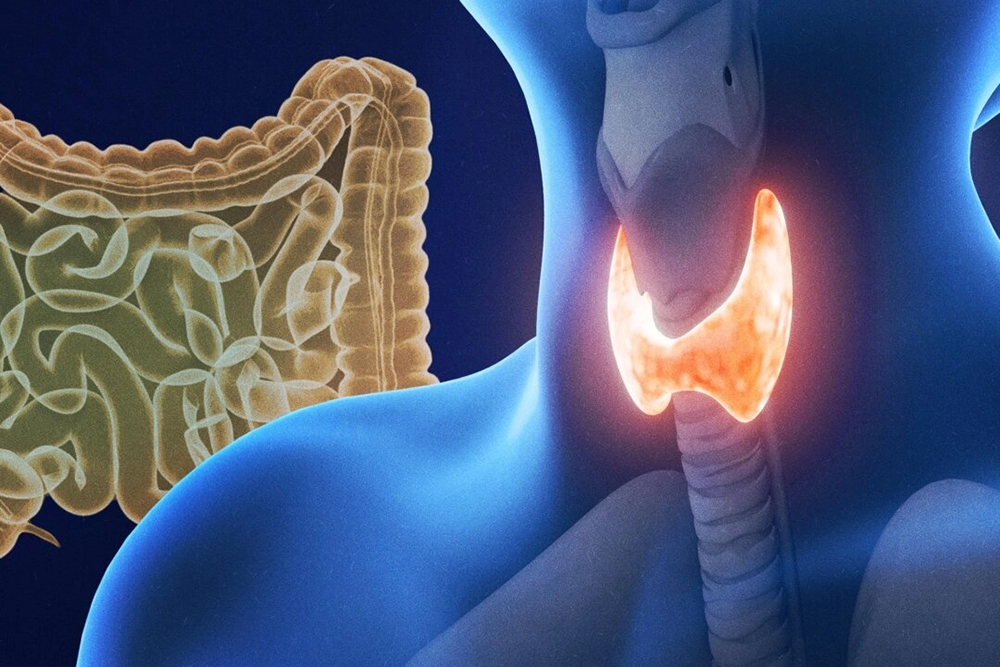
Dialing in micronutrient needs with curated health drinks is an example of adopting a gut-focused strategy to improve thyroid function.
Many clinicians are paying close attention to the gut-thyroid axis, as evidence mounts that an out-of-balance gut microbiome, called dysbiosis, can impair nutrient absorption while driving up intestinal permeability, chronic inflammation, and the risk of thyroid diseases. Focusing on gut health is an easy entry point for better thyroid function. Targeted nutrition, mindful medication use, and stress reduction can enhance this gut-thyroid relationship.
“Hypothyroidism really does end up slowing down motility,” Melissa Ramos, a traditional Chinese medicine practitioner and nutritionist who specializes in thyroid health, told The Epoch Times.
In addition to constipation, women with thyroid disorders have often been diagnosed with irritable bowel syndrome and may struggle with acid reflux, bloating, and food sensitivities.
The Gut-Thyroid Axis at a Glance
Gut microbiota influence absorption of minerals like iodine, selenium, zinc, and iron which are vital for thyroid function.
“The composition of the gut microbiota has an influence on the availability of essential micronutrients for the thyroid gland,” according to a review published in Nutrients that noted a person’s microbiota composition could drive both treatment and prevention of thyroid disorders. “There is a clear link between thyroid dysfunction and altered levels of these minerals.”
Dysbiosis–a common finding in thyroid disorders–alters the immune response and reduces thyroid-stimulating hormones, the review stated. Dysbiosis damages the intestinal barrier, increasing intestinal permeability and allowing antigens to escape the gastrointestinal tract, where they can create an inflammatory reaction and an autoimmune response.
Further evidence of the role dysbiosis plays in the gut-thyroid axis is that both celiac disease and non-celiac wheat sensitivity, which cause gastrointestinal distress, are associated with dysbiosis and prevalent in Hashimoto’s thyroiditis and Graves’ disease–two autoimmune disorders of the thyroid.
A more recent review, published in Nutrients, stated that dysbiosis is a trigger for autoimmune diseases, including thyroid diseases.
While dysbiosis is caused by some medications, infections, diet, and stress, the review postulates that phthalates in the maternal bloodstream are transferred to infants during breastfeeding. The authors said this could stimulate an overgrowth of microbes that are driving dysbiosis and leading to metabolic diseases, including thyroid disorders. Phthalates are chemicals found in plastic, makeup, and personal hygiene products.
Addressing Dysbiosis
Restoring an out-of-balance gut microbial community can have a beneficial effect on thyroid function and hormone levels at all ages. Several approaches are promising.
Probiotic supplements benefit thyroid hormone by allowing beneficial microorganisms to proliferate in the intestine to prevent dysbiosis, positively affecting absorption of some minerals, and possibly eliminating the need for thyroid hormone supplementation.
Probiotics can also be used safely alongside antibiotics, which may be necessary to eradicate infections in some thyroid patients despite the dysbiotic effect of antibiotics. The International Scientific Association for Probiotics and Prebiotics has developed a clinical guide outlining the products suitable for use in conjunction with various infections and treatments.
Experts advise that when those with thyroid conditions take antibiotics, they should also prioritize a healthy diet of whole foods, reduce stress, get adequate sleep, and avoid other medications that can harm healthy microbes.
Proton pump inhibitors, or acid reflux medications that lower stomach acid, and birth control pills can also disrupt the microbiome. “These drugs can end up altering a lot of the microbial diversity,” Ramos noted.
Probiotics can help lower the side effects of proton pump inhibitors and increase the effectiveness of the drug.
Diversity in the gut microbiota has been associated with a more robust immune system and better health. Research has found that a diet rich in a variety of colorful vegetables and fruits contributes to a diverse microbiome, while eating ultra-processed foods can be destructive to beneficial microbes.
It’s equally important to limit other foods that can be harmful to your gut microbiota, physician and functional medicine practitioner Dr. Christine Maren told The Epoch Times. Those include:
High amounts of any type of fat, especially saturated fat
Foods high in pesticides
Artificial sweeteners
Alcohol
Gluten and dairy–generally not recommended for those with Hashimoto’s
Ramos said a Mediterranean diet works well for most people. The diet prioritizes cooked vegetables and proteins, and quality fats.
Maren said that when gut issues are addressed, she sees positive results on thyroid hormone lab tests. Better gut health also results in a more effective response to thyroid hormone medications, due to improved gastric acidity that enhances absorption.
“Because their gut microbiome is working better and they’re absorbing their nutrients better, there’s less trauma and stress on their system,” she said. “I always say our body loves us. It’s trying to protect us, so we just have to figure out what it’s trying to say.”
That said, thyroid medications are less effective when taken with certain supplements like calcium, iron, zinc, magnesium, and fiber, as well as with antacids. It’s best to separate thyroid medication from these by four hours, Maren said.
Mineral Support
An orchestra of minerals–often missing or insufficient in the modern diet–fuels the thyroid gland, enabling it to direct overall health. While iodine tends to draw the spotlight for thyroid health, others, such as selenium, zinc, and iron, are also essential to making hormones, and these minerals are easier to manage.
Iodine
Iodine is necessary for normal thyroid function–it’s found in iodized salt, dairy products, bread, and seafood. Diet is typically sufficient to meet the body’s needs. The recommended daily allowance for adults is 150 micrograms; for pregnant women, 220 to 250 micrograms; and for breastfeeding women, 250 to 290 micrograms.
The American Thyroid Association recommends that women trying to conceive take a multivitamin containing 150 mcg iodine daily through pregnancy and lactation.
Too much iodine–more than 1,100 mcg of iodine daily–can also be problematic, as it can mimic symptoms of iodine deficiency and cause thyroid dysfunction. Many iodine, potassium iodide, and kelp supplements can contain several thousand times the upper threshold of iodine, the association warned.
Selenium
Selenium is found in Brazil nuts, sunflower seeds, sardines, and eggs. Deficiencies in selenium are associated with hypothyroidism, thyroid cancer, and autoimmune thyroid diseases. One to two Brazil nuts a day can help meet the daily requirement, Hueber said.
However, it’s important to avoid overuse, as too much selenium may be harmful for thyroid health, and to address iodine deficiencies alongside selenium deficiencies.
“Giving iodine without selenium is kind of like revving an engine without using any oil. It can cause a lot of oxidative stress and raise antibodies significantly,” Ramos said.
“You have to make sure you’re working with an iodine-literate practitioner,” she added. “If you just take iodine and selenium, you could still suffer a lot of immune flare-ups. I’ve seen that happen for women who have too much iodine.”
Magnesium
Magnesium deficiency is a common condition that can be associated with impaired thyroid function. Found in leafy green vegetables, nuts, seeds, legumes, and milk, magnesium plays several roles in thyroid health. It may also be preventive against thyroid cancer, according to the 2024 review published in Nutrients.
“Magnesium is a big one. It supports thyroid hormone conversion, your nervous system, helps with hormone signaling, helps with gut motility,” Ramos said. “But only 20 percent of oral magnesium is absorbed–and that’s in a healthy individual. Someone who’s super stressed out and not eating well, the body is going to pull magnesium to support overall health.”
Hueber said it’s difficult to get adequate magnesium through food. She recommends supplementing, including using Epsom salt baths or foot baths, lotions, and sprays to absorb the mineral through the skin.
Notably, hair test analyses can be more reliable indicators of magnesium levels over time, Ramos said.
Other Minerals and Vitamins
The review also highlighted the roles of iron, zinc, copper, and vitamins A and D in thyroid function, either directly or indirectly. Among the findings noted:
Patients with Hashimoto’s have iron deficiency due to gastritis or celiac disease, which results in iron loss.
Vitamin D deficiency is associated with an increased risk of thyroid cancer. It’s unclear whether low vitamin D is a cause or consequence of thyroid diseases.
Zinc deficiency is associated with hypothyroidism and may explain hair loss in thyroid patients.
Copper helps with thyroid hormone production, and its imbalance is associated with thyroid dysfunction.
Vitamin A not only helps with thyroid hormone production and secretion, but also plays a role in transporting and distributing hormones.
“In my practice, I’m testing people for their iron and their magnesium and their zinc, and there are certain people who definitely need it as a supplement. It would be great to get it through food, but especially if there are underlying gut issues, you’re probably not absorbing it all, and so you may need extra [supplements]. Many people do,” Maren said.
Additional support with potassium and sodium can help the thyroid indirectly by supporting the pituitary gland, which is a brain-based gland that releases thyroid-stimulating hormone that goes directly into the thyroid.
Low levels of potassium and sodium are common in women with thyroid issues, Hueber said, typically in women who are struggling with exhaustion because they aren’t fueling themselves well. That’s why she’s a fan of adrenal cocktails–often made with coconut water, a squeeze of lemon, and a pinch of salt. Another option is a glass of water with a pinch of cream of tartar and salt, with a bit of fresh orange juice.
“Having one of those beverages twice a day is really what we tend to recommend, the first intervention I usually guide people in,” she said, adding that those with blood pressure concerns can skip the sodium.
Stress: Doubly Troublesome
Strategies to reduce stress are key to better gut and thyroid health. Stress can burden thyroid function through the hypothalamic-pituitary-thyroid connection (axis) and a shift in gut bug composition.
Stressful events can result in a 5 percent microbiota variance in results, as published in a study in Scientific Reports. To put that in context, diet is responsible for a 5 percent to 20 percent difference in gut microbiota, and genetics explains anywhere from 1.9 percent to 8.1 percent of gut microbiota variation.
The gut microbiome has the potential to be either harmful or helpful when it comes to psychological and physiological stress resilience. Addressing microbial imbalances can achieve a homeostasis that would support a healthy stress response, according to the study.
Additionally, higher stress levels corresponded with increased thyroid-stimulating hormone levels–with older age, higher body mass index, and being married longer tied to subclinical hypothyroidism, according to the results of a study published in Cureus. Higher thyroid-stimulating hormone levels result from hypothyroidism.
“These findings underscore the potential influence of lifestyle factors and stress on thyroid function, suggesting that stress management and demographic factors should be considered in managing thyroid health. For women of reproductive age under high stress, routine monitoring of thyroid function could be beneficial for overall health maintenance,” the authors stated.
Maren said it’s also useful to avoid strenuous exercise that can drive up stress.
“Taking better care of yourself and your health is much easier when it comes from a place of love, versus being hard on yourself,” she said, adding that her own journey included learning to prioritize meditation, journaling, breath work, therapy, dance, and pottery. “Fitness and lifting weights and not drinking alcohol and eating better really came out of all the mindset work I did first.”
Everyone has their own timeline when it comes to addressing the emotional factors driving stress and depression, she said. In the meantime, regular labs can help patients track whether the changes they are making are improving thyroid health.
“I think everybody should have their thyroid looked at. It’s such a common issue, and screening for hypothyroidism is inexpensive and low risk,” Maren said.
How Testing Helps
Two common problems experts see when it comes to thyroid testing are that it’s infrequently done or that it’s often limited to just one test, when several others can also be done.
Most conventional doctors stop at a thyroid-stimulating hormone (TSH) test, which is generally reliable in most cases. However, Ramos said TSH results can register as normal even if thyroid health isn’t ideal.
A full thyroid panel includes six functional tests that can identify if there are hormone conversion issues, a process that occurs in the gut, and can lead to hypothyroidism.
Poor results from other thyroid tests often signify the gut is struggling with thyroid hormone conversion, even if TSH is normal, Ramos said.
Other tests that could be useful include mineral testing to pinpoint specific nutrient deficiencies, as well as stool and breath tests to determine if there are disruptive gut infections.
Some conditions that could be considered include small intestinal bacterial overgrowth, which is common in approximately half of hypothyroid patients. Additionally, some specific bacteria–including Helicobacter pylori and Yersinia enterocolitica–have been linked to thyroid diseases.
