

























By: Julie Herndon
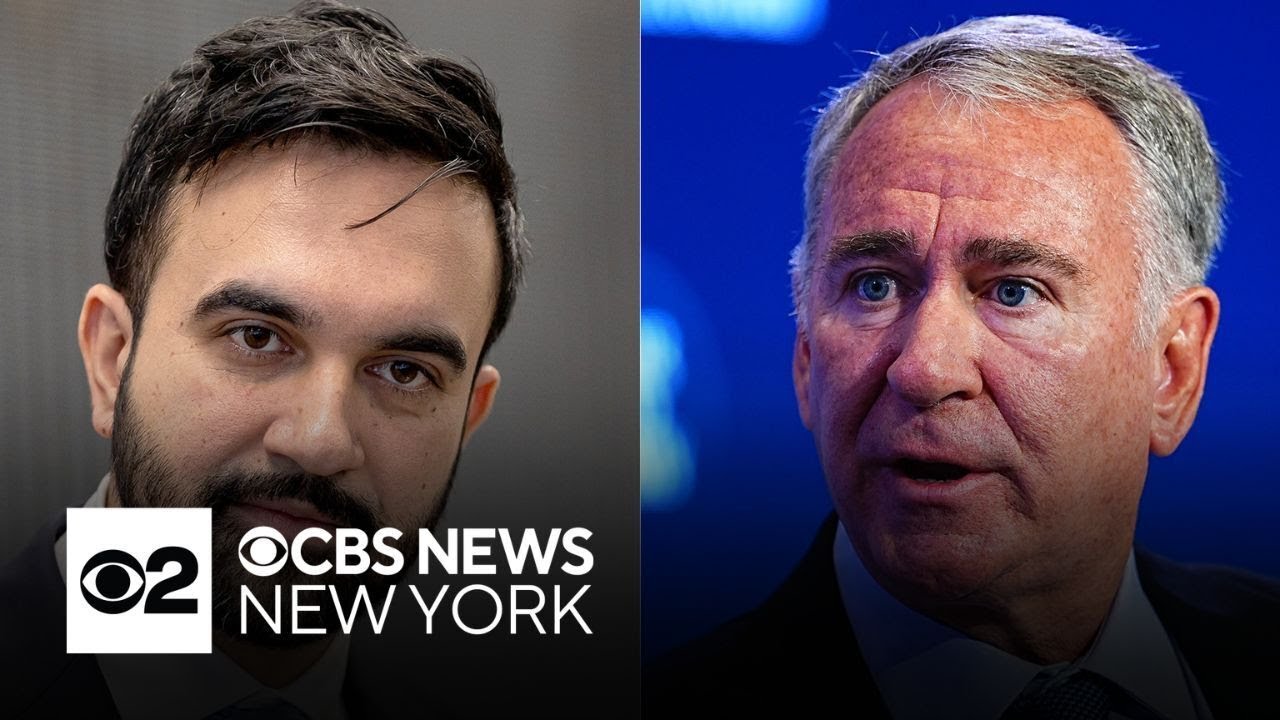
Billionaire hedge fund titan Ken Griffin appears to be translating rhetoric into reality, significantly expanding his already ambitious development plans in Miami just weeks after becoming an unexpected focal point in New York City’s increasingly contentious debate over wealth taxation and economic competitiveness.
According to a report on Thursday in The New York Post, the founder and chief executive of Citadel is moving forward with an enlarged vision for his massive real estate holdings in Miami’s rapidly evolving Brickell financial district, a decision that many observers view as the strongest indication yet that Griffin intends to deepen his investment footprint in Florida amid growing tensions with New York’s political leadership.
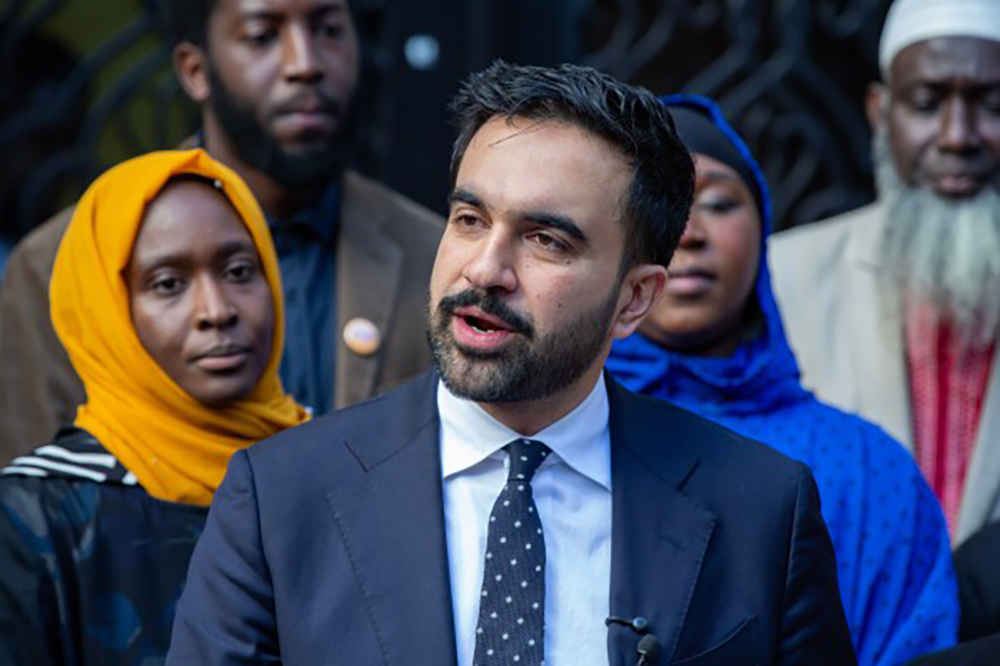
The expansion comes on the heels of a highly publicized dispute involving New York City Mayor Zohran Mamdani and the city’s newly enacted pied-à-terre tax, a levy targeting luxury secondary residences that has generated intense debate among policymakers, real estate professionals, investors, and high-net-worth individuals.
For Griffin, one of the most influential figures in global finance, the controversy appears to have reinforced a strategic conviction he articulated publicly only weeks ago.
“What the mayor of New York has made clear to my partners, and principally my New York partners, is that we need to double down on our bet in Miami,” Griffin declared at the Milken Institute Global Conference in Beverly Hills, according to remarks cited by The New York Post.
That statement, once interpreted by some as a pointed political rebuke, now appears to be materializing in concrete form.
According to Bloomberg News, as cited by The New York Post, Griffin’s latest proposal substantially enlarges the scope of his already enormous Miami development. The revised plan reportedly includes a new 300-unit residential tower, a 1,420-space parking structure, and additional commercial office capacity that would further transform Brickell’s skyline and reinforce the district’s emergence as one of the nation’s premier financial centers.
The expansion is only the latest chapter in Griffin’s long-term commitment to South Florida.
Over the course of several years, the Citadel founder has quietly accumulated approximately five acres of prime real estate spanning two city blocks in Brickell, creating what many industry observers view as the foundation for one of the most consequential corporate developments in modern Miami history.
The project is expected to serve not merely as a headquarters complex for Citadel and Citadel Securities but as a broader symbol of Miami’s ascent as a serious competitor to traditional financial capitals such as New York and Chicago. According to The New York Post report, Griffin has also acquired every unit within a nearby 22-story condominium building located across the street from the planned headquarters complex.
Bloomberg reported that the structure is expected to be demolished, clearing the way for future phases of development. Taken together, these moves suggest a level of commitment that extends well beyond routine real estate speculation.
Rather, they signal a deliberate effort to shape the future geography of American finance.
While Griffin’s migration toward Florida predates his conflict with Mamdani, The New York Post reported that the dispute elevated the issue into a broader national conversation regarding taxation, wealth, and economic migration. The confrontation erupted in April when Mamdani released a widely circulated Tax Day video filmed outside Griffin’s Manhattan residence at 220 Central Park South.
In the video, the mayor cited Griffin by name while discussing New York’s new pied-à-terre tax. The luxury apartment, reportedly valued at approximately $238 million, became a prominent example used by Mamdani to illustrate the types of properties targeted by the legislation. The move immediately attracted attention throughout financial and political circles.
Griffin responded forcefully. According to The New York Post report, he described the political tactic as “creepy” and argued that it projected an unfavorable image of New York to investors, entrepreneurs, and employers considering future commitments to the city. The disagreement quickly transcended the specific issue of one tax. Instead, it evolved into a broader debate over whether increasingly aggressive tax policies directed at affluent individuals could discourage investment and accelerate the migration of wealth toward lower-tax jurisdictions.
Interestingly, some industry professionals argue that the psychological impact of the controversy may ultimately prove more consequential than the tax itself. Jay Batra, chief executive of Batra Real Estate and Batra Property Management, told The New York Post that perception often matters as much as policy. “I think the pied-à-terre tax itself will do less damage than the publicity that this has generated,” Batra said.
His comments highlight a recurring theme among luxury real estate professionals: affluent buyers frequently make decisions based not only on financial calculations but also on broader perceptions regarding a jurisdiction’s political climate. According to Batra, many wealthy clients are increasingly questioning where they wish to maintain their investments.
He noted that conversations with prospective purchasers often revolve around whether there are alternative destinations where they would prefer to “park” their money.
That phrase encapsulates a growing concern among industry participants that capital is becoming increasingly mobile. Unlike previous generations, today’s ultra-high-net-worth individuals often maintain residences, businesses, and investments across multiple states and countries.
As a result, shifts in policy can influence not only where people live but also where they choose to deploy capital.
For Miami, the timing could hardly be better. Once viewed primarily as a tourism destination and seasonal retreat, the city has undergone a remarkable transformation during the past decade. Financial firms, technology companies, investment funds, and family offices have increasingly established operations in South Florida, attracted by favorable tax policies, regulatory flexibility, and a growing ecosystem of business talent.
Griffin’s relocation has played a significant role in legitimizing that transformation. His decision several years ago to move Citadel’s headquarters operations to Miami was widely viewed as a watershed moment in the city’s evolution. Now, according to The New York Post, the latest development plans appear poised to reinforce that trajectory.
A notable change in the revised proposal involves the elimination of a previously planned hotel component. Instead, additional office space will be added. The adjustment reflects a strategic emphasis on commercial development and corporate tenancy.
A Citadel spokesperson explained the rationale. “We are focusing this part of our development at 1201 Brickell solely on commercial office space,” the spokesperson said, according to Bloomberg and cited by The New York Post. The representative continued by emphasizing Miami’s attractiveness as a business destination. “Miami is open for business, and the unparalleled quality of our development will drive the tenancy of leading global firms, including Citadel and Citadel Securities.”
The statement reflects a message increasingly promoted by Florida leaders and business advocates: that the state offers an environment conducive to growth, investment, and expansion.
The conflict between Griffin and Mamdani has evolved into something larger than a disagreement between a billionaire financier and a progressive mayor. Instead, it has become a symbolic struggle over competing visions of economic governance.
Supporters of the pied-à-terre tax argue that luxury property owners should contribute more to public services and infrastructure, particularly at a time when affordability challenges continue affecting many residents. Advocates contend that the measure generates revenue from individuals who can most readily afford it. Critics, however, warn that such policies risk sending an unintended message to investors and entrepreneurs.
Business leaders increasingly question whether New York’s political environment remains welcoming to wealth creation and capital formation.
The New York Post reported that Citadel Chief Operating Officer Gerald Beeson described Mamdani’s actions as “shameful,” further escalating tensions between the city’s political leadership and one of the financial sector’s most prominent executives. Griffin himself reportedly raised questions regarding Citadel’s future participation in Manhattan’s planned 350 Park Avenue office tower development.
Although no definitive decision has been announced, the comments intensified speculation regarding the long-term implications of New York’s policy direction.
Business Insider recently estimated that Griffin’s New York properties could face an additional annual tax burden ranging between approximately $1.3 million and $1.4 million under the new law.
According to The New York Post report, the estimate includes Griffin’s record-setting penthouse at 220 Central Park South as well as two apartments located at the prestigious 740 Park Avenue address. Supporters of the tax note that such figures represent a relatively modest burden for someone with Griffin’s immense wealth. Opponents counter that the issue is not the amount itself but the precedent it establishes. They argue that repeated tax increases targeting affluent residents may cumulatively encourage relocation and reduce investment activity.
State and city officials have projected annual revenue generation between $340 million and $500 million from the tax. Whether those projections ultimately materialize remains to be seen.
According to Batra, uncertainty is already influencing market sentiment. “I am negotiating deals and working with buyers who are in the 1% and they don’t like what they’re hearing,” he told The New York Post. The veteran broker emphasized that heightened political scrutiny surrounding luxury property ownership can complicate transactions. “It’s not helpful to a buyer, definitely not helpful to a seller,” Batra said. “It’s not helpful to real estate professionals who are on the ground working so hard to facilitate deals.”
His observations suggest that beyond any immediate fiscal consequences, the controversy may be affecting confidence within portions of the luxury market. Batra cited recent dealings involving prospective buyers considering properties in Manhattan neighborhoods such as the Upper West Side and SoHo, with values in the vicinity of $10 million. According to him, the discussion surrounding taxation increasingly forms part of those conversations.
Meanwhile, Miami appears to be capitalizing on the moment. “It’s certainly helping Miami real estate,” Batra told The New York Post. “Miami is on the map.”
That concise observation may best summarize the broader significance of Griffin’s latest moves. For decades, New York occupied an unrivaled position as America’s financial capital. Today, while it remains enormously influential, emerging competitors are increasingly challenging its dominance.
Miami’s rise reflects shifting demographics, evolving business priorities, and changing attitudes toward taxation and regulation. Griffin’s expanded development plans represent more than another real estate project. They symbolize a larger realignment occurring within American economic geography. Whether New York ultimately adapts to these pressures or continues losing ground remains one of the defining questions facing policymakers, business leaders, and investors in the years ahead.
For now, however, Griffin’s message appears unmistakable. If New York wishes to test the limits of taxing wealth, Miami stands ready to welcome the investment that may follow.



