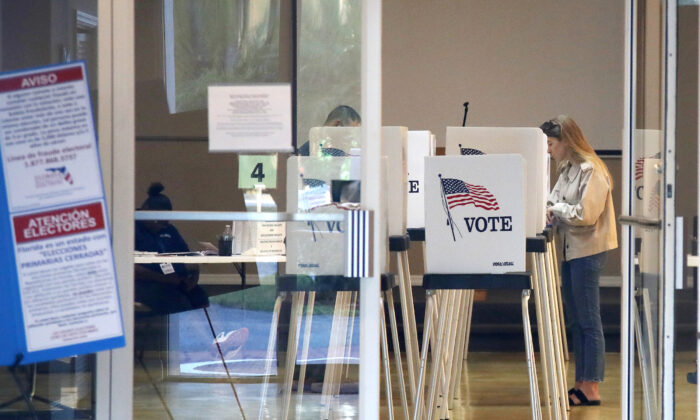
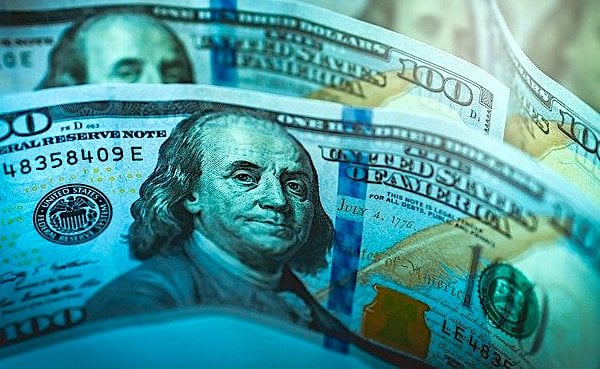
Pixabay|While federal stimulus checks ended several years ago, some states have continued to provide assistance to residents in the form of tax rebates or so-called “inflation relief” payments.
In context of such payments, the Internal Revenue Service (IRS) issued clarification earlier this year that most relief checks issued by states last year aren’t subject to federal taxes and so for the most part don’t need to be reported on 2022 tax returns.
Here’s a look at what states are offering in terms of such payments in 2023, including eligibility criteria, delivery timelines, and amounts of money either already paid out—or still coming.
Alabama
Starting in the fall of 2023, Alabama residents will begin receiving one-time tax rebate checks. The payment amounts will be determined by the filing status reported on 2021 tax year returns.
If individuals filed as single, head of family, or married filing separately, they will receive a $150 tax rebate payment. For those who filed as married filing jointly, a $300 tax rebate payment will be issued.
Not all individuals, however, are eligible for the Alabama tax rebate. If you did not file a personal Alabama income tax return for the 2021 tax year, you will not qualify for the 2023 Alabama tax rebate check.
Furthermore, estates and trusts are ineligible to receive these payments. In addition, individuals who were claimed as dependents on a 2021 federal or Alabama state income tax return will not receive a rebate payment.
California
California’s middle-class tax refunds (MCTRs) were available to California residents who filed a 2020 tax return by Oct. 15, 2021, and met specific criteria.
These criteria included not exceeding income limits, not being claimed as a dependent on another person’s 2020 tax return, and being a California resident for at least six months in 2020.
The MCTR amount ranged from $200 to $1,050, depending on factors such as income, filing status, and dependents.
Payments were generally sent out between October 2022 and mid-January 2023, with most eligible Californians set to have received them by mid-February at the latest.
The California FTB reported that nearly 32,000,000 taxpayers and their dependents benefited from the tax refund.
Colorado
Coloradans were poised to receive “cash back” payments if they met the eligibility criteria.
In order to qualify, they must have been aged 18 or older as of Dec. 31, 2021, and they must have been residents of the state for the entirety of 2021 and filed a 2021 Colorado income tax return or applied for a Colorado property tax/rent/heat credit (PTC) rebate.
The payment amount varied based on the filing status indicated on the 2021 Colorado state tax return, with eligible single filers generally receiving $750 and eligible joint filers receiving $1,500.
The majority of Colorado cash-back payments were issued by the end of September 2022, with most payments distributed by January 31, 2023.
Georgia
Qualifying Georgia residents were eligible to receive tax rebates of up to $500.
The relief payments have been set up as a one-time tax credit, also known as a surplus tax refund, for individual taxpayers who filed state income tax returns for the tax years 2021 and 2022.
To qualify for the refund, Georgia residents needed to file their tax return by the April 18, 2023, deadline. However, if they received an IRS tax deadline extension, they have until Oct. 16, 2023, to file.
Another condition of receiving a tax rebate is that the individual must have had a tax liability for the 2021 tax year. Both Georgia residents, including part-year residents, and nonresidents of Georgia are potentially eligible to receive the refund.
The specific amount of the Georgia surplus tax refund for 2023 is determined by a person’s tax liability from the 2021 tax year.
Maine
Maine residents who met certain criteria had the opportunity to receive winter energy relief payments.
These payments were designed to assist individuals and couples with their energy costs during the winter season.
Eligibility requirements included filing a 2021 Maine personal income tax return as a full-time resident by Oct. 31, 2022, and not being claimed as a dependent on another person’s tax return.
Income limits were also considered, and payment amounts varied based on filing status.
The state began distributing payments in mid-January, and residents who did not receive a payment have been given the opportunity to contact the state tax assessor by June 30, 2023, to provide necessary documentation to prove their eligibility.
The state tax assessor has until Sept. 30, 2023, to issue relief payments to eligible individuals who contacted them before the deadline.
Montana
Montana residents can expect to receive one-time income tax rebate checks in 2023.
While the specific rebate amount is determined based on the information provided in each individual’s 2021 tax return, the potential maximum amount is $2,500.
To be eligible for a payment, only Montana taxpayers who filed a 2021 Montana full-year resident tax return will be considered.
In addition, Montana residents must have filed either a part-year or full-year 2020 state tax return. The tax rebate bill sets forth several qualifying criteria, which include the following:
Filing 2020 and 2021 Montana tax returns by the 2021 tax year deadline, unless an extension was granted.
Individuals claimed as dependents on a 2021 Montana or federal income tax return are ineligible for the payment.
To receive an income tax rebate payment, Line 20 of the Montana Form 2 must indicate an amount greater than zero.
In addition, eligible residents will also receive a property tax rebate from Montana. This rebate applies to the years 2022 and 2023, with a maximum amount of $675.
In order to qualify for the property tax rebate, individuals must have owned and utilized the property as their primary residence for at least seven months in each of those years.
Furthermore, they must have made property tax payments for both 2022 and 2023.
New Mexico
Eligible residents of New Mexico can expect to receive rebate checks of up to $1,000.
In the coming weeks, New Mexico will begin the distribution of one-time rebate checks for 2023 to eligible residents, who can anticipate receiving the rebates as early as mid-June.
The payment amount will be determined based on the filing status reported on 2021 tax returns.
No application is required for the rebates, which will be sent out automatically.
Eligible individuals have until May 31, 2024, to file their 2021 tax returns and qualify for the rebate.
If the filing status for the 2021 tax year was head of household, married filing jointly, or qualifying widow(er), a payment of $1,000 can be expected.
Single filers or those who filed as married filing separately will receive a payment of $500.
For those who filed as married filing jointly, the rebate payment will be sent to the primary taxpayer listed on the 2021 New Mexico state tax return.
Pennsylvania
Pennsylvania’s Property Tax/Rent Rebate program provides payments to eligible individuals who meet certain criteria.
They must be at least 65 years old, a widow(er) at least 50 years old, or a person with disabilities who is at least 18 years old.
In addition, there is an annual income limit, with homeowners capped at $35,000 and renters at $15,000 (with 50 percent of Social Security benefits excluded).
The specific rebate amount is determined based on income and whether the individual owns or rents their home. Eligible homeowners, including some exceptions for older adults above the age of 65 who may receive a higher amount, can generally expect rebates of up to $650.
Rebate checks were initiated in August 2022, and eligible residents had until the end of 2022 to apply for a rebate. Consequently, payments will continue into 2023.
South Carolina
To qualify for a tax rebate in South Carolina, residents must have filed a 2021 South Carolina state income tax return by Feb. 15, 2023, and have a state tax liability for the 2021 tax year.
The rebate amount can reach up to $800 and will be determined based on an eligible individual’s 2021 South Carolina income tax liability after subtracting any applicable credits.
For tax liabilities below $800, the rebate amount will match the individual filer’s tax liability. However, if the tax liability exceeds the $800 cap, the filer will receive a rebate of $800.
Eligible filers should have received a rebate check by March 31, 2023.
Virginia
To be eligible for Virginia’s one-time stimulus tax rebate, taxpayers needed to file a 2021 Virginia income tax return by Nov. 1, 2022, and have a 2021 Virginia net tax liability.
It’s worth noting that even if a taxpayer received a refund after filing their 2021 state return, they could still qualify for a rebate. The rebate amount, with a maximum of $500, was based on a filer’s 2021 Virginia tax liability.
Those who filed their state tax return by Sept. 5, 2022, and met the eligibility requirements, should have received their payment by October 31 of 2022.
However, if taxpayers filed their return between Sept. 6 and Nov. 1, 2022, their payment would arrive within four months from the date they filed, which could have been as late as February 2023.
In New York, the price of residing in the Empire State is reaching staggering heights—not just in terms of living expenses but also in the burdensome weight of its tax demands. Yet, for the taxes paid, New Yorkers are receiving alarmingly inadequate returns. The recent budget deal announced in Albany stands as a testament to the continuing failure to address the fundamental inefficiencies and mismanagement plaguing the state’s fiscal policies and public services.
New York’s economic outlook is grim. According to a recent report, the state’s economic prospects are ranked as the worst among all fifty states. This is a striking indictment of the state’s inability to leverage its substantial tax revenues towards fostering a thriving economic environment. The substantial funds that should catalyze growth and prosperity are seemingly sinking into a black hole of fiscal mismanagement.
The disappointing return on taxpayer investment extends deeply into essential public services. New York holds the dubious distinction of ranking 47th in terms of what residents receive for their money, as per a WalletHub analysis. Despite leading the nation in per-student spending in public schools, New York’s students lag behind their peers in neighboring states across every educational performance measure. This stark disparity raises serious questions about the efficacy and allocation of state educational funding. Where is the money going if not to significantly elevate the quality of education?
Firstly, the significant investment in dual-language classrooms merits a thorough evaluation. Reports indicate that nationally, only 3% of 12th graders in these programs graduate proficient in English, suggesting a deep-rooted inefficiency that may be dooming many students to future economic disadvantage. New York lawmakers must question the efficacy and return on investment of these programs. It is imperative to investigate whether the funds allocated to dual-language classrooms are achieving the desired educational outcomes or merely feeding into a costly system that fails to equip students with necessary skills. The state needs a strategy that not only respects cultural and linguistic diversity but also ensures that all students, regardless of background, are proficient in English by the time they graduate, thereby enhancing their future economic opportunities.
The state’s infrastructure further illustrates this troubling trend. Rated 45th by MoneyGeek in terms of road quality, New York’s thoroughfares are a menace to navigate. The potholes and general disrepair not only make for a bone-jarring commute but also lead to an average cost of $715 per driver annually due to increased vehicle wear and tear, repairs, and fuel consumption. The Bruckner Expressway, often joked about as being more suitable for a Sherman tank than a car, is just one glaring example of many.
Similarly, the state’s Medicaid expenditures, particularly the payments to an astonishing number of 566,000 home health aides, call for stringent scrutiny. The initiative started in 2016, allowing family members to be paid for home care, aimed to reduce costs associated with nursing homes and external care providers. Despite this, the unchanged rate of nursing-home enrollments raises concerns about the actual necessity and utilization of these home health aides. This situation may indicate either redundancy, misuse, or a severe oversight in the management of this program.
Governor Hochul’s recent budget deal attempts to address these issues by consolidating home-care arrangements under the oversight of a single company, which is a step towards curbing potential abuses. However, while the move aims to streamline operations and possibly enhance oversight, it also involves increasing the pay for personal-care workers, which could further inflate costs if not paired with stringent checks and efficiencies.
In the corridors of Albany’s power, a troubling scenario unfolds year after year: three individuals—the Governor, the Assembly Speaker, and the Senate Majority Leader—along with a select few staff members, determine the fiscal fate of New York State behind closed doors. This opaque process excludes not only the public and press but also silences the voices of minority party representatives. The outcome? A budget process that is not only undemocratic but also ineffective, leaving New Yorkers to face the consequences of fiscal decisions made without their input or oversight.
The current method by which New York’s budget is decided is profoundly flawed. It is a process where discussion is limited, debate is nearly non-existent, and transparency is just a buzzword. Lobbyists and advocacy groups may crowd the hallways, their presence a superficial nod to influence, while the actual decisions are made in isolation. This closed-door negotiation leads to a legislative rubber-stamping that sees lawmakers forced to vote on a budget they haven’t even had time to read, much less understand or debate.
The results of this process are as expected as they are unacceptable. In 2023, New York’s economy showed minimal growth, and now forecasts place it at the very bottom of all states for economic outlook in the coming year. Experts such as Arthur Laffer and Steve Moore attribute this dismal prediction to the heavy combined state and local tax burdens, exorbitant workers’ compensation costs, and high energy costs—all factors that directly impact the viability and competitiveness of businesses in New York.
Why should New York taxpayers continue to tolerate this egregious mismatch between what they contribute and what they receive? It is time for a rigorous reassessment of how New York state collects and allocates its resources. Taxpayers deserve a budget process that is clear, accountable, and results in tangible improvements to their daily lives and economic prospects. The state’s leadership must commit to a transparent restructuring of budget priorities, focusing on efficiency and efficacy rather than unchecked spending.
Moreover, there must be a systemic overhaul in areas critical to New York’s future success—education and infrastructure. Investments in these areas must not only be substantial but also smart, ensuring that dollars spent translate directly into better school performance and smoother, more durable roads.
New Yorkers are justifiably tired of paying top dollar for subpar services. It’s high time Albany rethinks its approach, prioritizing taxpayer value over political expediency. If New York continues on this trajectory of high costs and low returns, it risks not only its fiscal health but also the trust and welfare of its residents. The state must strive to transform its budgetary black hole into a beacon of efficiency and service excellence. Only then can New York begin to deliver on the promise of what a great state it truly can be.