











|
Getting your Trinity Audio player ready...
|
By: Fern Sidman
As Germany prepares to mark the solemn anniversary of the liberation of the Buchenwald concentration camp, a bitter and deeply unsettling controversy has erupted around the very purpose of remembrance itself. German authorities and Jewish organizations have condemned the planned demonstration by antisemitic groups at the Buchenwald memorial on April 11, a date etched into European consciousness as a moment of deliverance from Nazi barbarism.
The protest, announced under the provocative slogan “Keffiyehs in Buchenwald,” has ignited a national debate over the politicization of Holocaust memory, the boundaries of legitimate protest, and the moral limits of contemporary activism. World Israel News, which has been closely following the unfolding controversy, reported on Sunday that the demonstration is being organized by a coalition of pro-Hamas and far-left groups who identify themselves as part of an international anti-fascist movement and accuse the memorial’s management of disseminating Israeli propaganda.
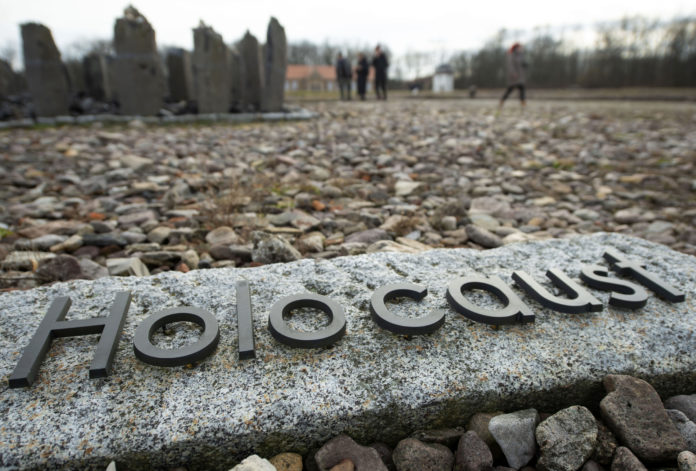
The symbolism of the planned rally has provoked an outcry that extends well beyond Germany’s Jewish community. Buchenwald is not merely a historical site; it is one of the most significant memorials to Nazi atrocities, a landscape of absence where tens of thousands of Jews and other victims were murdered during the Holocaust. For many, the proposal to stage a political demonstration at this location, on the precise anniversary of its liberation, is experienced as an act of desecration.
The World Israel News report noted that officials in Berlin reacted with undisguised fury, describing the planned rally as “an assault on the dignity of the victims’ memory.” Such language reflects a profound anxiety that the sanctity of Holocaust commemoration is being eroded by contemporary political conflicts imported into spaces of mourning.
At the heart of the controversy lies a dispute over the memorial’s policies and interpretive stance toward Israel. The organizers of the demonstration accuse the Buchenwald memorial’s management of engaging in “historical revisionism and genocide denial,” claims that the memorial’s leadership categorically rejects.
The protest is framed by its organizers as a response to what they allege is the memorial’s uncritical alignment with Israel, a position they argue compromises the site’s commitment to universal lessons of anti-fascism. The rhetoric employed by the campaign situates the memorial within a broader constellation of institutions they accuse of subordinating historical truth to contemporary political narratives.
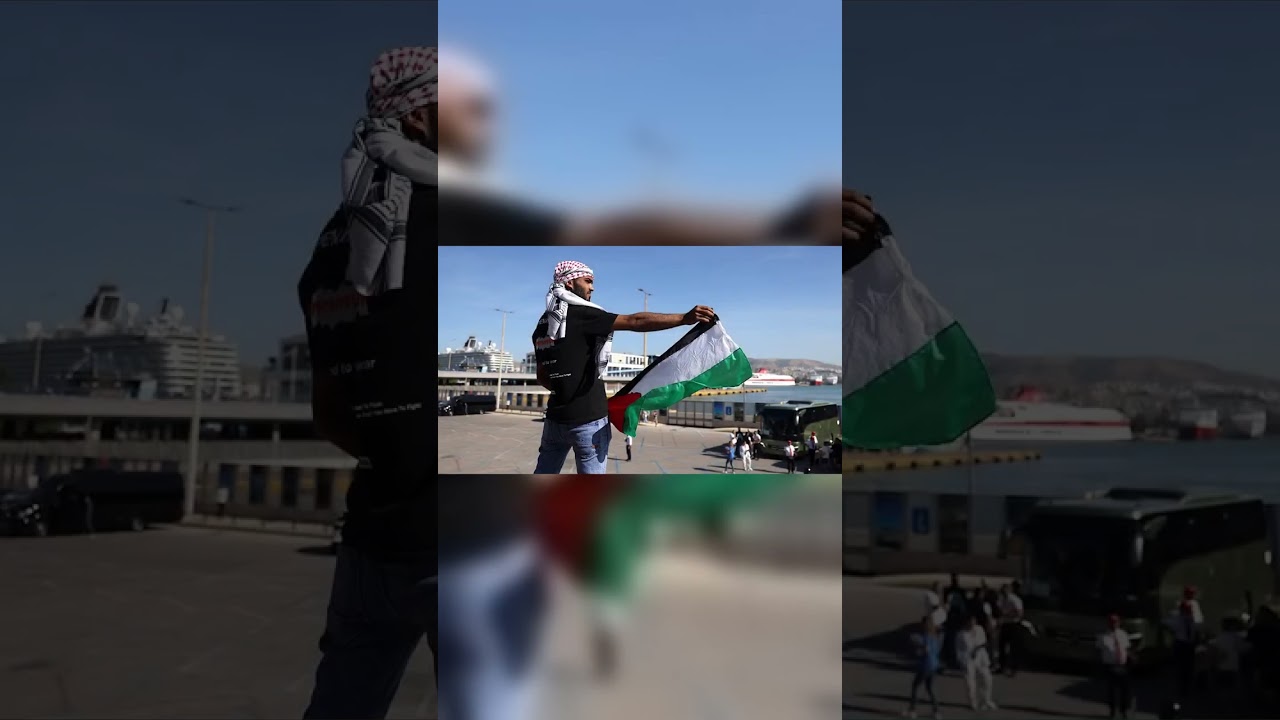
The immediate catalyst for the protest was a 2025 court ruling that upheld the memorial’s right to refuse entry to visitors wearing the Palestinian keffiyeh. The organizers contend that this decision amounts to political discrimination, arguing that the keffiyeh is a symbol of identity and resistance rather than an inherently political provocation.
The memorial, however, has defended the policy as a necessary measure to safeguard the integrity of the site, asserting that overt political symbols risk transforming a space of remembrance into a stage for ideological confrontation. The World Israel News report emphasized that the legal ruling recognized the memorial’s authority to regulate conduct and symbolism within its grounds in order to preserve the dignity of the victims and the contemplative character of the site.
The prospect of activists donning keffiyehs at Buchenwald on the day of its liberation has struck many observers as a deliberate provocation, one that instrumentalizes Holocaust memory to advance contemporary political grievances. The demonstration is expected to draw participants from the youth wing of Germany’s Left Party, the German Communist Party, and Jewish Voice for a Just Peace in the Middle East.
The inclusion of Jewish activists within the coalition has been cited by organizers as evidence that their protest is not antisemitic but rather an expression of dissent within Jewish moral discourse. Yet critics counter that the presence of Jewish participants does not neutralize the profound insensitivity of staging such a protest at a site synonymous with Jewish suffering and annihilation.
The controversy has been further inflamed by revelations about the ideological affiliations of some of the protest’s leading organizers. World Israel News, citing reports in the German newspaper Bild and Switzerland’s Neue Zürcher Zeitung, has noted that radical organizations are coordinating the demonstration and that one prominent figure behind the effort is affiliated with a communist group that previously voiced support for the October 7 massacre carried out by Hamas.
According to these reports, that organization described the violence as a “legitimate uprising by all means necessary.” The association of the protest with figures who have justified mass-casualty attacks against Israeli civilians has intensified fears that the demonstration at Buchenwald is less an expression of principled anti-fascism than an extension of a broader ideological campaign that normalizes violence against Jews under the guise of resistance.
The moral dissonance of invoking anti-fascism at a site of Nazi terror while aligning, even indirectly, with groups that celebrate contemporary acts of mass violence has not been lost on critics. The World Israel News report highlighted the outrage of Jewish organizations who argue that such rhetoric hollowly appropriates the language of anti-fascism while eroding its ethical core. For survivors, descendants, and custodians of Holocaust memory, the idea that Buchenwald could become a venue for slogans and symbols associated with contemporary geopolitical struggles represents a profound rupture in the moral architecture of remembrance.
German officials, too, have framed the planned rally as an affront not only to Jewish memory but to the Federal Republic’s postwar commitment to confront its past with humility and responsibility. Berlin authorities have stressed that the memorialization of the Holocaust is not a neutral canvas upon which any political grievance may be projected. Rather, it is a moral undertaking rooted in the recognition of unique historical crimes and the obligation to prevent their trivialization. The prospect of keffiyehs draped across the gates of Buchenwald has been described by officials as a gesture that collapses historical specificity into contemporary polemic, thereby diluting the singular gravity of the Holocaust.
The choice of April 11 as the date of the demonstration has magnified the controversy. The anniversary of Buchenwald’s liberation in 1945 is traditionally marked by commemorations that emphasize the triumph of human dignity over systematic dehumanization. To superimpose a contemporary political protest onto this ritual of remembrance is, in the eyes of many, to conflate incomparable historical experiences. The World Israel News report observed that survivors and educators fear such conflation risks fostering a moral relativism that obscures the specificities of Nazi genocide, replacing historical precision with a generalized rhetoric of oppression that can be mobilized for disparate political ends.
The debate unfolding around Buchenwald thus transcends the immediate dispute over keffiyehs and court rulings. It raises fundamental questions about the stewardship of memory in an age of polarized politics. The World Israel News report framed the controversy as emblematic of a broader struggle within European societies to balance the imperatives of free expression with the sanctity of sites consecrated to the victims of unparalleled crimes. The fear articulated by many Jewish leaders is that once memorials become arenas for contemporary ideological battles, their capacity to function as spaces of reflection and moral reckoning is irreparably compromised.
As April 11 approaches, the tension surrounding the planned demonstration continues to mount. Calls to mobilize at the memorial have circulated widely among activist networks, even as authorities and Jewish organizations urge restraint and respect for the solemnity of the site. Whether the demonstration proceeds as planned, and how it is policed, will likely shape the contours of future debates over the politicization of Holocaust memory in Germany and beyond.
What is already clear is that the proposed rally at Buchenwald has forced a reckoning with the uneasy coexistence of historical remembrance and contemporary protest—a reckoning that strikes at the heart of how societies honor the dead while navigating the turbulent moral landscapes of the present.



