



|
Getting your Trinity Audio player ready...
|
Edited by: TJVNews.com
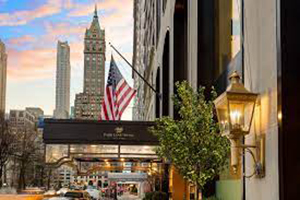
New York City’s Park Lane Hotel has long been a symbol of luxury and opulence, standing proudly opposite Central Park, between Fifth Avenue and the Avenue of the Americas. However, behind its elegant façade lies a tangled web of intrigue, financial misdeeds, and a complicated sale that has captured the attention of the world. The sale of the Park Lane Hotel is not just about real estate; it’s a story of international intrigue and the shifting tides of New York’s property market.
As was recently reported, Qatar’s sovereign wealth fund, known as the Qatar Investment Authority, has expanded its presence in New York’s real estate market by acquiring the Park Lane Hotel, a prominent property overlooking Central Park, as was reported by The Real Deal. The purchase price for the 46-story hotel, located at 36 Central Park South, was approximately $623 million.
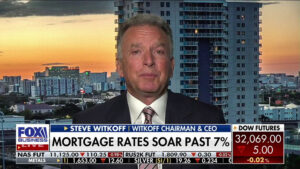
The Park Lane Hotel has a storied history, originally developed by Harry Helmsley in the 1960s. According to The Real Deal report, Steve Witkoff’s company acquired the hotel in 2013 for $654 million, with initial plans to convert a significant portion of its approximately 600 rooms into luxury condominiums. However, in 2016, Witkoff and his partners, including Harry Macklowe, Howard Lorber’s New Valley, and Highgate Holdings, decided to suspend the conversion project due to concerns about oversaturation in the Billionaires’ Row luxury real estate market, as was noted in The Real Deal report.
The project seemed to be back on track when Chinese developer Greenland Group purchased a 41 percent stake in the property from Kuwait Strategic Investors. However, the Real Deal report stated that shortly after this transaction, the U.S. Department of Justice filed a lawsuit seeking to seize the hotel as part of its investigation into Malaysian businessman Jho Low.
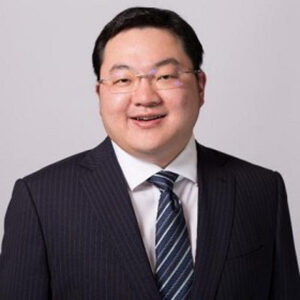
Low stands accused of orchestrating the embezzlement of $1 billion from 1MDB funds through Kuwait and several other countries, including safe havens such as the British Virgin Islands, as was reported in July of this year on the Asia Nikkei web site. The report also indicated that his given name is Low Taek Jho.
The Asia Nikkei web site also reported in July that the 1MDB scandal broke in 2015 when several news organizations reported that then Malaysian Prime Minister Najib Razak had channeled $700 million into his personal bank accounts from 1MDB.
Low is believed to be hiding in China since the fall of Malaysia’s long-ruling Barisan Nasional, or National Front, coalition, headed at the time by Najib, in the 2018 general elections, as was reported by the Asia Nikkei web site.
In March, a court in Kuwait sentenced Low in absentia to 10 years in prison for involvement with money laundering, ordered him to return $1 billion to 1MDB and imposed a fine of 145 million Kuwaiti dinars ($472 million), the report added.
The Qatar Investment Authority’s acquisition of the Park Lane Hotel underscores its continued interest in New York’s real estate market, as was indicated in The Real Deal report. The fund, with assets totaling around $450 billion, continues to invest in strategic properties and assets worldwide. However, it remains to be seen what specific plans Qatar has for this iconic property overlooking Central Park, the report added.
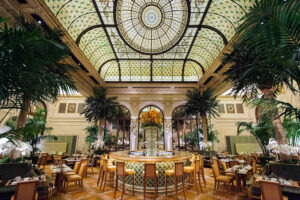
Speaking on the condition of anonymity, sources told the Jewish Voice that the neighboring Plaza Hotel, (which is also owned by the Qatar Investment Authority) and the Park Lane Hotel will be physically connected as an underground tunnel is being constructed in order to link the two top tier hotels for guests and staff.
In November 2017, the New York Times reported that at the heart of this convoluted narrative is Jho Low, who, at the time was one of owners of the Park Lane. He is alleged to be the mastermind behind an international scheme that saw billions of dollars siphoned from a Malaysian development fund, subsequently used to acquire a slew of extravagant assets, including the Park Lane Hotel. The NYT report noted that this audacious operation also involved mansions, condominiums, a yacht, jewelry, art, and even the glitzy environs of Beverly Hills. Jho Low’s social circle included A-list movie stars like Leonardo DiCaprio, Wall Street titans, and influential heads of state, the NYT report said. However, in late 2017, his whereabouts remained a mystery.
The U.S. Justice Department initiated a civil forfeiture action in 2016 in an attempt to seize the ill-gotten assets, including the Park Lane Hotel. The NYT reported that as part of a cooperation agreement with the government, the owners decided to put the hotel up for sale. The plan was to hold Low’s share in escrow while a criminal investigation into the fraudulent activities continued.
As was previously mentioned in this report, the journey of the Park Lane Hotel into this legal quagmire began in 2013 when Witkoff and his partners, including developer Harry Macklowe and investment firms New Valley L.L.C. and Highgate Holdings, acquired the property in an auction, according to the NYT report. The purchase price was a staggering $654 million, with the consortium putting up 15 percent. Jho Low had initially committed to contribute the remaining 85 percent, which included a nonrefundable $100 million deposit. However, the NYT reported that in a last-minute twist, he ended up with a 55 percent stake, enlisting the Mubadala Investment Company from Abu Dhabi to cover the final 30 percent.
Their ambitious vision for the Park Lane involved demolishing the existing structure and replacing it with an iconic, undulating glass tower designed by Swiss architects Herzog & de Meuron. This new structure would soar to 855 feet, offering breathtaking Central Park views from every apartment, while the five penthouses would boast outdoor swimming pools on their exterior galleries, as was noted in the NYT report of November 2017. With luxury towers and $100 million penthouses popping up along nearby 57th Street, the 38 Central Park South project appeared poised to become the next big thing in New York City real estate.
However, the dream started to unravel in July 2016 when Jho Low failed to meet his loan payment obligations for the Park Lane mortgage. The NYT report indicated that almost simultaneously, the U.S. Justice Department filed a civil complaint seeking to recover over $1 billion in assets tied to the Malaysian development fund scandal. Nearly a year later, Witkoff reached an agreement with federal prosecutors to sell the Park Lane Hotel.
As events unfolded, the once-red-hot real estate market, including condominium sales in the new towers along Billionaires’ Row, cooled considerably. The influx of ultra-luxury buildings had changed the landscape, and lenders grew wary of financing new projects. According to the NYT report, potential buyers for the Park Lane faced uncertainty, given the ongoing involvement of the Justice Department. Hotel experts noted a general slowdown in the hotel market, with investors hesitating to make significant commitments.
Chad Crandell, CEO of CHMWarnick, a company overseeing hotels owned by Asian and Middle Eastern firms, commented to the NYT in November 2017 that, “No one wants to be the last to buy a hotel in this cycle.” This sentiment echoed concerns about a softening transaction market amidst global economic uncertainties. Previously, foreign investors, particularly from China and the Middle East, had flocked to New York, viewing it as a safe haven amid global instability.
Hotel prices, in particular, had hit their peak in 2015 when the South Korean Lotte Group paid $805 million for the New York Palace, and China’s Sunshine Insurance Group spent over $230 million on the opulent 114-room Baccarat Hotel on West 53rd Street, setting a record for price per room, as was noted in the NYT report of 2017. The Park Lane Hotel, it seems, became a casualty not of its location or pricing, but rather of the ever-shifting tides of timing.
In July 2018, the New York Post reported that, in a major real estate move, Qatar’s state-owned Katara Hospitality had acquired full ownership of the iconic Plaza Hotel in Midtown Manhattan for a staggering $600 million. This acquisition marked a significant milestone in the luxury hotel industry and came as part of Katara’s strategy to expand its global portfolio of premium hospitality assets. The Plaza Hotel, known for its rich history and grandeur, is now under the complete control of the Qatari fund, which also boasts ownership of renowned hotels like the Savoy and the Connaught in London, the Post report of 2018 added.
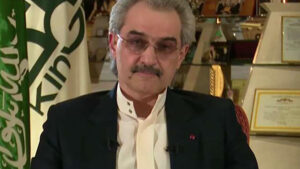
This purchase involved Katara Hospitality buying the 70 percent stake that Sahara India Pariwar held and a 5 percent stake owned by Sant Singh Chatwal, the head of Dream Hotel Management, which had been responsible for operating the hotel’s restaurants. Additionally, the Post report of 2018 indicated that Katara acquired the 25 percent stake that was jointly owned by Prince Alwaleed Bin Talal’s Kingdom Holding and Ashkenazy Acquisition, effectively bringing an end to a year-long high-stakes drama that revolved around the rights to own this prestigious establishment.
At the center of this drama was the stake owned by Prince Alwaleed Bin Talal and Ashkenazy, which granted them the right to match any genuine offer for the Plaza Hotel. The Post reported in 2018 that both parties exercised these rights in May of that year, responding to an offer of $600 million made by White City Ventures, the Dubai-based family office of Shahal Khan, and New York investor Kamran Hakim. It remains unclear whether these parties collaborated with Katara or transferred their contract on the hotel to the Qatari fund.
Amid these developments, Kingdom and Ashkenazy took legal action by filing a lawsuit in a New York state court to compel Sahara and Chatwal to sell their stake in accordance with the prior agreement, as was reported in 2018 by the Post. Simultaneously, the other group initiated legal proceedings against Sahara to finalize their own deal.
Adding to the complexity of the situation, the Plaza Condominium filed a lien against Sahara in June of 2018 for $2.73 million, a sum accumulated since 2008 through April 2018. This included interest and late fees, reflecting the condominium’s approximate 19.3 percent ownership stake in the entire building, according to the Post report. The lien, signed by board member Harry Macklowe, who resided at the time in a luxury condo within the Plaza Hotel, was subject to 37 percent of the outstanding expenses.
The transaction that concluded in early July 2018 was brokered by Jeffrey Davis of JLL and garnered interest from investors worldwide. It is worth noting that Kingdom Holding has a stake in Fairmont Hotels & Resorts, the company that manages the Plaza Hotel, and has consistently opposed any other management flag for the property, according to the Post report.
Regarding this development, Davis commented, “It stays a Fairmont hotel because Kingdom owns the management contract. And the saga is over,” according to the Post report. However, it remains uncertain whether Katara Hospitality paid any additional fees to acquire the Kingdom and Ashkenazy stake.
Notably, the price paid by Katara matches the amount Prince Alwaleed Bin Talal and Ashkenazy had initially agreed to pay for Sahara’s holdings, the Post report said. .
The Plaza Hotel, a historic and culturally significant landmark, also has a storied past, having previously been owned by former President Donald Trump, who celebrated his second marriage to Marla Maples with a lavish ceremony at the hotel, according to the Post report. In 2004, Israeli company El Ad acquired the property for $675 million and transformed many of its original 800 hotel rooms into luxurious residential condominiums, separating the two entities. Sant Singh Chatwal later assisted El Ad in selling the hotel portion to Sahara Group for $570 million in exchange for managing the hotel’s restaurants, which faced some operational challenges during his tenure, the Post report added.
The Plaza Hotel has not only played a significant role in New York’s social and cultural scene but has also been featured in various movies, television shows, and children’s books, making it one of the most recognized and iconic properties globally.
The acquisition of the Plaza Hotel by Katara Hospitality represents a strategic move by Qatar’s state-owned fund to strengthen its presence in the global luxury hotel industry, despite geopolitical challenges. It underscores the enduring appeal of premium hospitality assets in prime locations and highlights the continued investment interest in iconic properties with rich histories.
