


























By: Max Schleifer
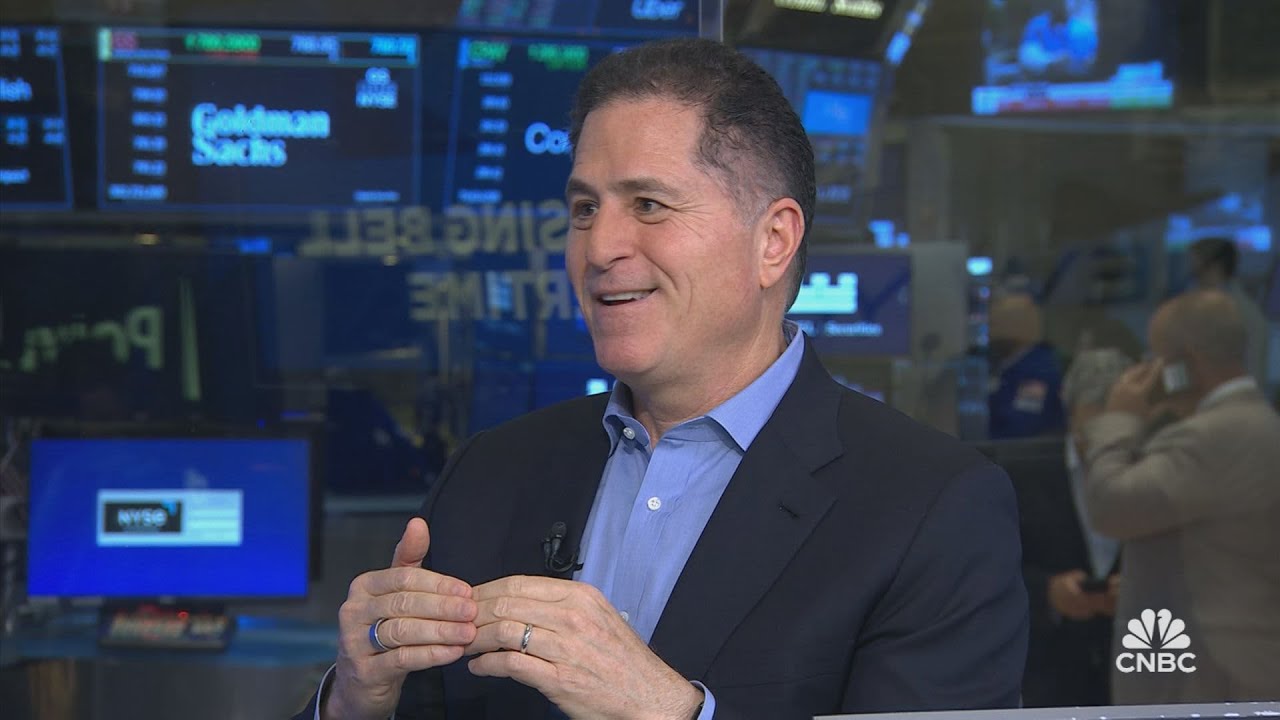
In a landmark act of philanthropy that is poised to reshape the future of healthcare, medical research, and artificial intelligence innovation in the United States, Dell Technologies founder and chief executive officer Michael Dell has pledged an extraordinary $750 million donation to the University of Texas at Austin. The contribution ranks among the largest gifts ever bestowed upon a public university in American history and represents a transformative investment in the future of medicine, scientific discovery, and higher education.
The unprecedented gift will help finance the creation of a new healthcare and research campus at the University of Texas at Austin, a sweeping initiative that university officials believe will position the institution at the forefront of medical innovation for decades to come. Central to the ambitious undertaking is what the university has described as the nation’s first artificial intelligence-native hospital, a groundbreaking facility designed from its inception to integrate advanced artificial intelligence technologies into virtually every aspect of patient care, medical research, operational management, and clinical decision-making.
The announcement has generated widespread attention throughout academic, medical, technological, and philanthropic circles, with many observers viewing the donation as a defining moment in the evolution of healthcare infrastructure in the United States. At a time when artificial intelligence is rapidly transforming industries ranging from finance and manufacturing to transportation and education, the University of Texas initiative seeks to place medicine at the forefront of that technological revolution.
University leaders have described the project as a bold vision for the future, one that combines world-class clinical care with cutting-edge computational capabilities. The new healthcare and research campus is expected to serve as a hub for physicians, researchers, engineers, scientists, and technology experts working collaboratively to develop innovative solutions to some of the most pressing medical challenges of the modern era.
According to the university, the donation will support far more than bricks and mortar. In addition to helping establish the new healthcare complex, the funding will provide substantial resources for scholarships, advanced computing infrastructure, and a broad array of medical research initiatives. These investments are intended to ensure that the institution can attract top-tier students, recruit leading researchers, and maintain the technological capabilities necessary to remain competitive in an increasingly sophisticated scientific landscape.
The scholarship component of the gift is particularly significant. Higher education costs continue to represent a substantial burden for many students and families, and university officials believe the new funding will expand educational opportunities for talented students who might otherwise face financial barriers to pursuing careers in medicine, science, engineering, and technology.
Equally important is the investment in advanced computing infrastructure. Modern medical research increasingly depends upon enormous computational power to analyze complex datasets, model biological systems, identify disease patterns, and develop new treatment strategies. Artificial intelligence systems require extensive technological resources, and the new funding is expected to provide the University of Texas with capabilities that few institutions can match.
The healthcare and research campus itself is envisioned as a comprehensive ecosystem where technological innovation and clinical excellence intersect. By integrating artificial intelligence directly into hospital design and operations, university officials hope to accelerate diagnostic accuracy, improve patient outcomes, enhance operational efficiency, and expand opportunities for groundbreaking medical discoveries.
The concept of an artificial intelligence-native hospital represents a significant departure from traditional healthcare facilities. Rather than retrofitting existing systems with new technologies, the hospital will be designed from the ground up with artificial intelligence embedded throughout its infrastructure. This approach could potentially transform how healthcare professionals diagnose illnesses, monitor patients, manage treatment plans, allocate resources, and conduct research.
The donation also underscores Michael Dell’s longstanding commitment to the city of Austin and its institutions. The latest gift is not an isolated act of generosity but rather the continuation of a philanthropic relationship that spans decades.
Michael Dell and his wife, Susan Dell, have established themselves among the most influential benefactors in Texas history. Their charitable contributions have helped shape numerous educational, healthcare, and community initiatives throughout the region.
In 2005, the couple donated $25 million to support the construction of Dell Children’s Medical Center, a project that significantly expanded pediatric healthcare services in Central Texas. The facility has since become one of the region’s most important medical institutions, providing specialized care for children and families across a broad geographic area.
The Dells deepened their commitment to healthcare education and medical innovation in 2013 when they contributed $50 million to establish Dell Medical School at the University of Texas at Austin. That historic investment helped launch the university’s medical school and laid the foundation for a new era of healthcare education, research, and clinical excellence.
The newly announced $750 million gift dramatically expands that legacy.
Viewed in historical context, the latest donation represents an extraordinary escalation in both scale and ambition. While previous contributions focused on creating critical healthcare institutions and educational programs, the new gift seeks to fundamentally redefine the intersection of medicine, technology, and research.
The timing of the donation is also noteworthy. Across the United States, universities are increasingly seeking innovative ways to leverage artificial intelligence to advance scientific discovery and improve educational outcomes. Yet few institutions possess the resources necessary to build comprehensive AI-driven healthcare ecosystems. The University of Texas at Austin now appears positioned to become one of the leading centers for this emerging field.
Experts have long predicted that artificial intelligence would eventually transform medicine. AI systems are already being utilized to assist physicians in interpreting medical images, identifying disease patterns, predicting patient risks, and accelerating drug development. However, the establishment of an artificial intelligence-native hospital suggests a far more comprehensive integration of technology into healthcare delivery.
Supporters argue that such facilities could improve efficiency, reduce costs, enhance diagnostic precision, and expand access to specialized expertise. Researchers also anticipate that advanced computing systems will enable faster scientific breakthroughs by analyzing vast quantities of medical data that would be impossible for human investigators to process independently.
For the University of Texas at Austin, the donation represents more than a financial windfall. It is a statement of confidence in the institution’s ability to lead some of the most important scientific and technological advancements of the coming decades.
For Austin, it reinforces the city’s growing reputation as a center of innovation, entrepreneurship, research, and technological development. The city has already established itself as a major hub for technology companies and startups, and the new healthcare and research campus is expected to further strengthen that identity.
For Michael and Susan Dell, the gift serves as the latest chapter in a philanthropic journey that has consistently focused on expanding opportunity, improving healthcare, and investing in transformative institutions. Their contributions have already left an indelible mark on Austin’s educational and medical landscape. With this latest $750 million commitment, they have once again demonstrated a willingness to think on a scale commensurate with the challenges and opportunities of the future.
As plans for the new campus move forward, the University of Texas at Austin stands on the threshold of what could become one of the most ambitious healthcare and research initiatives in the nation. The historic donation not only cements Michael Dell’s legacy as one of America’s most influential philanthropists but also signals a bold new era in which artificial intelligence, medicine, and higher education converge to shape the future of human health.



