




|
Getting your Trinity Audio player ready...
|
Ryan Cohen’s Colossal Gambit: GameStop Chief Launches $56B Bid to Transform eBay into an Amazon Rival
By: Jerome Brookshire
In a stunning and audacious move that has sent tremors through the global financial markets, Ryan Cohen, the chief executive of GameStop, has made an unsolicited bid to acquire eBay in a transaction valued at approximately $56 billion. As reported in detail on Sunday by The Wall Street Journal, the proposal—offering $125 per share in a combination of cash and stock—represents not merely a corporate takeover attempt but a sweeping vision to redefine the competitive contours of global e-commerce.
The boldness of Cohen’s initiative is matched only by its ambition. At a time when Amazon continues to dominate the digital marketplace with unparalleled scale and logistical sophistication, Cohen has declared his intention to elevate eBay into a formidable rival capable of commanding a valuation in the hundreds of billions of dollars. “eBay should be worth—and will be worth—a lot more money,” he asserted in remarks to the WSJ, signaling a strategic vision that extends far beyond the immediate transaction.
According to the information provided in the WSJ report, GameStop has quietly accumulated a stake of roughly 5 percent in eBay, a position built over several months beginning in early February. This foothold provided the foundation for Cohen’s unsolicited approach, which was formalized in a letter delivered to eBay Chairman Paul Pressler.

The offer itself is structured as an even split between cash and GameStop equity, reflecting both the financial constraints and strategic considerations inherent in such a massive acquisition. With eBay’s market capitalization hovering near $46 billion prior to the announcement, the proposed purchase price represents a premium of approximately 20 percent—a figure that underscores Cohen’s determination to secure shareholder support.
The market’s initial reaction was swift and emphatic. As the WSJ reported, eBay’s shares surged by roughly 12 percent in after-hours trading following the revelation of the bid, suggesting that investors are at least intrigued by the prospect of a transformative deal.
Yet the scale of the proposed acquisition raises immediate and complex questions regarding financing. GameStop, valued at approximately $12 billion, is significantly smaller than its intended target. While the company boasts a substantial cash reserve—estimated at around $9 billion—this alone is insufficient to fund a transaction of such magnitude.
To bridge this gap, Cohen has secured a commitment letter from TD Bank for up to $20 billion in debt financing. As detailed by the WSJ, this arrangement would form the backbone of the deal’s financial structure, though it still leaves a considerable shortfall.
Industry observers have speculated that Cohen may seek additional capital from external investors, potentially including sovereign wealth funds in the Middle East. Such partnerships, while not uncommon in large-scale transactions, would introduce further complexity into an already intricate financial equation.
At the heart of Cohen’s proposal lies a compelling strategic thesis: that the combination of GameStop and eBay could create a synergistic enterprise capable of challenging Amazon’s dominance.

Cohen’s argument, as conveyed to the WSJ, rests on several key pillars. First, the two companies share a significant overlap in their focus on collectibles, including trading cards, retro games, and other niche categories that have experienced a resurgence in popularity. By consolidating these offerings, Cohen believes the combined entity could strengthen its position in high-margin segments of the market.
Second, he envisions a hybrid model that integrates GameStop’s physical retail footprint with eBay’s digital marketplace. Under this framework, GameStop stores could serve as hubs for the collection, authentication, and distribution of goods sold through eBay, thereby enhancing trust and efficiency within the platform.
This approach reflects Cohen’s broader philosophy of blending online and offline experiences—a strategy that has gained traction across the retail industry in recent years.
Beyond operational synergies, Cohen has outlined a vision for innovation that includes expanded investment in live commerce, a rapidly growing segment of e-commerce in which products are sold through real-time video streams.
As the WSJ report noted, this format has already gained significant traction in markets such as China and is increasingly being adopted by Western retailers. Cohen believes that eBay has yet to fully capitalize on this opportunity and that the combined company could leverage its scale to become a leader in this space.
Additionally, eBay has already begun to incorporate artificial intelligence into its operations, streamlining processes for buyers and sellers alike. The integration of GameStop’s resources and expertise could accelerate these efforts, further enhancing the platform’s competitiveness.
Despite the boldness of Cohen’s vision, the proposal has been met with a degree of skepticism on Wall Street. Analysts have questioned both the feasibility of the financing and the necessity of disrupting eBay’s current trajectory.
As The Wall Street Journal reported, some analysts have pointed to eBay’s recent performance as evidence that its existing strategy is already yielding positive results. The company’s focus on niche categories and cost optimization has resonated with investors, and its first-quarter results showed an 18 percent increase in gross merchandise volume.
“Why disrupt things? The turnaround is working,” Bernstein analysts remarked in a note cited by The Wall Street Journal.
Such perspectives highlight the inherent tension between incremental improvement and transformative change—a tension that lies at the core of Cohen’s proposal.
To understand the significance of this bid, it is essential to consider Cohen’s track record. He first rose to prominence as the co-founder of Chewy, which he transformed into a leading e-commerce platform before selling it for billions of dollars.
In 2020, he turned his attention to GameStop, acquiring a substantial stake and advocating for a shift toward digital commerce. His involvement played a central role in the company’s resurgence during the so-called “meme stock” phenomenon of 2021, when retail investors drove its share price to unprecedented heights.
Since assuming the role of chief executive in 2023, Cohen has implemented a series of sweeping changes, including the closure of hundreds of stores and a strategic pivot toward higher-margin products. As the WSJ report has documented, these efforts have stabilized the company and positioned it for potential growth.
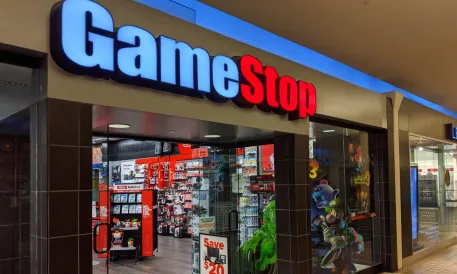
Cohen’s bid for eBay represents the most ambitious chapter yet in his career—a high-stakes gamble that could redefine not only GameStop but the broader e-commerce landscape.
The risks are considerable. Financing remains uncertain, integration challenges loom large, and the competitive environment is unforgiving. Yet the potential rewards are equally significant. If successful, the acquisition could create a powerful new player capable of challenging Amazon’s dominance and reshaping the industry’s competitive dynamics.
Cohen himself stands to benefit substantially from such an outcome. As the WSJ has previously reported, his compensation package is structured to reward significant increases in GameStop’s market value, with the potential for a payout of up to $35 billion if certain milestones are achieved.
The immediate future of the proposal remains uncertain. eBay has yet to publicly respond to the offer, and it is unclear whether its board will engage with Cohen’s overture or seek to resist it.
Cohen, for his part, has indicated that he is prepared to pursue a proxy fight if necessary, taking his case directly to shareholders. However, the window for nominating new directors ahead of eBay’s upcoming annual meeting has already closed, potentially complicating this strategy.
As the WSJ report emphasized, the coming weeks will be critical in determining the trajectory of the bid. Whether it evolves into a full-scale takeover battle or fades as an ambitious but unrealized vision remains to be seen.
Ryan Cohen’s unsolicited bid for eBay represents a defining moment in the evolution of the e-commerce industry. It encapsulates the tension between established players and disruptive innovators, between incremental progress and transformative ambition.
As chronicled extensively in the WSJ report, the proposal is as much about vision as it is about valuation. It challenges conventional assumptions about scale, strategy, and competition, offering a glimpse of what the future of retail might look like under a new paradigm.
Whether that vision ultimately becomes reality will depend on a complex interplay of financial, strategic, and market forces. For now, one thing is clear: the battle for the future of e-commerce has entered a bold and unpredictable new phase.
