














By: Jed Johnson
A political and legal firestorm has erupted across the United States following a controversial decision by Texas Governor Greg Abbott to designate the Council on American-Islamic Relations (CAIR) as a foreign terrorist organization under Texas state law.
The unprecedented action has ignited fierce debate among elected officials, legal scholars, civil rights advocates, security experts, and community leaders, transforming what might otherwise have been a state-level administrative decision into a national confrontation over the boundaries of executive authority, the definition of terrorism, and the relationship between state governments and organizations accused of maintaining ties to extremist movements.
Governor Abbott announced the designation as part of a broader initiative targeting organizations that Texas officials contend pose threats to public safety, national security, and the state’s interests. In issuing the designation, Abbott argued that Texas has both the authority and the obligation to confront entities that state officials believe maintain connections to organizations associated with extremist activities.
“The State of Texas will not tolerate organizations that threaten the security and well-being of our citizens,” Abbott declared in announcing the action. Supporters of the governor’s decision described the move as a bold assertion of state sovereignty and a forceful response to concerns regarding foreign influence and extremist networks operating within the United States.
The designation immediately reverberated throughout political circles in Washington and beyond, drawing praise from some conservative lawmakers while prompting sharp criticism from civil liberties organizations and legal experts who questioned both the factual basis and legal authority underlying the action.
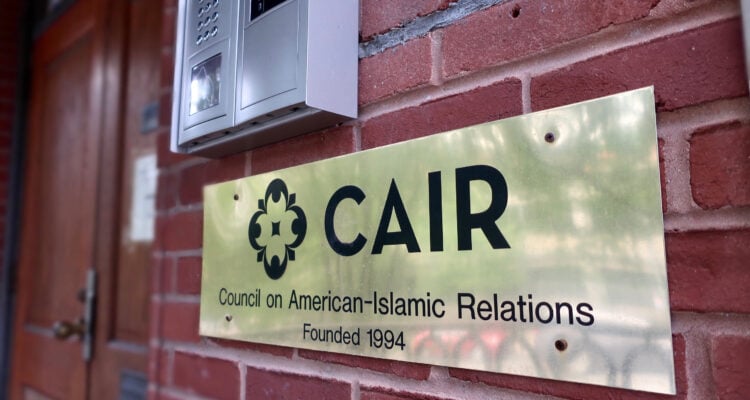
At the center of the controversy is CAIR, an organization that for decades has described itself as a civil rights and advocacy group dedicated to protecting the constitutional rights of American Muslims and combating discrimination. Founded in 1994, the organization has become one of the most recognizable Muslim advocacy groups in the country, frequently engaging in public policy debates, legal advocacy, community outreach, and educational initiatives.
CAIR has categorically rejected the allegations associated with the Texas designation.
Organization officials have denounced the action as politically motivated, legally unfounded, and deeply harmful to the constitutional principles upon which the nation was founded. In statements issued following Abbott’s announcement, CAIR leaders asserted that the designation constitutes an attack on civil liberties and religious freedom rather than a legitimate security measure.
“This action is baseless and politically driven,” CAIR representatives said, arguing that the organization has spent decades advocating for the rights of American Muslims and working within the framework of the United States Constitution.
The organization has also vowed to challenge the designation through the courts, setting the stage for what could become a lengthy and consequential legal battle with implications extending far beyond Texas.
Legal scholars have noted that the dispute raises complex constitutional questions regarding the respective powers of state and federal governments.
Under federal law, the authority to designate Foreign Terrorist Organizations traditionally resides with the United States government through established federal procedures involving the Department of State and other national security agencies. Critics of Abbott’s action argue that states lack the authority to create equivalent terrorism designations carrying the same legal significance as federal classifications.
Several constitutional experts have suggested that courts may ultimately be required to determine the extent to which states can independently identify and sanction organizations they believe pose security threats.
“The legal issues involved are extraordinarily significant,” one legal analyst observed. “This dispute could establish important precedents regarding state authority, federal supremacy, and constitutional protections.”
Supporters of Abbott’s decision counter that Texas possesses broad powers to protect its citizens and regulate activities occurring within its borders. They argue that state governments should not be compelled to wait for federal action when officials believe security concerns require immediate attention.
The controversy emerges against the backdrop of heightened national debate surrounding immigration, border security, foreign influence, terrorism, and public safety.
Texas has frequently positioned itself at the forefront of these discussions under Abbott’s leadership. The governor has repeatedly challenged federal policies on immigration and border enforcement while pursuing an aggressive agenda centered on state-level security initiatives.
For supporters, the CAIR designation represents a continuation of that approach.
Several conservative commentators hailed the move as evidence that Texas is willing to take decisive action where they believe federal authorities have failed to act. They argue that state leaders must remain vigilant against potential threats regardless of political sensitivities.
Opponents, however, contend that the designation risks stigmatizing an entire religious community and could create dangerous precedents regarding government treatment of advocacy organizations.
Civil rights groups have expressed concern that such actions may chill free speech, discourage civic participation, and undermine confidence in constitutional protections.
“This is not merely a dispute involving one organization,” a civil liberties advocate argued. “The broader question concerns whether governments can apply labels of this magnitude without the procedural safeguards typically associated with such determinations.”
The implications extend beyond legal and political considerations.
Business leaders, educational institutions, religious organizations, and community groups are closely monitoring developments as they attempt to assess the practical consequences of the designation. Questions have emerged regarding potential impacts on fundraising, partnerships, public events, community programs, and organizational operations.
Meanwhile, legal observers expect the forthcoming court challenges to attract national attention.
Attorneys representing CAIR are anticipated to argue that the designation violates constitutional protections, exceeds state authority, and inflicts reputational and operational harm upon the organization. Texas officials, by contrast, are expected to defend the action as a lawful exercise of state power intended to safeguard public interests.
The resulting litigation could ultimately reach appellate courts and potentially establish important legal precedents regarding the interaction between state authority and federal national security frameworks.
Political ramifications are also likely to be significant.
The designation has further intensified already heated national discussions regarding terrorism, religious liberty, civil rights, and the proper balance between security and constitutional freedoms. As the issue becomes increasingly intertwined with broader debates over immigration and public safety, it is expected to remain a focal point in political discourse for the foreseeable future.
For Governor Abbott, the decision reinforces his reputation as one of the nation’s most assertive governors on matters of security and state authority. For CAIR, the designation represents perhaps one of the most consequential challenges in the organization’s history.
What began as a state-level announcement has rapidly evolved into a national controversy with potentially far-reaching consequences. Whether courts ultimately uphold or reject Texas’ actions, the dispute is poised to influence conversations about security policy, constitutional rights, and governmental authority long after the immediate headlines have faded.
As legal challenges move forward and political tensions continue to mount, the nation will be watching closely to see how one of the most contentious and consequential disputes involving state power and civil liberties unfolds.