



|
Getting your Trinity Audio player ready...
|
By: Fern Sidman
In a wide-ranging and forceful address delivered at the opening of Sunday’s cabinet meeting, Israeli Prime Minister Benjamin Netanyahu articulated a resolute stance on a series of urgent national and international developments, weaving together concerns over political violence, domestic unrest, and mounting security challenges along Israel’s northern frontier. As reported on Sunday by Israel National News, the prime minister’s remarks underscored the gravity of the current moment, reflecting a leadership posture defined by vigilance, determination, and an insistence on maintaining both internal cohesion and external deterrence.
Netanyahu began his address by referencing a deeply unsettling development abroad: the attempted assassination of President Trump. The prime minister described the incident as profoundly shocking, noting that he and his wife were “deeply disturbed” upon learning of what he characterized as a repeated attempt on the lives of Trump and his spouse. He expressed relief that the US president, along with his wife and senior members of his administration, emerged from the incident unharmed.
Yet Netanyahu’s comments quickly moved beyond expressions of concern to a broader reflection on the dangers of political violence. He emphasized that such acts, regardless of where they occur, represent a fundamental threat to democratic societies. “There is no place for violence,” he declared, extending the principle not only to attacks on political leaders but to violence in all its forms. In a pointed transition, he stressed that this imperative applies “first and foremost” within Israel itself, signaling a deep concern about the tone and trajectory of discourse within the country.
This concern was brought into sharp focus as Netanyahu turned to a tragic and deeply disturbing incident in the central Israeli city of Petah Tikva. In somber terms, he condemned the killing of a young boy, Benjamin Zelka, describing the act as both “despicable” and profoundly horrifying. The murder, which occurred in a pizzeria, has reverberated across the nation, prompting widespread grief and outrage.
Netanyahu’s response to the incident was unequivocal. He not only denounced the act itself but also the subsequent surge of inflammatory rhetoric that followed. “We cannot accept this,” he said, referring to what he described as a wave of incitement that risked further destabilizing an already fragile social environment. His remarks conveyed a sense of urgency, warning that such patterns of behavior must be confronted and eradicated before they take deeper root.
To that end, the prime minister announced a series of immediate steps aimed at addressing both the symptoms and underlying causes of such violence. Following the cabinet meeting, he indicated that he would convene discussions with the education minister and the national security minister to explore a combination of enforcement measures and educational initiatives. The objective, he explained, is to instill a clear understanding—particularly among younger generations—that acts of violence are not only morally reprehensible but unequivocally criminal.
This dual emphasis on enforcement and education reflects a broader strategy aimed at shaping societal norms while ensuring accountability. Netanyahu’s remarks suggested that the government views the issue not merely as a matter of law enforcement but as a deeper cultural challenge requiring sustained engagement across multiple domains, including schools and families.
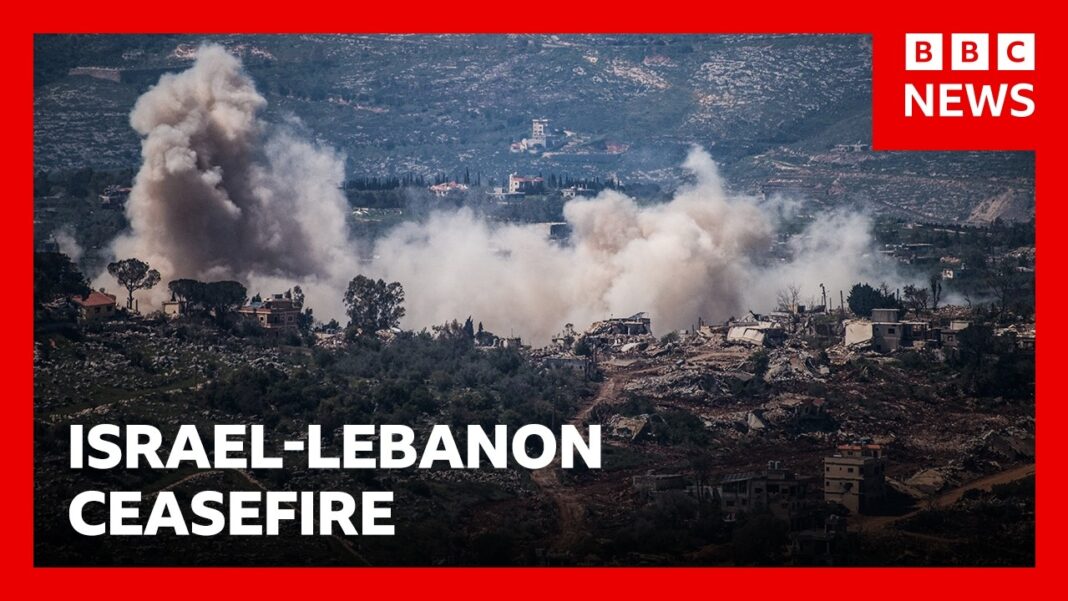
While domestic concerns occupied a significant portion of his address, Netanyahu also devoted considerable attention to the evolving security situation along Israel’s northern border. In particular, he addressed criticisms suggesting that Israel had failed to respond adequately to violations of the ceasefire in Lebanon. Rejecting such claims, he asserted that the Israel Defense Forces are actively and forcefully engaged in maintaining security in the region.
Central to his argument was the assertion that ongoing actions by the Hezbollah terrorist organization are effectively undermining the ceasefire framework. According to Netanyahu, these violations necessitate a robust and sustained response, guided by the overriding imperative of protecting Israeli citizens and military personnel. “What obligates us,” he stated, “is Israel’s security, the security of our soldiers, and the security of our communities.”
The prime minister emphasized that Israel retains full operational freedom under the terms of its agreements with both the United States and Lebanon. This, he explained, extends beyond reactive measures to include proactive efforts aimed at neutralizing emerging threats before they materialize. Such a posture, he argued, is essential in an environment characterized by persistent volatility and the presence of hostile actors.
Providing a concrete illustration of this approach, Netanyahu revealed that over the past 2 weeks, the Israel Defense Forces Northern Command has eliminated 46 terrorists. While he did not provide specific details regarding the operations, the figure underscores the intensity of military activity in the region and the government’s commitment to maintaining a strong deterrent posture.
“We will act with a strong hand and an outstretched arm,” Netanyahu declared, invoking language that conveys both resolve and readiness. He made clear that Israel will not tolerate what he described as “lawlessness” along its borders and will take whatever measures are necessary to restore and sustain security in the north.
The prime minister’s remarks also touched upon the broader political landscape within Israel, where tensions remain high amid shifting alliances and ongoing debates over governance. Statements from key political figures, reported by Israel National News, highlight the extent to which internal divisions continue to shape the national discourse.
Itamar Ben Gvir, leader of the Otzma Yehudit party, offered a sharply critical assessment of rival political factions, accusing them of compromising national interests. His comments reflect a broader pattern of rhetoric that underscores the polarized nature of Israeli politics, particularly in the wake of recent events.
Similarly, Avigdor Lieberman, leader of the Yisrael Beiteinu party, addressed developments within the opposition, framing them in the context of a broader effort to reshape the political landscape. His remarks suggest that the current moment is being viewed by many as a potential inflection point, with implications for the balance of power in the months ahead.
Members of the Likud party, Netanyahu’s political base, also weighed in, offering their own interpretations of the evolving dynamics. Their statements, characterized by pointed criticism of rival leaders and alliances, further illustrate the intensity of the political environment and the challenges facing efforts to achieve consensus.
Against this backdrop, Netanyahu’s emphasis on unity and the rejection of violence takes on added significance. His call to address incitement and reinforce societal norms can be seen as an attempt to counteract the centrifugal forces that threaten to pull the nation further apart. At the same time, his firm stance on security underscores the government’s determination to confront external threats with unwavering resolve.
The convergence of these themes—domestic stability and national security—reflects the complex interplay of factors shaping Israel’s current trajectory. As reported by Israel National News, the prime minister’s address sought to address both dimensions, presenting a comprehensive framework for navigating a period of heightened uncertainty.
In the final analysis, Netanyahu’s remarks serve as both a reflection of the challenges facing Israel and a declaration of the government’s intent to meet them head-on. Whether through efforts to curb internal violence, initiatives to strengthen social cohesion, or military operations aimed at securing the nation’s borders, the message conveyed was one of determination and vigilance.
As the country moves forward, the effectiveness of these efforts will depend not only on the actions of its leaders but also on the collective response of its citizens. In a time marked by both danger and opportunity, the imperative to uphold the principles of security, justice, and unity remains as urgent as ever.
