



|
Getting your Trinity Audio player ready...
|
By: Fern Sidman
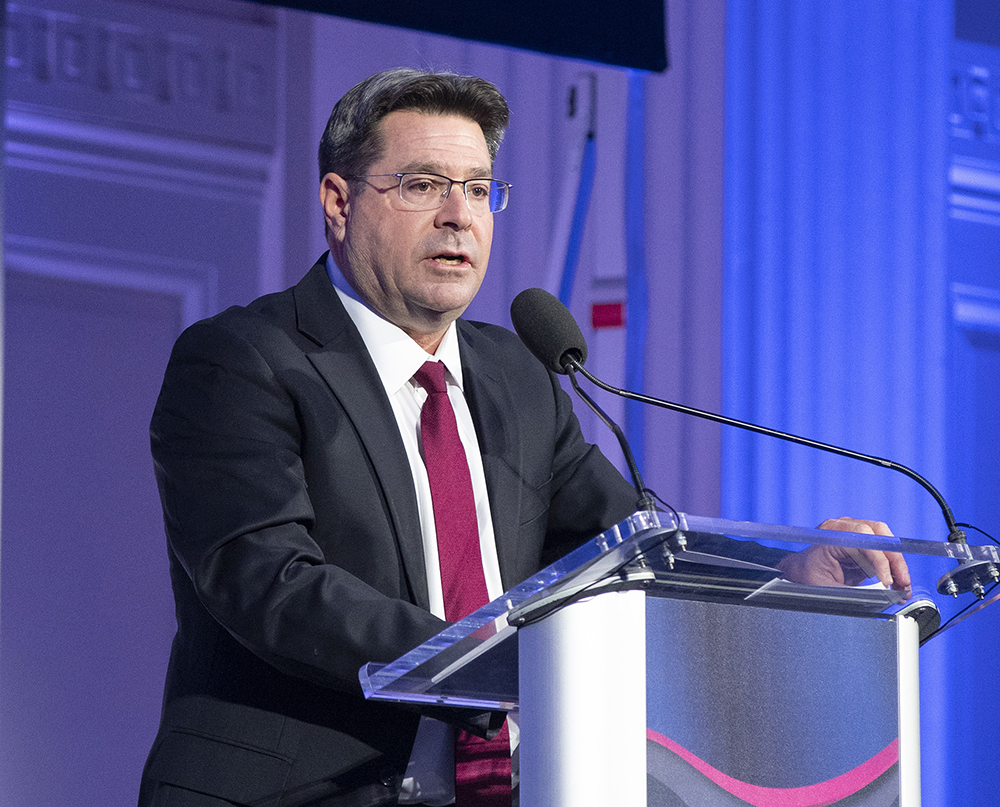
In an evening imbued with both solemn reflection and jubilant affirmation, the 78th anniversary of the State of Israel’s independence was commemorated in Manhattan on Sunday evening with a ceremony that fused patriotic fervor with an unmistakable tone of defiance. At the center of the event stood Israel’s Consul General Ofir Akunis, whose address to an audience of dignitaries, community leaders, and supporters articulated a resolute vision of national identity, resilience, and unity in the face of persistent international criticism.
Held at the iconic waterfront venue of Pier 60, the Sunday evening celebration drew hundreds of attendees, including prominent figures from the worlds of politics, culture, and sports. The gathering reflected not merely a ceremonial observance but a broader reaffirmation of Israel’s place on the global stage—an assertion of sovereignty and accomplishment delivered with clarity and conviction.
In his keynote remarks, Akunis adopted a tone that was at once celebratory and unyielding. He underscored the historical magnitude of Israel’s independence, framing it as a moment of unparalleled significance in the long arc of Jewish history.
“Independence Day is the happiest day for the Jewish people since we were dispersed into exile two thousand years ago,” he declared, invoking the profound historical continuity that underpins the modern state. His words resonated with an audience acutely aware of the centuries of displacement, persecution, and aspiration that culminated in the establishment of Israel in 1948.
Ambassador Akunis’s address emphasized the extraordinary achievements that have defined the state’s trajectory over the past seven decades. He highlighted Israel’s emergence as a dynamic democracy, an economic powerhouse, and a global leader in technological innovation. These accomplishments, he argued, stand as irrefutable evidence of the nation’s vitality and legitimacy.
Yet the speech was not confined to celebration alone. It also confronted, with notable directness, the persistent challenges posed by critics who question Israel’s existence or legitimacy. “We do not need your recognition,” Akunis asserted, delivering a message that was both declarative and dismissive of external validation. “We know who we are and we are proud of ourselves.”
Amb. Akunis did not shy away from addressing the broader climate of criticism that often surrounds Israel in international discourse. He characterized many of these critiques as uninformed, and in some cases, rooted in prejudice.
“There are many who refuse to recognize our existence,” he said. “They criticize us automatically without knowing what they are talking about. Some of them are antisemitic and some are racist.”
This candid acknowledgment of hostility toward Israel—and, by extension, toward Jewish identity—added a layer of urgency to the proceedings. It underscored the enduring relevance of the struggle for recognition and respect, even decades after the state’s founding.
By framing such criticism as both uninformed and prejudicial, Akunis sought to shift the narrative, positioning Israel not as a subject of scrutiny but as a nation entitled to assert its own identity on its own terms.
A central theme of the Consul General’s address was the resilience and dynamism of Israel’s economy. Despite enduring years of conflict and geopolitical tension, the country has continued to attract investment and drive innovation.
“Look at the strength of our economy after three years of war,” Amb. Akunis urged, pointing to the remarkable capacity of the Israeli economy to withstand external pressures. He emphasized that the global investment community increasingly recognizes Israel as a stable and promising destination for capital.
“The world understands that investing in Israel is the right thing,” he added, framing economic engagement as both a practical and moral choice.
This emphasis on economic vitality served not only to highlight Israel’s achievements but also to reinforce its strategic importance in the global marketplace. By positioning Israel as an indispensable hub of innovation and enterprise, Amb. Akunis sought to counter narratives that portray the country solely through the lens of conflict.
Perhaps the most poignant aspect of Akunis’s address was his appeal for unity—both within Israel and among its supporters worldwide. He described unity as an “iron wall” essential to the nation’s continued success and survival.
“We must be united,” he insisted. “Unity is an iron wall for our success. We need to learn from our forces what unity is—from those who fight shoulder to shoulder on the battlefield.”
This invocation of the military as a model of cohesion carried particular resonance, especially in light of recent conflicts that have tested the nation’s resolve. By drawing attention to the solidarity exhibited by soldiers in combat, Amb. Akunis underscored the importance of transcending internal divisions in pursuit of a common purpose.
His remarks also contained a note of introspection, urging a reduction in internal discord. “This is the time to put aside what divides us, lower the flames within us, and unite,” he said, acknowledging the challenges posed by domestic polarization.
The call for unity was framed not merely as a moral imperative but as a strategic necessity. “Only united will we continue to prosper and succeed in standing against enemies who seek our destruction,” he concluded.
The event itself was notable for the breadth and diversity of its attendees. Among those present were prominent figures such as fashion designer Elie Tahari and Ben Saraf, whose participation underscored the cultural and societal reach of the celebration.
Elected officials from New York and New Jersey joined representatives from various diplomatic missions, as well as leaders of Jewish and pro-Israel organizations. The presence of media figures and influencers further amplified the event’s visibility, reflecting its significance beyond the immediate community.
The venue, Pier 60, provided a striking backdrop for the occasion. Overlooking the Hudson River and the Manhattan skyline, it symbolized the intersection of local and global perspectives—a fitting setting for a celebration that sought to bridge national identity with international engagement.
The ceremony was further enriched by recorded greetings from Israel’s highest political leaders. Israeli President Isaac Herzog, Israeli Prime Minister Benjamin Netanyahu, and Israeli Minister of Foreign Affairs Gideon Sa’ar each conveyed messages that reinforced the themes of resilience, unity, and national pride.
These statements served to connect the diaspora celebration with the broader national narrative, creating a sense of shared purpose that transcended geographic boundaries. They also underscored the importance of international support and solidarity in sustaining Israel’s position on the world stage.
Among the evening’s most moving moments was the address delivered by Dedi Simchi, father of the late soldier Guy Simchi. His son had become a symbol of courage and sacrifice, having confronted Hamas terrorists during the attacks of October 7.
Simchi’s remarks provided a deeply personal perspective on the cost of conflict and the enduring strength of those who bear its burdens. His presence at the event served as a poignant reminder of the human dimension underlying the broader themes of national identity and resilience.
The Yom Ha’atzmaut ceremony in Manhattan was more than a festive gathering; it was a statement of intent and identity. It reaffirmed Israel’s achievements while confronting the challenges that continue to shape its trajectory.
Through his address, Ambassador Ofir Akunis articulated a vision of Israel that is unapologetically proud, resolutely independent, and steadfast in the face of adversity. His words reflected a broader sentiment within the community—a determination to celebrate accomplishments while remaining vigilant against threats, both external and internal.
As the evening drew to a close, the atmosphere at Pier 60 was one of both celebration and contemplation. The music, the flags, and the shared sense of purpose created a powerful tableau of unity and pride.
Yet beneath the festivities lay a deeper message—one that spoke to the enduring significance of Israel’s independence and the responsibilities that accompany it. In a world marked by complexity and conflict, the ceremony served as a reminder of the resilience of a nation and the strength of a people bound by history, identity, and aspiration.
In his address, Ambassador Akunis encapsulated this sentiment with clarity and conviction. “We know who we are,” he declared—a statement that resonated not only within the walls of the venue but far beyond, echoing as a testament to a nation’s endurin
