



|
Getting your Trinity Audio player ready...
|
A Party Unmoored: How Cultural Obsession and Elite Detachment Are Driving Democrats Into Irrelevance
There are moments in the life of a political party when candor becomes unavoidable—when the distance between rhetoric and reality grows so vast that even its most loyal architects are compelled to speak plainly. The recent remarks by Rahm Emanuel, a seasoned operative of the Democratic establishment, represent precisely such a moment. His blunt declaration that Democrats have “lost the plot” is not merely a rhetorical flourish; it is an indictment born of experience, frustration, and a growing recognition that the party has drifted dangerously far from the concerns of the American electorate.

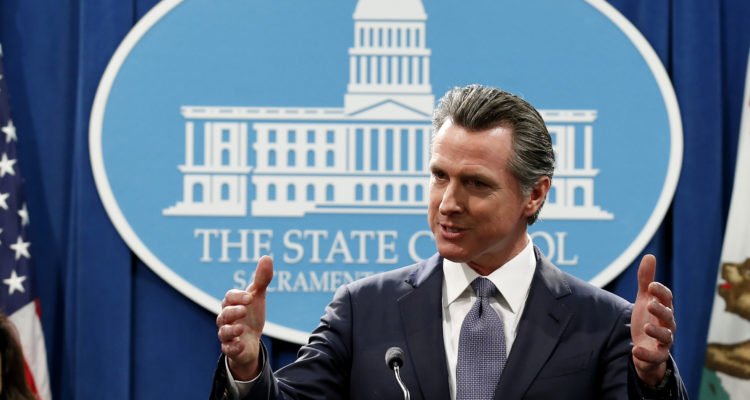
Emanuel’s critique, echoed by figures such as Gavin Newsom, signals a fracture within Democratic ranks that is as ideological as it is strategic. Yet the most striking aspect of this internal reckoning is not that it has occurred, but that it has taken so long. The evidence of political misalignment has been accumulating for years, visible in electoral setbacks, declining trust among working-class voters, and an increasing perception that the party has become captive to a narrow and ideologically rigid constituency.
At the heart of Emanuel’s argument lies a simple yet devastating observation: the Democratic Party has become consumed by cultural and identity-driven issues that resonate with only a small segment of the population. Terms and concepts that once occupied the fringes of academic discourse—linguistic innovations, abstract theories of identity, and symbolic debates over language—have migrated into the party’s mainstream messaging.
This shift has not been without consequence. For many Americans, these issues appear detached from the realities of daily life. The preoccupation with terminology such as “Latinx,” or the relentless focus on symbolic battles over identity, conveys an image of a party more concerned with ideological purity than practical governance. Emanuel’s critique is therefore not an attack on inclusivity, but rather on the disproportionate emphasis placed on issues that fail to address the urgent needs of the electorate.
Politics, at its core, is a discipline of prioritization. When a party elevates peripheral concerns above fundamental ones, it risks alienating the very constituencies it seeks to represent. In this regard, Emanuel’s warning is not merely descriptive; it is diagnostic of a deeper institutional failure.
Perhaps nowhere is this misalignment more evident than in the realm of education. Emanuel’s scornful observation—that Democrats are preoccupied with debates over bathroom access while half of American students struggle to read at grade level—captures a profound disconnect between policy focus and public need.
Education has historically been a cornerstone of Democratic policy, a domain in which the party once claimed both moral authority and practical competence. Yet the current landscape tells a different story. Instead of championing rigorous academic standards, teacher accountability, and measurable outcomes, the party has often found itself entangled in controversies that, while emotionally charged, do little to improve educational attainment.
This is not merely a matter of misplaced emphasis; it is a structural problem rooted in the party’s relationship with powerful institutional actors. Teachers’ unions, particularly the National Education Association and the
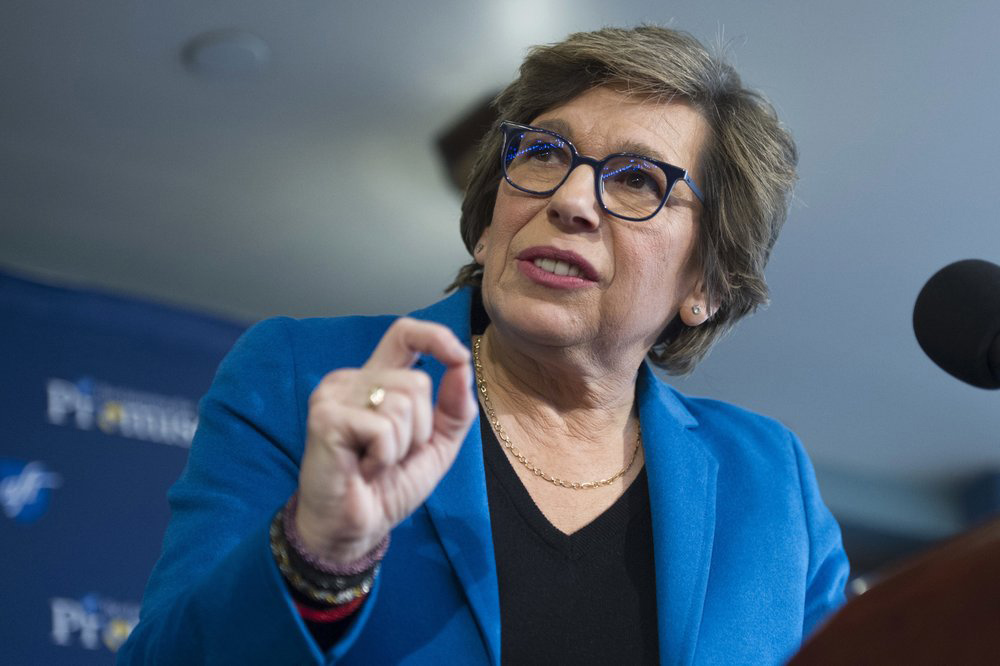
exert considerable influence over Democratic policymaking. While their advocacy has historically advanced important causes, it has also created constraints that limit the party’s willingness to pursue reforms that might challenge entrenched interests.
The result is a policy agenda that often prioritizes the preferences of organized stakeholders over the needs of students and families. Emanuel’s critique, therefore, is not simply about priorities; it is about power—about who shapes the party’s agenda and whose voices are ultimately heard.
The consequences of this shift extend far beyond education. Over the past decade, the Democratic Party has undergone a demographic and ideological transformation, increasingly aligning itself with highly educated, urban, and culturally progressive voters. While this coalition has delivered electoral successes in certain contexts, it has also come at the expense of the party’s traditional base.
Working-class voters—once the backbone of Democratic support—have grown increasingly disillusioned. Their concerns, centered on economic stability, public safety, and educational opportunity, often receive less attention than abstract debates over identity and climate policy. This perceived neglect has created an opening for political realignment, as voters seek alternatives that more directly address their priorities.

Emanuel’s critique underscores this dynamic. By focusing on issues that resonate primarily with a narrow segment of the electorate, Democrats risk reinforcing the perception that they are out of touch with the broader public. This is not merely a matter of messaging; it is a question of representation and legitimacy.
Another area in which the party’s approach has generated significant controversy is public safety. The embrace of slogans such as “defund the police,” coupled with broader critiques of law enforcement, has contributed to a perception that Democrats are indifferent—or even hostile—to the concerns of communities grappling with crime.

While the intent behind such positions may be rooted in a desire for reform, the political impact has been decidedly negative. For many voters, particularly those in urban and suburban areas, safety is a non-negotiable priority. Policies or rhetoric that appear to undermine this priority can quickly erode trust.
Emanuel’s critique reflects an understanding that effective governance requires not only moral conviction but also pragmatic sensitivity to public concerns. A party that fails to balance these imperatives risks ceding ground to opponents who promise more straightforward solutions.
Compounding these challenges is the perception that the Democratic Party has become increasingly tolerant of ideological extremism within its ranks. Issues such as antisemitism and anti-American sentiment, once marginal, have gained visibility in certain corners of the party’s coalition.
This development poses both moral and political risks. Morally, it undermines the party’s commitment to inclusivity and equality. Politically, it alienates voters who view such positions as incompatible with mainstream values. Emanuel’s critique implicitly acknowledges this tension, highlighting the need for clearer boundaries and more consistent leadership.
The contrast between the party’s current trajectory and its historical roots is striking. In 1992, James Carville famously distilled the essence of political success into a single phrase: “It’s the economy.” That insight reflected a recognition that voters prioritize tangible outcomes—jobs, wages, and economic stability—over abstract ideological debates.
Three decades later, the Democratic Party appears to have lost sight of this fundamental principle. Economic concerns, while still present in policy discussions, often take a backseat to cultural issues that lack broad appeal. Emanuel’s critique can thus be seen as a call to return to first principles—a reminder that political success depends on addressing the realities of everyday life.
If the Democratic Party is to regain its footing, it must undertake a process of introspection and recalibration. This will require more than rhetorical adjustments; it will necessitate a fundamental reordering of priorities.
First, the party must reestablish its commitment to economic issues that resonate across demographic lines. This includes not only job creation and wage growth but also the affordability of housing, healthcare, and education.
Second, it must adopt a more balanced approach to cultural issues, ensuring that they do not overshadow core policy objectives. Inclusivity and equality are essential values, but they must be pursued in a manner that unites rather than divides.
Third, the party must confront the influence of entrenched interests that constrain its ability to enact meaningful reform. This will require political courage and a willingness to challenge long-standing alliances.
Finally, it must articulate a vision that speaks to the aspirations of all Americans, not just a select few. This vision must be grounded in practicality, informed by evidence, and communicated with clarity.
Rahm Emanuel’s critique is not an isolated outburst; it is a reflection of a broader unease within the Democratic Party. It is a recognition that the current trajectory is unsustainable, that the gap between the party and the electorate has grown too wide to ignore.
The question now is whether this moment of candor will lead to meaningful change or whether it will be dismissed as yet another internal disagreement. The stakes are high, not only for the party itself but for the broader political landscape.
In an era defined by polarization and uncertainty, the need for a party that can effectively represent the diverse interests of the American people has never been greater. Whether the Democrats can fulfill that role will depend on their willingness to heed Emanuel’s warning and to embark on a path of renewal.
If they fail to do so, they risk not only electoral defeat but also a deeper erosion of their relevance in the national conversation.
