



|
Getting your Trinity Audio player ready...
|
By Ryan Morgan
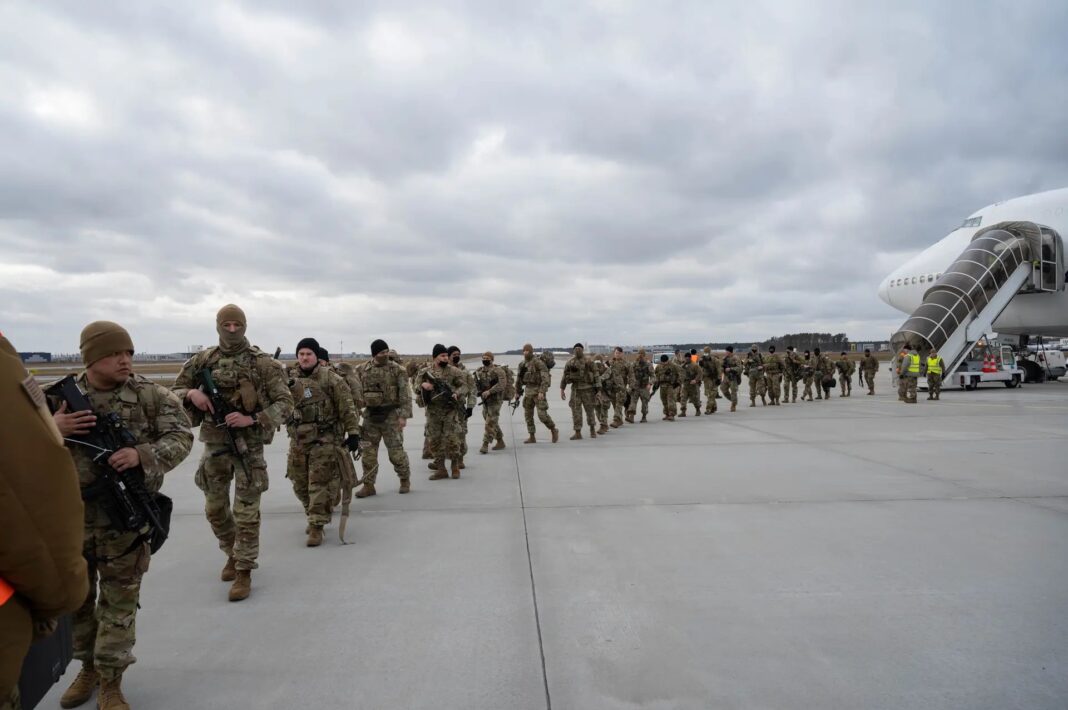
(Epoch Times) The U.S. military has deployed several thousand additional infantry troops to the Middle East in recent weeks, raising speculation of imminent ground combat in the conflict with Iran.
Military analysts have proposed a handful of potential missions for U.S. ground forces, including seizing key territory in the Persian Gulf or mounting a raid deep into Iran.
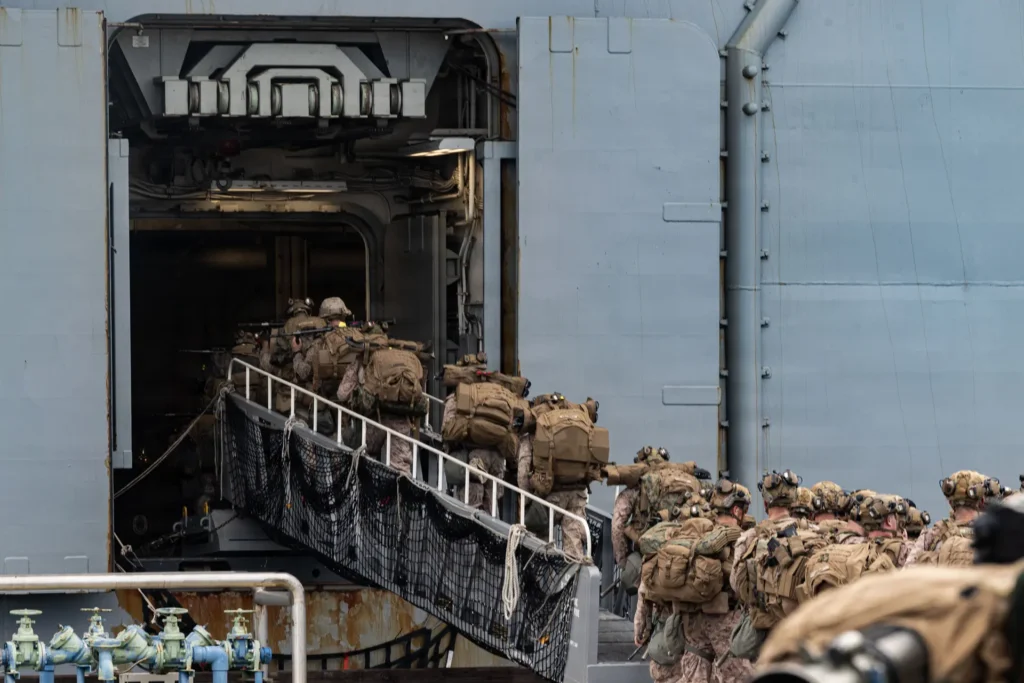
Since the start of the military campaign against Iran—dubbed Operation Epic Fury—the Pentagon has deployed two amphibious groups closer to the Middle East.
Each group includes Marine air and ground combat forces.
The second amphibious group is sailing west across the Pacific and could potentially bolster the existing U.S. force presence in the Middle East before the Iran conflict ends.
The 82nd Airborne Division is America’s premier paratrooper force and can deploy virtually anywhere around the world on short notice.
In a press briefing on March 31, Secretary of War Pete Hegseth avoided announcing or ruling out any military actions against Iran, including ground operations.
Additional Forces Arriving
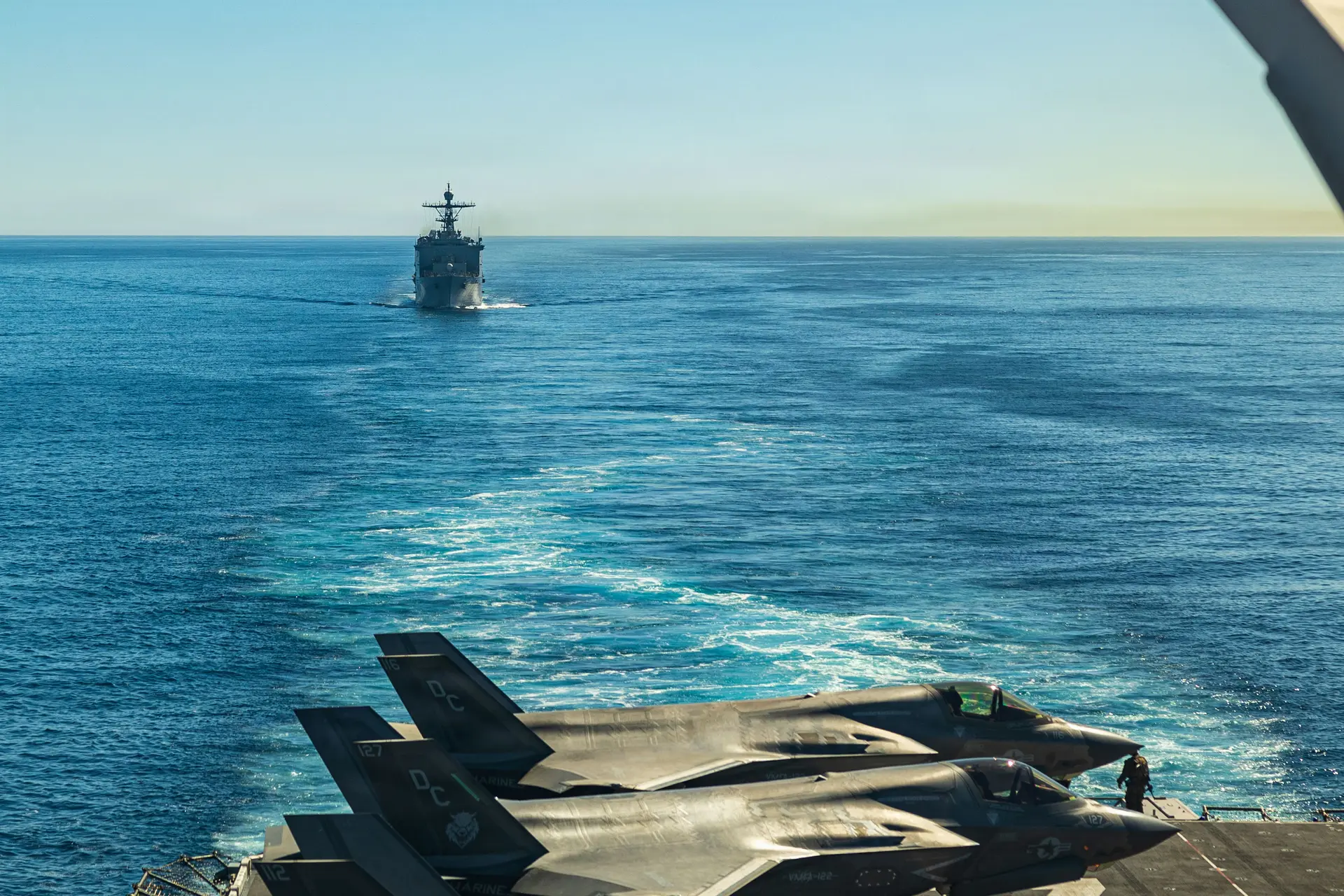
A combined amphibious group and embarked Marine expeditionary unit includes a squadron of fighter jets, as well as a squadron of attack and transport helicopters.
The USS Tripoli is a newer America-class amphibious assault ship, and its embarked fighter squadron consists of short-takeoff-capable F-35B Lightning II stealth fighter jets.
The ground combat element of the 31st MEU includes members of 3rd Battalion, 1st Marine Regiment.
This unit participated in the 2003 invasion of Iraq and the Second Battle of Fallujah in 2004, which saw some of the heaviest urban combat in Marine Corps history.
Led by the amphibious assault ship USS Boxer, the 11th MEU is still crossing the Pacific and could take weeks to reach the waters of the Middle East, if it is so assigned.
The ground combat component of the 11th MEU includes the 3rd Battalion, 5th Marines.
The 3rd Battalion, 5th Marine Regiment, also participated in the 2003 invasion of Iraq and the Second Battle of Fallujah.
Known as the “Devil Brigade,” the 82nd Airborne Division’s 1st BCT trains to deploy at a moment’s notice, in support of the division’s overall mission to serve as a so-called immediate response force.
The 1st BCT deployed to Iraq in January 2020, in the days after Trump ordered an assassination strike on Gen. Qassem Soleimani, commander of Iran’s Islamic Revolutionary Guard Corps (IRGC).
The 1st BCT also deployed to Afghanistan in August 2021 and supported the civilian evacuation and final U.S. troop withdrawal from the country.
Reopening the Strait of Hormuz
U.S. military planners may be considering deploying ground forces on Iran’s territorial islands in the Persian Gulf.
Several of these islands sit at the mouth of the Strait of Hormuz, providing Iran’s forces a key vantage point from which to attack nearby merchant ships.
Iranian forces have indeed attacked shipping over the past month, harming sailors and inflicting economic pain.
Even if the fighting ends, international observers have expressed concerns about Iran imposing a toll on ships transiting the Strait of Hormuz.
“That’s not going to be allowed to happen. And the president has a number of options available to him, if he so chooses, to prevent that from happening,” the secretary of state said.
The largest and most prominent Iranian island at the mouth of the strait is Qeshm Island.
Seizing Qeshm with ground forces could weaken Iran’s ability to impose costs on traffic in the Strait of Hormuz, but such an objective may prove challenging with the current force buildup.
James Webb, a Marine infantry veteran and national security consultant, told The Epoch Times that two Marine Expeditionary Units and the deployed elements of the 82nd Airborne Division would be hard-pressed to control the nearly 600-square-mile island.
Webb also raised concerns about committing ground forces to an island within range of Iranian artillery on the mainland.
“You could insert yourself there, you know, to try to secure a base to operate out of, as a leverage point, but that makes everybody on the ground targets for indirect fire of all kinds,” he said.
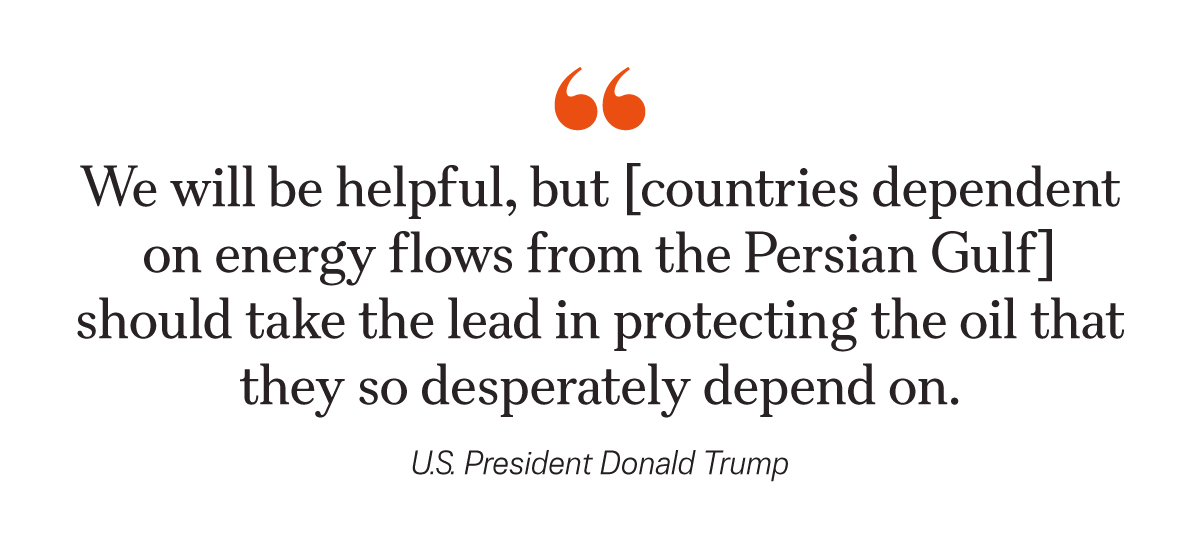
In a primetime address on April 1, Trump suggested that countries dependent on energy flows from the Persian Gulf will have to take the lead in protecting those interests. However, he left open the possibility of U.S. support for such efforts.
“They can do it easily. We will be helpful, but they should take the lead in protecting the oil that they so desperately depend on,” the president said.
In a Truth Social post two days later, Trump indicated that he’s still considering options to open the strait.
“With a little more time, we can easily OPEN THE HORMUZ STRAIT, TAKE THE OIL, & MAKE A FORTUNE. IT WOULD BE A ‘GUSHER’ FOR THE WORLD???” Trump wrote in his April 3 social media post.
U.S. forces have already bombed military outposts on the small Iranian island. In a March 29 interview with the Financial Times, Trump raised the possibility of seizing the island.
“Maybe we take Kharg Island, maybe we don’t. We have a lot of options,” he said.
Brent M. Eastwood, a former Army infantry officer, military analyst, and national security editor for 19FortyFive, previously told The Epoch Times that seizing Kharg Island could provide leverage in future negotiations.
Paul Davis, an Army veteran and military analyst working as an adjunct faculty member at The Institute of World Politics, questioned the value of seizing Kharg Island to sever Iran’s energy revenues.
Speaking with The Epoch Times, he said U.S. naval power could intercept Iranian fuel tankers outside the relatively narrow confines of the Persian Gulf, rather than trying to take and hold Kharg Island.
“As far as shutting off the Iranian oil flow, we can do it other ways, less costly ways,” Davis said.
Capturing Iran’s Nuclear Fuel
Some media reports have raised the prospect of a special operations raid deep inside Iran to retrieve highly enriched uranium that may remain at three nuclear facilities that U.S. forces bombed in June 2025.
The Wall Street Journal and The Washington Post both recently reported that military planners have briefed Trump on such a proposal.
The White House did not deny the reports when approached for comment by The Epoch Times.
“It’s the job of the Pentagon to make preparations in order to give the Commander in Chief maximum optionality. It does not mean the president has made a decision.” White House press secretary Karoline Leavitt said in an emailed statement.
Webb described the special operations raid as his leading scenario for U.S. ground troops to enter the fray.
He said Marines or the Army’s 82nd Airborne could cordon off the area around Iranian nuclear facilities and repel counterattacks while commandos infiltrate those sites to retrieve nuclear fuel therein.
Preventing Iran from obtaining a nuclear weapon has topped Trump’s list of justifications for launching the current military campaign.
In Webb’s assessment, a ground operation at one or more Iranian nuclear facilities would provide a strong visual aid in support of the president’s stated objectives.
“Trump loves to make a splash. … He’s looking for a way to exit and declare victory on the way out, and a raid like that, if it went well, I think would fit the bill,” Webb said.
U.S. special operations forces carried out a similarly spectacular helicopter-borne assault on Jan. 3 to abduct then-Venezuelan leader Nicolás Maduro from a fortified compound in Caracas, Venezuela.
While such an operation could inspire awe in U.S. military prowess, Webb warned that it would also pose an attractive opportunity for Iranian forces seeking to ambush and kill Americans.
“If you don’t think that’s going to be a Bat Signal to the entire IRGC to come get some, then you’ve got another thing coming,” Webb said.
Davis, likewise, noted that the risk to U.S. forces would grow with each passing minute that they spend on the ground deep inside Iranian territory.
“A special ops force is in and out … not digging tunnels a mile into the ground to try to find something that may or may not be there,” he said.
Preventing Iran from attaining a nuclear weapon may instead be an open-ended objective that exceeds the current conflict.
In his April 1 address, Trump said U.S. satellites are continuing to monitor Iranian nuclear facilities and that U.S. forces could conduct additional strikes to prevent Iranians from accessing those sites.
“If we see them make a move, even a move for it, we’ll hit them with missiles very hard again,” the president said.
