



|
Getting your Trinity Audio player ready...
|
Global Deception Unraveled: US-Israeli International Fraud Mastermind Extradited as Multi-Million Dollar Scheme Comes to Light
By: TJVNews.com
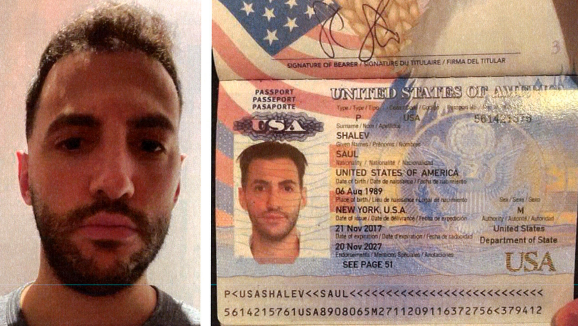
In a case that reads like a modern financial thriller—complete with international intrigue, digital subterfuge, and a trail of unsuspecting victims—federal authorities have brought to the United States a man accused of orchestrating a sprawling fraud scheme that preyed upon small and medium-sized businesses across the country. The arrest and extradition of 36-year-old Saul Shalev mark a decisive breakthrough in an investigation that has confounded regulators and industry insiders for years.
Shalev, a dual citizen of the United States and Israel, now faces a formidable array of federal charges, including wire fraud, money laundering, and aggravated identity theft. According to prosecutors, his alleged activities between 2019 and 2022 represent a calculated and sophisticated exploitation of the small business finance ecosystem—one that leveraged stolen identities, fabricated brokerage operations, and a deep understanding of lending practices to siphon substantial sums into accounts under his control.
By the time authorities apprehended him in early 2026, Shalev had established a lifestyle emblematic of the globalized financial underworld. After departing the United States in 2019, where he had previously resided in Brooklyn, New York, he reportedly relocated to Dubai in the United Arab Emirates, a city known both for its opulence and its role as a nexus for international commerce.
Yet it was not in Dubai that his movements were curtailed. Instead, the turning point came in Spain, where Shalev had traveled for leisure, staying at the Hotel Nobu Barcelona. Spain’s extradition treaty with the United States proved decisive. Law enforcement agents seized not only the suspect but also his laptop, which prosecutors allege contains a trove of incriminating evidence documenting the full scope of the operation.
The arrest brought an abrupt end to what authorities describe as a meticulously constructed scheme that had evaded detection for years.
At the heart of the case lies a deceptively simple but highly effective fraud model. According to court filings and statements from federal prosecutors, Shalev is accused of targeting small and medium-sized businesses that had previously obtained commercial loans. By acquiring sensitive financial information—often through illicit means—he identified companies that might be receptive to refinancing or additional funding.
Posing as a legitimate loan broker, Shalev allegedly approached these businesses with offers to secure more favorable financing terms. In doing so, he presented himself as an intermediary between the borrower and prospective lenders, often invoking the credibility of established financial institutions.
The scheme unfolded in several stages. First, Shalev would facilitate the approval of a new loan, either by connecting the business with a lender or by misrepresenting his authority to do so. Once the funds were disbursed, he would provide the borrower with instructions to pay off an existing loan. These instructions, however, were fraudulent, directing payments not to legitimate creditors but to accounts controlled by Shalev.
Simultaneously, he is alleged to have collected commissions from lenders under false pretenses, thereby extracting additional revenue from each transaction.
This dual extraction—diverting loan proceeds while also securing commissions—enabled the operation to generate significant financial gains while remaining concealed within the complexity of routine commercial transactions.
Federal prosecutors have outlined several specific instances that illustrate the mechanics and scale of the alleged fraud.
In one case from December 2020, Shalev is accused of impersonating a broker in a transaction involving an auto dealership in Ohio. By presenting stolen credentials, he allegedly orchestrated a loan of $343,000 from a Connecticut-based lender. The dealership, believing it was settling a prior obligation, transferred nearly $191,000 to what it believed was a creditor in Colorado. In reality, the funds were redirected to an account controlled by Shalev. He also reportedly secured a $42,000 commission from the lender.
A similar pattern emerged in August 2021, when a healthcare provider in Indiana became the target of a comparable scheme. In this instance, the business received a loan of $145,500 but was subsequently instructed to make payoff payments totaling more than $156,000 to a fraudulent account. Once again, Shalev allegedly collected a commission, this time amounting to $18,000.
By November 2022, the scheme had evolved further. In a case involving a home improvement company in Michigan, Shalev allegedly advised the business that its loan proceeds had been mistakenly disbursed. He then instructed the company to return the funds to an account under his control, effectively converting the entire loan into illicit gain.
These examples, while individually significant, represent only a portion of the broader pattern. Authorities estimate that more than 20 businesses were affected, each subjected to variations of the same underlying deception.
A defining feature of the alleged scheme is its reliance on identity theft. By appropriating the identities of legitimate brokers or financial professionals, Shalev was able to establish credibility and bypass initial scrutiny. This tactic not only facilitated access to sensitive information but also allowed him to operate across multiple jurisdictions without immediate detection.
Equally notable is the alleged use of cryptocurrency to conceal and transfer illicit proceeds. Prosecutors contend that Shalev converted stolen funds into digital assets, a move that complicates traditional tracking methods and underscores the evolving nature of financial crime in the digital age.
The intersection of identity theft and cryptocurrency represents a formidable challenge for law enforcement, requiring sophisticated investigative techniques and international cooperation.
The charges against Shalev carry severe penalties. Each count of wire fraud and money laundering is punishable by up to 20 years in prison, while the aggravated identity theft charges carry mandatory consecutive sentences of two years each.
If convicted on all counts, the cumulative sentence could extend to decades of incarceration, reflecting the gravity with which federal authorities view the alleged offenses.
The prosecution, led by the United States Attorney’s Office for the District of Connecticut, has emphasized the breadth of the scheme and its impact on victims. Small and medium-sized businesses, often operating with limited financial buffers, were particularly vulnerable to the type of manipulation alleged in this case.
Beyond the immediate legal proceedings, the case has broader implications for the small business finance industry. The alleged scheme exposes vulnerabilities in the processes used to verify intermediaries and authenticate payment instructions.
Industry experts have long warned that the increasing complexity of financial transactions, combined with the proliferation of digital communication channels, creates opportunities for sophisticated fraud. The Shalev case appears to confirm these concerns, highlighting the need for enhanced due diligence and improved security protocols.
Lenders and borrowers alike may be compelled to reassess their practices, implementing stricter verification measures and adopting technologies designed to detect anomalies in real time.
The narrative of Saul Shalev’s alleged activities serves as a cautionary tale about the risks inherent in a globalized and digitally interconnected economy. The ability to operate across borders, assume multiple identities, and exploit gaps in regulatory frameworks presents both opportunities and challenges.
For law enforcement, the case underscores the importance of international collaboration. The successful extradition from Spain and the recovery of critical evidence demonstrate the effectiveness of coordinated efforts among multiple jurisdictions.
For businesses, the lesson is equally clear: vigilance is paramount. Even routine financial transactions can be weaponized by those with the knowledge and intent to deceive.
As the legal process unfolds, the case against Saul Shalev is likely to remain a focal point for discussions about financial crime, regulatory oversight, and the protection of small businesses. The allegations, if proven, reveal a scheme of remarkable audacity and sophistication—one that exploited trust, technology, and the intricacies of modern finance.
Yet the arrest and extradition also signal a broader commitment to accountability. In an era where financial crime can transcend borders with ease, the pursuit of justice requires persistence, innovation, and cooperation.
For the victims, the proceedings offer the possibility of restitution and closure. For the broader public, they serve as a stark reminder that even the most elaborate schemes can ultimately be dismantled.
And for the financial industry, the case may well become a defining moment—prompting reforms that strengthen defenses against the next wave of deception lurking just beyond the horizon.
