



|
Getting your Trinity Audio player ready...
|
By: Fern Sidman
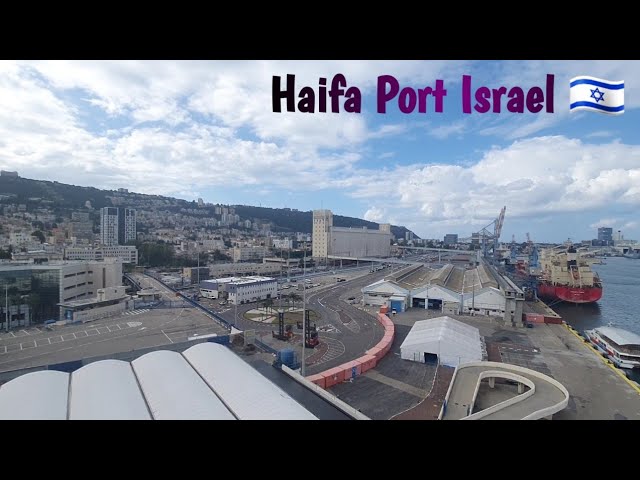
As geopolitical tremors continue to reverberate across the Middle East, a quiet but potentially transformative conversation is unfolding among Gulf Arab states—one that could reshape global energy flows, redefine regional alliances, and elevate Israel’s strategic importance to unprecedented levels. According to a report on Sunday by World Israel News, policymakers and industry leaders are actively exploring the feasibility of a land-based energy corridor that would bypass the volatile Strait of Hormuz and instead channel oil exports through Israel’s Mediterranean port of Haifa.
The implications of such a development are profound. For decades, the Strait of Hormuz has functioned as the world’s most critical maritime chokepoint, facilitating the export of approximately one-quarter of global oil supplies. Yet its vulnerability to disruption—particularly amid escalating tensions with Iran—has long been a source of concern for energy markets and geopolitical strategists alike. The current conflict has only intensified these anxieties, prompting renewed urgency around alternative routes.
The Strait of Hormuz, a narrow waterway connecting the Persian Gulf to the Arabian Sea, has historically been both an artery of global commerce and a flashpoint of geopolitical risk. Its strategic significance lies not only in the volume of oil that passes through it but also in its susceptibility to military interference.
Iran’s repeated threats to restrict or disrupt traffic through the strait have underscored this vulnerability. As the World Israel News report noted, Tehran’s capacity to exert pressure on this chokepoint effectively grants it leverage over global energy markets—a reality that Gulf states and their Western partners have long sought to mitigate.
The current war has amplified these concerns, transforming theoretical risks into immediate challenges. In this context, the exploration of alternative export routes is no longer a matter of strategic foresight but one of urgent necessity.
At the center of these discussions is the concept of a land-based corridor linking the Persian Gulf to the Mediterranean Sea. This ambitious vision encompasses a network of pipelines, railways, and roadways designed to transport oil and other goods across the Arabian Peninsula and into Europe.
The proposed route would traverse several key states, including Saudi Arabia, the United Arab Emirates, Jordan, and Israel, culminating at the port of Haifa. From there, energy shipments could be distributed to European and transatlantic markets with greater security and efficiency.
This initiative aligns closely with the broader framework of the India–Middle East–Europe Economic Corridor, a project that has garnered sustained support from the United States. As highlighted by World Israel News, this corridor is envisioned not merely as an energy conduit but as a comprehensive economic network integrating trade, infrastructure, and technological cooperation.
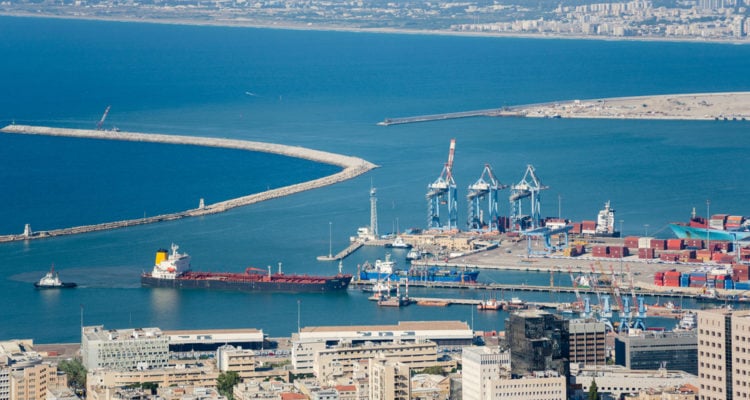
The inclusion of Haifa as a central node in this proposed corridor represents a significant evolution in Israel’s regional role. Historically, Israel’s economic integration with its Arab neighbors has been limited by political and diplomatic constraints. However, recent normalization agreements have begun to alter this landscape, creating new opportunities for cooperation.
Haifa, with its modern port facilities and strategic location on the Mediterranean, is uniquely positioned to serve as a gateway between the Middle East and Europe. Its potential role in facilitating energy exports underscores Israel’s growing importance as both a logistical hub and a geopolitical partner.
According to the information provided in the World Israel News report, the development of such a corridor would not only enhance Israel’s economic prospects but also solidify its position within a reconfigured regional order—one increasingly defined by pragmatic collaboration rather than ideological division.
While the Haifa-linked corridor has attracted considerable attention, it is not the only option under consideration. Existing infrastructure provides alternative pathways, albeit with significant limitations.
Saudi Arabia’s East-West pipeline, which runs from Jubail on the Persian Gulf to Yanbu on the Red Sea, offers a partial solution. Spanning approximately 1,200 kilometers, it enables the kingdom to bypass Hormuz for a portion of its exports. Similarly, the Kirkuk–Ceyhan pipeline connects northern Iraq to the Turkish port of Ceyhan, providing access to the Mediterranean.
However, these routes lack the capacity and flexibility required to fully replace the Strait of Hormuz. They are constrained by geographic, political, and logistical factors that limit their scalability.
In contrast, a comprehensive corridor incorporating multiple modes of transport—pipelines, railways, and roads—offers a more robust and adaptable solution. By diversifying export options, such a network could significantly reduce reliance on any single route, thereby enhancing resilience.
Despite its strategic appeal, the realization of a Haifa-linked corridor faces substantial political and diplomatic hurdles. Chief among these is the need for Saudi Arabia’s participation. As the region’s largest oil producer and a key geopolitical actor, Saudi buy-in is essential to the viability of the project.
Yet this requirement introduces a complex set of considerations. While Saudi Arabia has taken steps toward normalization with Israel, full diplomatic relations remain elusive. The prospect of overt infrastructure links involving Israel may encounter resistance within segments of the Saudi population and broader Arab world.
Moreover, the success of such a corridor would depend on sustained regional security cooperation. The infrastructure would traverse multiple jurisdictions, each with its own political dynamics and security challenges. Ensuring the protection of pipelines, railways, and transport corridors would require unprecedented levels of coordination.
As the World Israel News report noted, these challenges are not insurmountable but will require careful navigation of both domestic sensitivities and regional rivalries.
The potential benefits of the corridor extend far beyond immediate logistical considerations. By reducing dependence on the Strait of Hormuz, Gulf states could mitigate one of their most significant strategic vulnerabilities. This, in turn, would enhance their bargaining power in international markets and reduce the impact of external threats.
For Europe and other energy-importing regions, the corridor offers the prospect of greater supply security. In an era marked by geopolitical uncertainty and shifting alliances, diversification of energy routes is a critical priority.
From a broader perspective, the initiative represents a step toward a more integrated and interconnected Middle East. By linking economies and infrastructure, it could foster greater stability and cooperation, creating a foundation for sustained growth.
The exploration of a Haifa-linked energy corridor reflects a broader transformation in regional geopolitics. Traditional alignments are giving way to more fluid and pragmatic relationships, driven by shared interests rather than ideological divisions.
Israel’s increasing integration into regional frameworks is a key aspect of this transformation. Once isolated, it is now emerging as a central player in initiatives that span commerce, technology, and energy.
As the World Israel News repot highlighted, this evolution is reshaping the strategic landscape of the Middle East, creating new opportunities while also introducing new complexities.
The prospect of a land-based energy corridor linking the Persian Gulf to the Mediterranean represents one of the most ambitious infrastructure initiatives in recent memory. Its success would mark a significant shift in global energy dynamics, reducing reliance on vulnerable maritime routes and redefining regional cooperation.
Yet the path to realization is fraught with challenges. Political sensitivities, security concerns, and logistical complexities all stand in the way of implementation. Overcoming these obstacles will require vision, leadership, and a willingness to embrace new paradigms.
For now, the idea remains in the realm of strategic planning. But as tensions persist and the limitations of existing routes become increasingly apparent, the impetus for action continues to grow.
In this evolving landscape, the role of Israel—and particularly the port of Haifa—may prove pivotal. What was once unthinkable is now under serious consideration, signaling a future in which the Middle East is not merely a source of energy but a nexus of connectivity and cooperation.
