



|
Getting your Trinity Audio player ready...
|
By: Fern Sidman
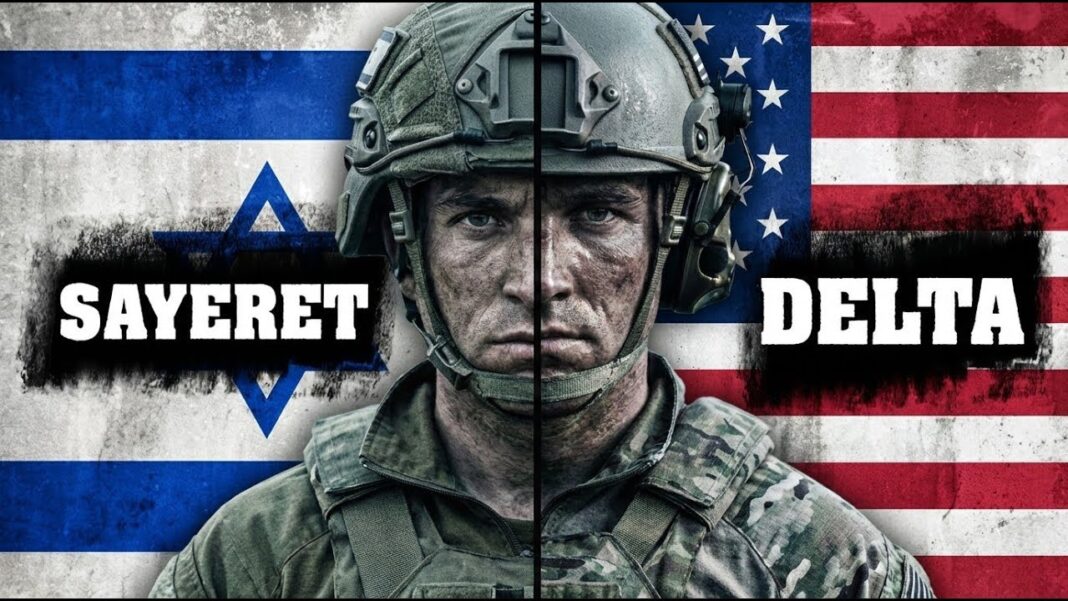
In a dramatic and highly classified operation deep within Iranian territory, elite Israeli special forces units reportedly played a pivotal role in the daring rescue of an American pilot stranded near the strategically sensitive city of Isfahan. The mission, which unfolded over approximately 36 tense hours, has emerged as one of the most intricate and perilous joint operations in recent memory, underscoring the growing depth of military coordination between the United States and Israel.
🚨 BREAKING : Two Israeli commando units — Sayeret Matkal and Unit 5101 “Shaldag” — participated in the rescue of the American pilot near Isfahan, according to the latest reports.
•Sayeret Matkal is the IDF’s elite general‑purpose commando unit with deep‑penetration and… pic.twitter.com/aJuCxqizqr
— Mossad Commentary (@MOSSADil) April 5, 2026
According to multiple reports cited by Iran International, two of Israel’s most elite commando units—Sayeret Matkal and Unit 5101, commonly known as Shaldag—were directly involved in the rescue effort. Their participation adds a new dimension to what had already been described as a complex multinational operation involving advanced intelligence coordination, aerial support, and ground-level combat engagements.
Sources speaking to Iran International indicated that the mission lasted roughly a day and a half, during which time Israeli and American forces navigated hostile terrain, evaded Iranian detection, and executed a precise extraction under fire.
The involvement of Israeli units in such a deeply embedded operation within Iran is particularly notable given the geopolitical sensitivities and the inherent risks of operating in one of the region’s most heavily defended areas. Isfahan, long recognized as a hub for Iranian military infrastructure, including missile facilities and nuclear-related sites, presents formidable challenges for any external force attempting to operate within its vicinity.
During the course of the mission, a United States helicopter reportedly came under hostile fire, further illustrating the intensity of the operation. Despite the engagement, the aircraft was able to return safely to base, according to details shared with Iran International.
At the heart of the operation were two of the Israel Defense Forces’ most highly regarded units, each renowned for their specialized capabilities and history of executing high-risk missions.
Sayeret Matkal, widely considered the IDF’s premier general-purpose commando unit, is tasked with deep-penetration reconnaissance, counterterrorism, and hostage rescue operations. Its operatives are selected through an exceptionally rigorous process and are trained to function in the most demanding and clandestine environments.
Complementing this unit was Shaldag, an elite formation within the Israeli Air Force specializing in covert operations, intelligence gathering, and combat search-and-rescue missions. Shaldag’s expertise in coordinating with aerial assets and operating behind enemy lines made it uniquely suited for a mission of this nature.
As the Iran International report emphasized, the combination of these two units provided a synergistic blend of ground combat proficiency and air-ground integration, enabling the successful execution of a mission that required both precision and adaptability.
The involvement of Sayeret Matkal in this mission evokes a long and storied tradition of daring operations conducted by the unit. Among its most notable engagements are cross-border raids during periods of heightened conflict and high-profile hostage rescue missions that have become emblematic of Israeli military capability.
One such operation, the 1972 rescue of hostages aboard Sabena Flight 571, remains a defining moment in the unit’s history. The mission, known as Operation Isotope, demonstrated the effectiveness of rapid, coordinated action in neutralizing threats and saving lives.
It is also noteworthy that Israeli Prime Minister Benjamin Netanyahu himself once served in Sayeret Matkal, participating in numerous high-risk operations during his military career. His experience in the unit has often been cited as shaping his approach to national security and counterterrorism.
While the current mission differs in its geopolitical context and operational scope, it reflects the same principles of precision, coordination, and determination that have long defined Sayeret Matkal’s activities.
The successful rescue of the American pilot was not merely a function of tactical prowess but also the result of sophisticated intelligence integration. As reported by Iran International, the operation required real-time coordination between Israeli and American forces, including the sharing of critical intelligence and situational awareness.
Such cooperation likely involved advanced surveillance capabilities, including aerial reconnaissance and signals intelligence, enabling commanders to monitor Iranian troop movements and anticipate potential threats. The ability to operate with such precision in a hostile environment is a testament to the technological and operational synergy between the two nations.
Moreover, the presence of Israeli commandos on the ground would have provided invaluable local expertise, enhancing the effectiveness of the broader mission and reducing the risks associated with navigating unfamiliar terrain.
The revelation that Israeli forces participated directly in a rescue mission inside Iran carries significant geopolitical implications. While the United States and Israel have long maintained close military ties, the extent of cooperation suggested by this operation represents a notable escalation in joint operational activity.
For Iran, the presence of foreign commandos operating within its borders is likely to be perceived as a profound breach of sovereignty, potentially fueling further tensions in an already volatile region. The incident may also prompt Tehran to reassess its defensive posture and security protocols, particularly in areas deemed critical to its strategic interests.
At the same time, the operation serves as a powerful demonstration of the capabilities and resolve of both the United States and Israel. The ability to conduct such a mission successfully, despite the inherent risks, underscores their commitment to safeguarding personnel and achieving operational objectives under even the most challenging conditions.
The rescue operation near Isfahan stands as a vivid illustration of the complexities and dangers inherent in modern military engagements. From the initial search for the stranded pilot to the final extraction under fire, every phase of the mission required meticulous planning, unwavering discipline, and the seamless integration of multiple capabilities.
As the Iran International report noted, the operation’s success was far from assured. The combination of hostile terrain, active enemy forces, and the strategic importance of the region created an environment in which even minor miscalculations could have had catastrophic consequences.
Yet, despite these challenges, the mission achieved its primary objective: the safe recovery of the American pilot. In doing so, it reaffirmed a fundamental principle that underpins military operations for both nations—the unwavering commitment to leave no one behind.
In the final analysis, the joint rescue operation near Isfahan represents more than a tactical success; it is a testament to the enduring partnership between the United States and Israel and their shared commitment to confronting threats in an increasingly complex global landscape.
The involvement of elite units such as Sayeret Matkal and Shaldag highlights the depth of expertise brought to bear in achieving this outcome, while the broader coordination between the two nations underscores the strategic importance of their alliance.
As further details continue to emerge, the mission will undoubtedly be analyzed as a case study in modern warfare—an example of how intelligence, technology, and human skill can converge to overcome even the most formidable challenges.
For now, however, it stands as a powerful narrative of courage, collaboration, and the relentless pursuit of success in the face of adversity—a story that will resonate far beyond the mountains where it unfolded.

Inner driven selflessness of the Israeli and American patriots has no equal,I’m proud of been Jewish, American and a Veteran.