






























|
Getting your Trinity Audio player ready...
|
LINK HERE FOR STORYIsrael under fire: Sgt. Omer Tabib killed by Gaza terrorists(CLICK HERE)
By Ilana Siyance
Two stories published by the NY Times, which were based on anonymous and unidentifiable sources, became strongly etched in public opinion against former President Donald Trump during the 2020 elections.
As reported by the NY Post, both of those stories have been proved untrue. On April 15, the Biden administration acknowledged that there was no evidence that Russia ever offered bounties on American troops in Afghanistan, disproving the infamous report. Then, on April 19, the Washington, DC, medical examiner revealed that Capitol Police Officer Brian Sicknick had not been murdered in the Capitol riots by rampaging Trump supporters, as reports had claimed, but had actually died of natural causes. Now, ten months later, there is no way to repair the damage made or change the election which was heavily influenced by those widely circulated untrue reports.
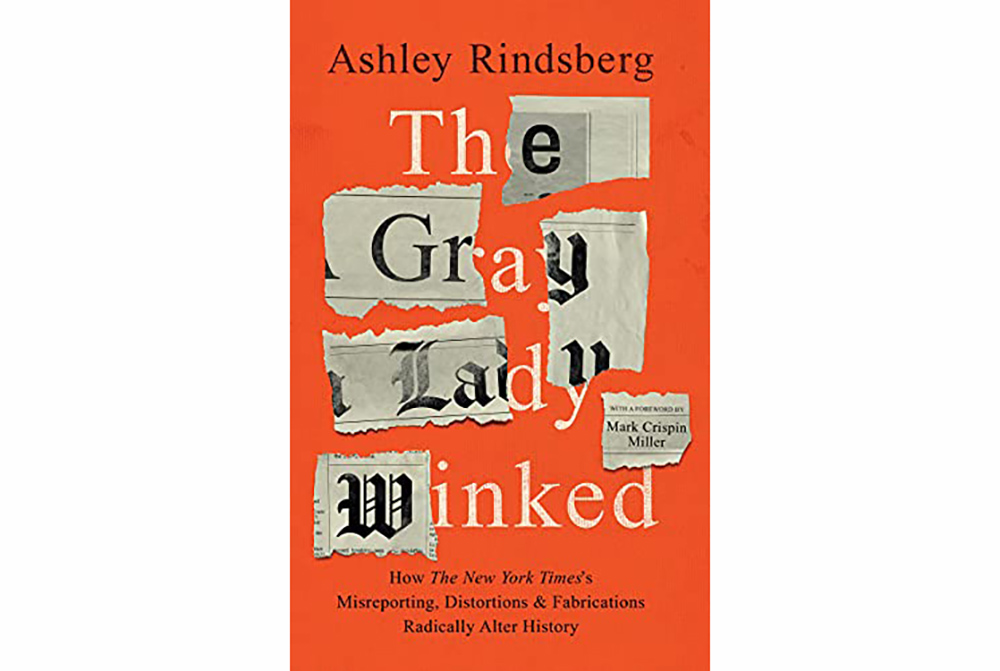
Journalist and media commentator Ashley Rindsberg maintains that the NY Times has been practicing malicious misreporting for a century. “My research churned up not mere errors or inaccuracies but whole-cloth falsehoods,” Rindsberg writes in the book, The Gray Lady Winked , which examines how the most influential newspaper in the world has been manipulating the news. The “fabrications and distortions” he found in the Times’ coverage of major stories from Hitler’s Germany and Stalin’s Russia to Vietnam and the Iraq War “were never the product of simple error,” Rindsberg claims, saying that Times reporters have followed the same tactics since the 1920s. “Rather, they were the byproduct of a particular kind of system, a truth-producing machine” constructed to twist facts into a pattern of the Times’ own choosing, he says.
“We toss the term ‘fake news’ around as if it’s something whimsical,” Rindsberg told The Post. “But creating what I call a false media narrative is really hard, It takes coordination, deliberation, and a lot of resources. And there aren’t many news organizations that can do it.” He noted the Times’ $2 billion annual revenue, saying the Times has the funds, name, and experience to make news that other papers will follow. “When the Times breaks these stories, it’s wall to wall,” Rindsberg said. “MSNBC, CNN — everywhere you look, you’ll get that story. And with the Times, it’s never just one false claim,” he said. “They make a concerted effort over time that they dig into and won’t let go.”